



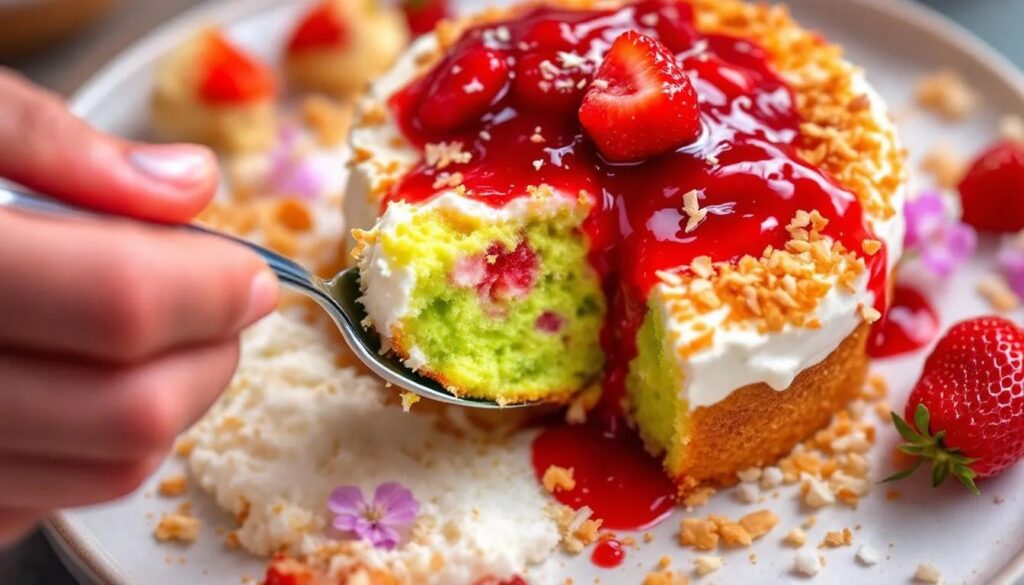
Spring is finally here, and with it comes the urge to bake something bright, fragrant, and effortless. The farmers' markets are filling up with strawberries, rhubarb, and the first stone fruits of the season — and yet, the most unexpected pantry staple of the moment costs just $1.25: a standard box of cake mix. Humble, versatile, and criminally underestimated, it has become the secret weapon behind some of the most crowd-pleasing spring desserts making the rounds right now.
This isn't about shortcuts for the sake of laziness. It's about understanding how a pre-measured blend of flour, leavening, and sugar can become the flexible base for lemon bars with a crinkled crust, strawberry cobbler with a golden top, or a lavender cake fragrant enough to serve at an Easter table. The fifteen recipes below stretch that $1.25 box further than you might expect, and each one fits the lightness that spring actually calls for. Tie on your apron and keep a zester within reach.
| Preparation | 10–20 min per recipe |
| Cooking | 20–45 min per recipe |
| Servings | 8–12 per recipe |
| Difficulty | Easy |
| Cost | $ (base ingredient from $1.25) |
| Season | Spring — strawberries, lemon, rhubarb, raspberries, lavender |
Suitable for: Vegetarian · Can be adapted for dairy-free
Why cake mix works so well in spring desserts
A boxed cake mix is, at its core, a calibrated dry base: soft-wheat flour, baking powder, a touch of salt, and sugar in measured proportions that most home bakers would otherwise spend ten minutes weighing. What it lacks — fat, eggs, liquid, aromatics — is precisely what spring ingredients supply so naturally. Fresh lemon zest, a handful of crushed strawberries, a tablespoon of floral honey, a splash of rosewater: these are the additions that transform a neutral base into something that actually tastes of the season. The mix does the structural work; the season provides the flavor.
The technique shift is as important as the ingredients. Used dry, it forms a buttery crumble topping. Mixed with cream cheese, it becomes a dense, fudgy bar. Thinned with sparkling water instead of milk, it produces a lighter, airier crumb. Understanding these variations is what separates a forgettable box cake from something worth bringing to a spring gathering.
The 15 recipes
1. Lemon crinkle cookies
Combine one box of white or lemon cake mix with 2 eggs, ⅓ cup vegetable oil, and the zest of 2 lemons. Roll the dough into balls, coat in powdered sugar, and bake at 350°F (175°C) for 10–12 minutes. The outsides crack as the centers puff, creating a thin, sugared shell over a chewy, citrus-forward interior. The crinkle effect comes from the powdered sugar resisting the spread of the dough — no chilling required.
2. Strawberry cobbler
Melt ½ cup (1 stick) of butter in a 9×13-inch baking dish. Pour one box of yellow cake mix — dry, straight from the box — evenly over the butter without stirring. Layer 2 cups of fresh sliced strawberries and pour 1 cup of strawberry soda or sparkling water over the top. Do not mix. Bake at 350°F (175°C) for 40–45 minutes until the surface is deeply golden and the fruit bubbles at the edges. The carbonation creates an unusually tender, porous crumb.
3. Lemon bars with a cake mix crust
Press one box of lemon cake mix combined with ½ cup softened butter and 1 egg into the base of a greased 9×13-inch pan. Bake at 350°F (175°C) for 15 minutes. Pour over a filling made from 2 eggs, ¾ cup lemon curd, and 2 tablespoons lemon juice, then return to the oven for a further 20 minutes. The crust holds a slightly sandy, shortbread-like texture that contrasts with the bright, tart filling above it.
4. Strawberry cream cheese dump cake
Spread 21 oz (600 g) of strawberry pie filling across the bottom of a greased baking dish. Drop spoonfuls of 8 oz (225 g) softened cream cheese mixed with ¼ cup powdered sugar across the filling. Sprinkle one box of white cake mix evenly over the top, then drizzle with ¾ cup melted butter. Bake at 350°F (175°C) for 45 minutes. The cream cheese pockets stay slightly molten at the center while the cake mix top turns golden and crisp.
5. Lemon lavender cake
To one box of white cake mix, add 1 teaspoon dried culinary lavender ground briefly in a mortar, the zest of 1 lemon, and substitute ½ cup of the required water with fresh lemon juice. Bake in two 8-inch round pans at the temperature indicated on the box. Frost with a simple lavender honey buttercream: beat 1 cup softened butter with 2 cups powdered sugar, 1 tablespoon honey, and ½ teaspoon lavender extract. Floral, pale, and just right for an Easter table.
6. Rhubarb upside-down cake
Arrange 2 cups of sliced rhubarb in a buttered 9-inch round cake pan. Scatter ¼ cup brown sugar and 2 tablespoons butter in pieces over the rhubarb. Prepare one box of yellow or white cake mix according to package directions and pour the batter gently over the fruit. Bake at 350°F (175°C) for 35–40 minutes, then invert immediately onto a serving plate. The rhubarb caramelizes into jammy, pink-edged ribbons against the golden sponge beneath.
7. Raspberry lemon mug cakes
Combine 3 tablespoons of lemon cake mix with 2 tablespoons milk, 1 tablespoon oil, and 1 egg yolk in a large microwave-safe mug. Press 4–5 fresh raspberries into the batter. Microwave on high for 60–75 seconds. The cake rises just above the rim of the mug before settling into a soft, steamed center ringed with raspberry pockets that release a thin, bright juice. Serve immediately.
8. Spring sprinkle sheet cake
Prepare one box of vanilla or funfetti cake mix according to package directions, adding ¼ cup pastel sprinkles folded in at the end. Bake in a sheet pan at 350°F (175°C) for 20–25 minutes. Frost with whipped cream cheese frosting — 8 oz cream cheese, 1½ cups powdered sugar, 1 teaspoon vanilla, whipped until fluffy — and top with additional sprinkles and fresh edible flowers if available. The effect is visually immediate: pale, speckled, celebratory.
9. Peach and honey dump cake
Use 2 cups of fresh or canned sliced peaches (drained if canned) as the base layer in a greased baking dish. Drizzle with 2 tablespoons of floral honey and a pinch of cardamom. Sprinkle one box of white or butter cake mix over the top without mixing, then pour ¾ cup melted butter over everything. Bake at 350°F (175°C) for 40 minutes. The honey seeps upward through the cake mix as it bakes, pulling traces of caramel color along the edges.
10. Lemon poppy seed loaf
Combine one box of lemon cake mix with 3 eggs, ⅓ cup vegetable oil, ⅔ cup sour cream, and 2 tablespoons poppy seeds. Pour into a greased loaf pan and bake at 350°F (175°C) for 45–50 minutes, until a toothpick inserted at the center comes out with moist crumbs rather than wet batter. Glaze while still warm with ⅓ cup powdered sugar dissolved in 2 tablespoons lemon juice. The glaze soaks in rather than sitting on top, keeping the crumb moist for days.
11. Strawberry shortcake bars
Mix one box of white cake mix with ½ cup softened butter and 1 egg into a thick dough. Press two-thirds of it into a greased 9×13-inch pan. Spread 1½ cups of fresh strawberry jam or crushed fresh strawberries mixed with ¼ cup sugar over the base. Crumble the remaining dough on top. Bake at 350°F (175°C) for 30–35 minutes. The top crumble bakes golden and slightly crisp while the strawberry layer below stays soft and jammy, setting up properly once cooled.
12. Carrot cake cookies
One box of spice cake mix, 1 cup finely grated carrot, 2 eggs, and ⅓ cup vegetable oil: stir to combine and scoop onto parchment-lined baking sheets. Bake at 350°F (175°C) for 11–13 minutes. Sandwich pairs together with a cream cheese filling made from 4 oz softened cream cheese, 1 cup powdered sugar, and ½ teaspoon vanilla. These are appropriately dense and spiced, with the faint sweetness of carrot visible in small orange flecks across the surface.
13. Orange dreamsicle cake
Prepare one box of orange cake mix (or white cake mix with 2 tablespoons orange zest) according to the package. Bake in a 9×13-inch pan. Once cooled, frost with a no-cook frosting made from 1 package instant vanilla pudding dissolved in 1½ cups cold milk, folded together with 8 oz whipped topping. The frosting is cloud-like, slightly wobbly at room temperature, and carries the nostalgic pairing of orange and vanilla that is unmistakably spring.
14. Blueberry lemon crumble bars
Press half a box of lemon cake mix combined with ¼ cup melted butter and 1 egg into the base of an 8×8-inch pan. Cover with 1 cup fresh blueberries tossed with 1 tablespoon sugar and 1 teaspoon cornstarch. Top with the remaining cake mix crumbled with 2 tablespoons cold butter rubbed between the fingers until it resembles coarse breadcrumbs. Bake at 350°F (175°C) for 30–35 minutes. The blueberries burst during baking, staining the crumble base a deep blue-purple where they make contact.
15. Vanilla poke cake with fresh berries
Bake one box of white or vanilla cake mix in a 9×13-inch pan according to directions. While still warm, poke deep holes across the surface at 1-inch intervals using the handle of a wooden spoon. Pour 1 can (14 oz) sweetened condensed milk slowly over the surface, allowing it to sink into the holes. Refrigerate for at least 2 hours. Top with 8 oz whipped topping and 2 cups of mixed spring berries — strawberries, raspberries, blueberries — arranged across the surface just before serving. The condensed milk creates a dense, sticky interior that contrasts sharply with the light cream and fresh fruit above.
My baker's tip
The most common mistake with cake mix desserts is following the box instructions exactly when the recipe calls for a modification — then wondering why the texture is off. Treat the mix as a dry ingredient, not a recipe. Swap water for citrus juice, replace oil with melted brown butter, add a spoonful of sour cream or Greek yogurt for tension and moisture. Especially in spring, a teaspoon of lemon zest folded into almost any of these batters will lift the flavor in a way that no artificial flavoring in the box can replicate. Fresh zest costs nothing at the market this time of year — use it freely.
Pairings
Spring desserts built on a cake mix base tend to lean sweet and simple, which calls for beverages that bring either acidity or brightness to balance them out.
For the citrus-forward recipes — the lemon crinkle cookies, the lemon bars, the blueberry bars — a glass of cold Moscato d'Asti from Piedmont works well: low in alcohol, lightly sparkling, with peach and apricot notes that echo rather than compete with the fruit. For the strawberry and raspberry-based desserts, a chilled Rosé de Provence brings a dry, mineral contrast to the sweetness of the filling. Without alcohol, a cold-brewed hibiscus tea or a sparkling water with a squeeze of blood orange serves the same purpose — brightness against sugar.
The cake mix: a brief history of a pantry staple
The boxed cake mix entered American pantries in the late 1940s, developed by companies like General Mills and Pillsbury as part of a post-war push toward kitchen convenience. Early versions required only water — sales were sluggish. When marketers realized that adding an egg gave home bakers a sense of contribution and improved the texture simultaneously, the product found its audience. By the 1950s, it had become a fixture, and by the 1960s, home economists and recipe developers were already finding ways to bend it beyond its intended use.
The modern $1.25 box is the direct descendant of that original product, refined over decades but structurally unchanged. What has changed is how cooks approach it: less as a finished recipe and more as a platform. The dump cake technique — layering fruit, dry mix, and butter without stirring — emerged from Southern American home cooking in the 1970s and remains one of the most efficient dessert methods in the home baker's repertoire. Spring, with its abundance of accessible fruit, is when that method earns its keep most visibly.
Nutritional values (per serving, approximate values — based on a standard slice from a 12-serving recipe)
| Nutrient | Amount |
|---|---|
| Calories | ~280 kcal |
| Protein | ~3 g |
| Carbohydrates | ~42 g |
| of which sugars | ~26 g |
| Fat | ~11 g |
| Fiber | ~1 g |
Frequently asked questions
Can these desserts be made ahead of time?
Most of these recipes hold well for 24 to 48 hours. The dump cakes, bars, and loaves actually improve overnight as the moisture redistributes through the crumb. The poke cake requires a minimum of two hours of refrigeration and is best assembled the evening before serving. The cookies and crinkle bites are best eaten within 24 hours while the exterior retains some texture, though they remain safe to eat for up to three days stored in an airtight container.
How should leftovers be stored?
Bars, loaves, and sheet cakes keep well at room temperature for up to two days, covered tightly with plastic wrap or in an airtight container. Any recipe containing cream cheese frosting, fresh berries, or condensed milk should be refrigerated and consumed within three days. Dump cakes can be stored covered in their baking dish in the refrigerator for up to four days — they reheat well in individual portions at 300°F (150°C) for eight to ten minutes.
Can a gluten-free cake mix be substituted in these recipes?
Yes, with minor adjustments. Gluten-free cake mixes tend to absorb liquid more slowly and can produce a denser, stickier crumb if the baking time is not extended slightly — add three to five minutes and test with a toothpick. For bar recipes that use the dry mix as a crumble or pressed crust, the texture difference is minimal. Brands that include xanthan gum in their formulation perform closest to conventional mixes in these applications.
Which cake mix flavor works best as a general base?
White cake mix is the most neutral and versatile base across all fifteen recipes — it carries added flavors cleanly without introducing competing notes. Yellow cake mix adds a slight butteriness that works particularly well in cobbler and dump cake applications. Lemon cake mix is the natural choice for any citrus-forward recipe but can overpower delicate additions like lavender or rosewater if used without adjustment. Spice mix is best reserved for the carrot cake cookies, where its cinnamon and nutmeg notes are a structural part of the flavor rather than an accent.
Can these recipes be scaled up for a crowd?
Most of the bar, dump cake, and cobbler recipes scale directly — doubling the quantities and using a larger baking vessel works without adjusting temperature or technique, though baking time may increase by five to ten minutes due to greater volume. Cookie and mug cake recipes scale by batch rather than within a single mix: prepare multiple rounds sequentially rather than attempting to multiply the dough indefinitely, as the proportions become harder to manage at very large volumes.