



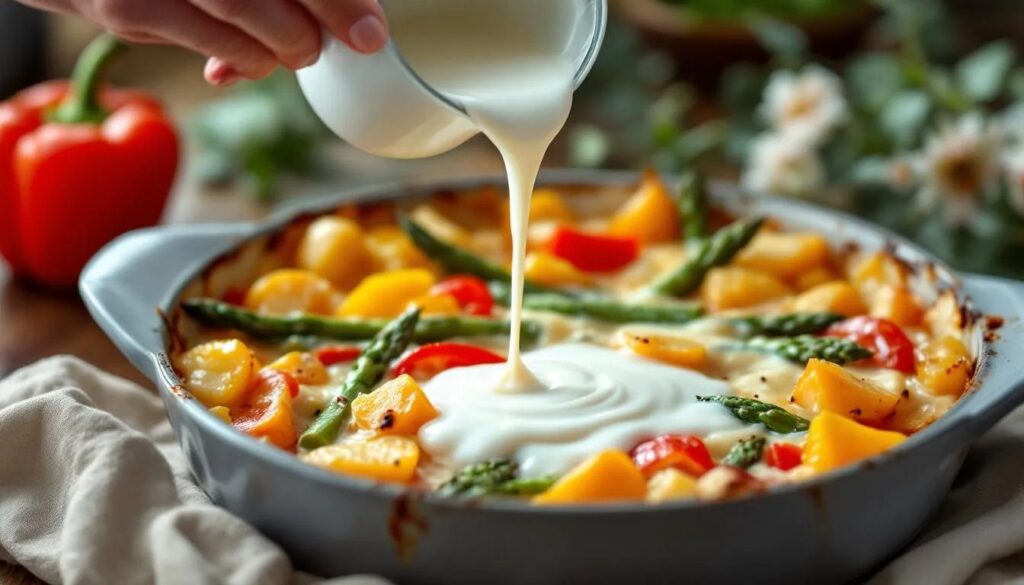
March turns the corner and everything shifts — the light stretches longer, the farmers' market fills up with asparagus spears, fresh peas, and tender leeks, and yet the appetite for something warm, bubbling, and deeply satisfying doesn't simply vanish. Comfort food has long been miscast as a winter-only affair, the exclusive property of grey skies and frozen pipes. Spring casseroles challenge that assumption directly: they trade heavy root vegetables and thick cream sauces for bright herbs, young vegetables, and lighter proteins, while keeping every bit of the warmth and ease that makes a baked dish so appealing in the first place.
The fifteen recipes gathered here span the full spring pantry — from a lemony chicken and artichoke bake to a herb-flecked white bean gratin, a spring pea and ricotta casserole, and a salmon dish layered with asparagus and dill. Some take under forty minutes of active work; others reward patience with deeper flavor. All of them prove that pulling a dish from the oven on a mild April evening is not a seasonal contradiction — it is simply good cooking.
What makes a spring casserole different
A winter casserole leans on fat, time, and density. A spring casserole leans on freshness, acid, and restraint. The shift is less about technique than it is about the ingredients doing the talking. When you swap parsnips and swede for young courgettes, broad beans, and fresh tarragon, the dish changes character entirely. The oven still does the slow, patient work of melding flavors and creating those caramelized edges that no stovetop can quite replicate — but the result feels appropriate for a table set near an open window.
Texture plays a central role. Spring produce retains a slight bite even after baking if the timing is right, and that contrast between a golden, set top and a tender, almost-yielding interior is one of the quiet pleasures of this style of cooking. Acid — a squeeze of lemon over the finished dish, a spoonful of white wine into the base, a scattering of capers — keeps everything lifted rather than heavy.
The 15 recipes at a glance
1. Lemon chicken and artichoke bake
Bone-in chicken thighs, jarred artichoke hearts, preserved lemon, and a generous pour of white wine form the base of a casserole that is ready in under an hour. The skin crisps in the final minutes uncovered while the cooking juices reduce to a sharp, fragrant sauce. Serve with crusty bread or soft polenta.
2. Spring pea and ricotta gratin
Fresh or frozen peas — both work here — are folded into a mixture of ricotta, eggs, grated Parmesan, and mint, then spread into a gratin dish and baked until puffed and golden at the edges. The interior stays creamy and yielding. A handful of pea shoots scattered over at the end adds color and a raw sweetness that anchors the whole dish in the season.
3. Asparagus, leek and Gruyère strata
A strata is essentially a savory bread pudding — day-old sourdough soaked overnight in a custard of eggs and milk, then layered with roasted asparagus, softened leeks, and shredded Gruyère. Baked low and slow, it sets into something halfway between a soufflé and a quiche: deeply savory, with pockets of melted cheese and tender green throughout.
4. White bean and spinach gratin with herb breadcrumbs
Cannellini beans provide the body here, braised briefly with garlic, vegetable stock, and a splash of white wine before being folded with wilted spinach and transferred to a baking dish. The topping — breadcrumbs toasted with olive oil, lemon zest, and flat-leaf parsley — adds crunch and brightness. This is the casserole that converts anyone who thinks beans are dull.
5. Salmon, asparagus and dill casserole
Salmon fillets are nestled into a base of partially cooked asparagus, shallots, and crème fraîche thinned with a little fish stock. A lid of foil for the first half of cooking keeps everything moist; removing it for the last eight minutes allows the sauce to thicken and the fish to take on a little color. Fresh dill stirred through at the end lifts the dish considerably.
6. Spring lamb and green olive tagine-style bake
Diced lamb shoulder, green olives, preserved lemon, fresh coriander, and a pinch of ras el hanout go into a heavy-lidded casserole dish and cook slowly in the oven until the meat falls apart. The flavor profile nods to North African cooking while the technique — long, covered oven braising — is pure casserole. Young carrots and spring onions added in the final thirty minutes retain enough texture to provide contrast.
7. Potato, nettle and cheddar bake
Young nettles picked in early spring — blanched for thirty seconds and wrung dry — replace spinach in this substantial layered bake. Thinly sliced waxy potatoes, mature Cheddar, a little crème fraîche, and a grating of nutmeg complete the picture. It is forthright, warming, and speaks directly to the strange weather that March and April regularly deliver.
8. Courgette, tomato and feta casserole
Courgettes — still slender and without the bitterness they can develop in high summer — are sliced lengthways and layered with cherry tomatoes, crumbled feta, dried oregano, and olive oil. The dish bakes uncovered so the tomatoes collapse and caramelize, the courgettes soften without losing their shape entirely, and the feta takes on a firmer, slightly salty crust at the edges.
9. Chicken, broad bean and tarragon casserole
Broad beans — double-podded for tenderness — join chicken thighs braised in a base of shallots, dry vermouth, and chicken stock. Tarragon, added at two stages (some early, some fresh at the end), gives the sauce its distinctive anise warmth. A spoonful of Dijon stirred into the cooking liquid just before serving introduces a background sharpness that keeps the dish from feeling too rich.
10. Mushroom and barley casserole with spring herbs
Pearl barley absorbs stock and mushroom juices as it bakes, swelling into something thick, nutty, and almost risotto-like in consistency. Wild mushrooms — whatever the market holds — provide depth, while a combination of chives, parsley, and a little fresh thyme stirred through at the end prevents the dish from reading as autumnal. This one suits a mid-week evening when speed matters: it is in the oven within fifteen minutes.
11. Spring vegetable and halloumi bake
Sliced halloumi placed over a bed of spring vegetables — new potatoes, asparagus tips, cherry tomatoes, and peas — crisps in the oven while everything beneath it steams gently in its own moisture. A drizzle of honey and a scattering of chili flakes over the cheese before baking creates a glaze that is sweet, saline, and faintly hot. Ready in thirty-five minutes, no complex technique required.
12. Tuna, fennel and caper casserole
Good-quality tuna in oil, thinly sliced fennel, capers, crushed tomatoes, and a handful of olives go into a wide baking dish. The fennel softens and sweetens as it cooks, its anise edge rounding out. Finished with a drizzle of the tuna oil and a few fennel fronds if available, this is a Mediterranean casserole that sits comfortably alongside a spring salad of bitter leaves.
13. Lentil, carrot and cumin casserole with yoghurt
Green lentils hold their shape through long baking, absorbing a broth seasoned with cumin, coriander, turmeric, and a little smoked paprika. Young carrots — left whole if small enough — add sweetness. The yogurt is not stirred in but spooned over each serving cold, providing a cooling contrast to the warm spice of the dish beneath. A squeeze of lemon over everything at the table is not optional.
14. Chicken and sorrel gratin
Sorrel — sharp, leafy, and one of the first green things to push through in early spring — wilts down dramatically in cooking, losing its vivid color but releasing a pronounced lemony acidity. Mixed into a cream sauce with cooked chicken, spread into a gratin dish, and topped with Gruyère and fine breadcrumbs, it becomes something that is both deeply comforting and unmistakably seasonal.
15. Strawberry and rhubarb bread casserole
The sweet closer on this list: a dessert casserole built on buttered brioche layered with macerated rhubarb and early strawberries, soaked in a vanilla custard, and baked until puffed and golden. Rhubarb's sharpness cuts through the richness of the custard; strawberries soften into pools of jammy color. Served warm from the oven with cold crème fraîche, it is the definitive argument that spring has its own comfort food language.
Tips for building a better spring casserole
Start with the right dish. A heavy ceramic or enameled cast-iron dish retains heat evenly and transfers from oven to table without losing temperature. For gratins and vegetable-forward bakes, a wide, shallow dish maximizes the surface area available for browning — a crucial detail when there is no pastry lid to provide texture.
Season in layers. Spring vegetables are more delicate than their winter counterparts and absorb salt quickly. Season at each stage — the base, the sauce, the topping — rather than correcting at the end. Taste the cooking liquid before it goes into the oven: it should be slightly more assertive than you expect, because baking mellows flavors.
Resist the urge to overcrowd. A casserole dish packed too tightly traps steam and prevents browning. If the recipe fills the dish to the rim, use two dishes or cook in batches. The difference between a steamed and a properly baked casserole top is the difference between serviceable and memorable.
Fresh herbs are not a garnish here — they are structural. Stir half the herbs into the dish before baking to infuse the base, and reserve the other half to scatter raw at the end. The cooked herbs provide depth; the raw herbs provide freshness. Together they prevent the dish from tasting flat.
Pairing spring casseroles with wine
The lighter protein and vegetable-forward nature of spring casseroles opens the field considerably compared to the heavy red wines typically paired with winter braises. A dry Viognier or a lightly oaked Chardonnay suits the lemony chicken and artichoke bake. The pea and ricotta gratin pairs well with a crisp Pinot Blanc from Alsace or a grassy Sauvignon Blanc. For the lamb dish, a young Grenache or a medium-bodied Côtes du Rhône bridges the gap between spring freshness and the dish's underlying richness. Those who prefer a non-alcoholic option will find that a sparkling water with a slice of lemon and a few sprigs of fresh mint echoes the herb and citrus notes running through most of these recipes.
Making casseroles ahead
Most of these dishes — the notable exception being the salmon casserole, which is best assembled and cooked immediately — can be prepared up to the point of baking, covered tightly, and refrigerated for up to twenty-four hours. Add five to eight minutes to the baking time if cooking from cold. Several improve on the second day: the lentil casserole, the white bean gratin, and the spring lamb bake all deepen in flavor overnight, making them strong candidates for Sunday cooking intended to carry through to Monday evening.
Can I use frozen vegetables in spring casseroles?
For most of these recipes, frozen vegetables perform well and in some cases — peas and broad beans especially — are preferable to fresh ones that have been sitting in a refrigerator for several days. Frozen peas go directly into the dish without thawing; frozen broad beans should be thawed and double-podded before use. The main exception is asparagus, where the fibrous texture of frozen spears does not hold up well under oven heat.
How do I prevent a spring vegetable casserole from becoming watery?
Spring vegetables contain more water than the root vegetables used in winter casseroles, and they release it during baking. To manage this, roast or sauté any high-moisture vegetables — courgettes, tomatoes, mushrooms — briefly before adding them to the casserole dish. Removing the lid or foil for the final ten to fifteen minutes of baking allows excess moisture to evaporate. A light dusting of breadcrumbs over the surface also helps absorb liquid while providing texture.
Which of these casseroles works best for feeding a large group?
The asparagus and leek strata and the white bean and spinach gratin both scale well: they can be assembled in larger dishes without any change to technique or timing, and they hold their temperature at the table for longer than protein-heavy dishes. The mushroom and barley casserole is another strong option for a crowd, particularly if some guests do not eat meat, as it is satisfying enough to serve as a main rather than a side.
Are spring casseroles suitable for Easter entertaining?
Several of these recipes are well-suited to an Easter table. The spring lamb and green olive bake is a natural fit for the occasion, requiring little hands-on time on the day itself. The strawberry and rhubarb bread casserole makes an effortless dessert when rhubarb is at its peak. For a lighter lunch option, the pea and ricotta gratin or the halloumi vegetable bake can be served at room temperature alongside a green salad, freeing the oven for other preparations.
Can these casseroles be made gluten-free?
Most of the savory casseroles in this collection are naturally gluten-free or easily adapted. The strata requires a gluten-free loaf in place of sourdough; the results are slightly denser but remain flavorful. Breadcrumb toppings can be replaced with a mixture of finely crushed gluten-free crackers and grated Parmesan. The strawberry and rhubarb bread casserole adapts well with a good-quality gluten-free brioche, which is increasingly available in supermarkets.