



Late March light filters through windows at a particular angle—softer than winter, sharper than full spring—and something shifts in the way we want to set a table. The season calls for flowers in small vases, mismatched china, and food that looks as though it grew naturally into its own beauty. A tea party, properly conceived, is not a fussy affair but a generous one: a spread of small things made with care, where every bite holds a conversation and no one leaves hungry.
These 21 recipes gather the full range of what a garden-party table demands in spring 2026—from the flaky and savory to the delicate and sweet, from classics that have earned their place to lighter modern additions that reflect what is actually growing right now. Cucumber is crisp and cold from the fridge. Strawberries are arriving early at farmers' markets. Lemon curd is bright enough to wake up the palate between sips of Earl Grey. Pull out the tiered stand and the pressed napkins—this is where to begin.
| Preparation | 45 min (varies by recipe) |
| Portions | 8–12 guests |
| Difficulty | Easy to Medium |
| Cost | $$ |
| Season | Strawberries, cucumber, radishes, peas, lemon, elderflower, mint, asparagus |
Suitable for: Vegetarian options throughout · Several naturally gluten-free · Dairy-free adaptations noted per recipe
The foundation: sandwiches & savory bites
Every tea table begins with something savory to anchor the sweet. These are not afterthoughts—they are the reason guests linger.
1. Classic cucumber & cream cheese sandwiches
The most iconic finger sandwich demands the most attention to detail. Use a close-crumbed white bread—a day-old loaf slices cleaner—spread cold full-fat cream cheese all the way to the edges, and layer wafer-thin cucumber slices cut on a mandoline. A mandoline produces the translucency that gives this sandwich its visual elegance. Season the cream cheese with white pepper, a few blades of fresh chives, and a pinch of fine sea salt. Remove the crusts with a single confident cut, then slice each sandwich into three fingers. The cucumber should overhang by no more than 2mm—just enough to signal what lies inside.
2. Smoked salmon & dill on brown bread
Cold-smoked salmon carries a mineral depth that responds well to the slight bitterness of wholemeal bread. Spread a thin layer of crème fraîche mixed with a small amount of freshly grated horseradish—around half a teaspoon per four slices—before laying the salmon flat. Finish each triangle with a single sprig of fresh dill and a few capers. The contrast between the oily salmon and the clean acidity of the capers prevents the bite from feeling heavy.
3. Egg mayonnaise & cress sandwiches
Boil eggs for exactly 10 minutes, transfer immediately to ice water, and peel while still warm. Mash coarsely with a fork—texture matters here, too smooth and the filling slides—and fold in good-quality mayonnaise, a pinch of dry English mustard powder, and salt. Pile generously onto white bread and top with a thick layer of garden cress before closing. The cress brings a peppery bite that elevates the entire sandwich.
4. Radish butter tartines
A French influence that earns its place at any spring table. Slice a baguette on a long diagonal, spread thickly with unsalted butter that has been left at room temperature for 30 minutes, and press thinly sliced radishes into the surface. Finish with a pinch of fleur de sel and a few small mint leaves. Radishes are at their most tender and least peppery in early spring—buy them with their tops still attached as a sign of freshness, and use the tops in a salad or green butter later.
5. Asparagus spears wrapped in prosciutto
Early asparagus—the thin-stemmed variety that arrives first—needs very little cooking. Blanch the spears in heavily salted boiling water for 2 minutes, then plunge into ice water to fix their color: a bright, saturated green that tells the eye they will be good. Wrap each spear in a single strip of thinly sliced prosciutto, spiraling from base to tip. Arrange in a fan across a long plate. No sauce is needed, but a small bowl of hollandaise placed alongside allows guests to choose.
6. Coronation chicken vol-au-vents
Buy ready-made vol-au-vent cases from a bakery or make them from all-butter puff pastry cut into rounds. For the filling, combine shredded poached chicken breast with a sauce of good-quality mayonnaise, mild curry powder, mango chutney, and a few sultanas. The mango chutney carries sweetness; the curry powder carries warmth; together they produce the particular golden flavor that defines this British classic, created to celebrate the 1953 coronation. Spoon filling generously and top each with a single toasted almond flake. Serve within 30 minutes of filling to protect the pastry's crispness.
7. Pea & mint crostini with whipped ricotta
Slice a thin baguette, brush lightly with olive oil, and toast at 350°F (180°C) for 8 minutes. Whip full-fat ricotta with a fork, season with salt and lemon zest. Blanch fresh or frozen peas for 90 seconds, drain, and crush coarsely with the back of a spoon—a few whole peas add texture. Pile the ricotta first, then the peas, then finish with fresh mint, a drizzle of extra-virgin olive oil, and a crack of black pepper. These feel more modern than the rest of the table and serve as a visual break in the spread.
The middle tier: scones & their companions
Scones occupy the emotional center of a tea party. There is no neutral opinion about them.
8. Classic plain scones
Sift 450g self-raising flour with 1 tsp baking powder and a pinch of fine salt. Rub in 85g cold unsalted butter cut into cubes until the mixture resembles coarse breadcrumbs—the cold temperature of the butter creates the steam during baking that produces layers. Make a well, add 300ml whole milk warmed to body temperature, and bring together with a table knife, not hands. Overworking develops gluten, which toughens. Pat to 1 inch (2.5cm) thickness, cut with a floured cutter using a straight downward motion—no twisting, which seals the edges and prevents a good rise. Bake at 430°F (220°C) for 12–14 minutes until golden. Serve warm, split, with clotted cream and strawberry jam.
9. Lemon & elderflower scones
Use the same base recipe as above, adding the zest of two unwaxed lemons and 2 tbsp elderflower cordial in place of an equal measure of milk. The cordial adds a floral, slightly honeyed note that pairs remarkably well with early-season strawberry jam. Brush the tops with a wash of egg yolk and a touch of cordial, creating a sheen with a faint sweetness.
10. Cheese & chive scones
Add 120g grated mature Cheddar and a small bunch of finely snipped chives to the dry scone mix before adding the milk. Reserve a little cheese to press onto the tops. These sit on the savory end of the table and are particularly suited to guests who want something substantial alongside their first cup of tea. Serve with good salted butter rather than clotted cream.
The sweets: cakes, tarts & delicate things
The upper tier holds what guests photograph and what they quietly return to twice.
11. Lemon curd tartlets
Press sweet shortcrust pastry into small tartlet tins, blind-bake at 340°F (170°C) for 12 minutes, remove the baking weights, and return for a further 5 minutes until the base is dry and pale gold. For the curd: whisk together 3 eggs, 150g caster sugar, the juice and zest of 3 lemons, and 85g unsalted butter in a bowl set over simmering water. Stir constantly for around 10 minutes until the mixture thickens enough to coat the back of a spoon. Pour into the cooled tartlet shells and refrigerate for at least 2 hours. Finish each with a thin curl of lemon zest.
12. Victoria sponge finger cakes
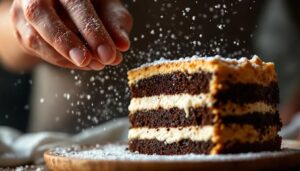
Bake a classic Victoria sponge in a rectangular tin, cool completely, then cut into individual fingers rather than wedges—a format that is easier to eat standing up and looks more deliberate on a tiered stand. Fill with freshly whipped cream and a thin layer of strawberry jam. The ratio matters: too much cream overwhelms the sponge, too little produces a dry bite. Dust with confectioners' sugar immediately before serving, not hours before, as the sugar absorbs moisture and disappears.
13. Strawberry & champagne jelly cups
Hull early strawberries, halve them, and place in small glass cups or vintage teacups. Make a jelly with Champagne or prosecco—300ml sparkling wine, 3 sheets of leaf gelatin soaked in cold water, 2 tbsp caster sugar warmed together until dissolved, then cooled slightly before pouring over the fruit. Refrigerate for 4 hours minimum. The jelly trembles slightly when the table is bumped, which is part of its charm. A single mint leaf placed on top just before service adds color without complication.
14. Earl grey madeleines
Steep two Earl Grey teabags in 60g melted butter for 10 minutes, then discard the bags. Make a standard madeleine batter—2 eggs, 100g caster sugar, 100g flour, ½ tsp baking powder—and fold in the infused butter. Rest the batter in the fridge for 1 hour; this resting produces the characteristic hump when the batter hits the hot tin. Bake at 390°F (200°C) for 10–11 minutes. Madeleines are best eaten within 2 hours of baking, when the edges are still slightly crisp and the bergamot scent from the tea is still present in the crumb.
15. Rose & pistachio shortbread
Cream 200g softened unsalted butter with 80g confectioners' sugar until pale, then fold in 250g all-purpose flour, 1 tsp rosewater, and 60g finely chopped pistachios. The dough will be firm; press into a lined tray to 0.4 inch (1cm) thickness and chill for 30 minutes before baking at 320°F (160°C) for 18–20 minutes. Cut into rectangles while still warm. The rosewater should be present but not dominant—more a suggestion than a declaration. Dust with confectioners' sugar and press a single pistachio half into each piece.
16. Carrot cake bites with cream cheese frosting
Bake a standard carrot cake in a shallow rectangular tin, cool, then cut into 1 inch (3cm) cubes. Pipe a small swirl of cream cheese frosting—cream cheese, confectioners' sugar, a drop of vanilla—onto each cube using a star nozzle. Top with a tiny piece of candied walnut. At this scale, the carrot cake becomes something refined, making it better suited to a tea table.
17. Lavender honey financiers
Brown 100g unsalted butter in a small saucepan over medium heat until it smells of hazelnuts—this is beurre noisette, the foundation of a proper financier. Add 1 tbsp lavender honey and cool slightly. Fold into a mixture of 3 egg whites (lightly beaten, not whipped), 120g confectioners' sugar, 40g ground almonds, and 40g all-purpose flour. Pour into buttered financier molds and bake at 370°F (190°C) for 12 minutes. The outside should be dark gold and slightly crisp; the inside should be moist, dense, and faintly floral.
18. Mini pavlovas with strawberries & mint cream
Whisk 3 egg whites to stiff peaks, gradually adding 170g caster sugar. Add 1 tsp white wine vinegar and 1 tsp cornstarch on the final additions—the vinegar and cornstarch together create the soft, marshmallow interior that distinguishes a pavlova from a plain meringue. Spoon into eight individual nests on baking parchment and bake at 250°F (120°C) for 1 hour, then turn off the oven and leave inside for a further hour. Top with whipped cream folded through a few torn mint leaves and fresh early strawberries. Assemble no more than 30 minutes before serving.
19. Chocolate & orange ganache tartlets
Line small tartlet cases with dark chocolate pastry and bake blind. For the ganache, heat 150ml heavy cream with the zest of one orange, remove from heat, and pour over 150g finely chopped dark chocolate (minimum 70% cocoa solids). Stir slowly from the center until smooth and glossy. Pour into the cooled shells and leave to set at room temperature for 2 hours. Finish with a small curl of candied orange peel. These are the richest thing on the table and should be presented in small quantities—one per guest is exactly right.
The drinks & supporting elements
20. Elderflower & mint lemonade
Combine the juice of 6 lemons, 4 tbsp elderflower cordial, and 1 quart (1 liter) cold sparkling water. Add a large handful of fresh mint, a few thin slices of cucumber, and serve over ice in a glass pitcher. This accommodates guests who do not drink tea and gives the table a visual centerpiece when the pitcher is filled and condensation forms on the glass. Prepare the base without the sparkling water up to a day ahead; add the water only at the moment of serving.
21. The tea itself: a three-pot approach
A garden party table should offer at least three teas to accommodate the range of what is being eaten. Serve an Assam—malty, full-bodied—for those who take milk and are eating savory things. An Earl Grey pairs well with the lemon and floral sweets. A Japanese sencha or a light Darjeeling first flush, served without milk, suits the delicate bites and anyone who prefers a less tannic cup. Brew each in its own warmed pot, with loose leaf where possible, and use water at the correct temperature: 212°F (100°C) for black teas, 175°F (80°C) for green.
Chef's notes: building the table
The architecture of the spread matters as much as the individual recipes. Work on three visual levels: the tiered stand for small, handsome pieces; a long board or slate for the sandwiches; and individual small plates or cups for anything with height or liquid, like the jelly cups or the pavlovas. Early spring flowers—tulips, ranunculus, the first sweet peas if you can find them—belong in small vessels between the plates, not in one large arrangement that blocks conversation. Prepare everything that can be made ahead the day before: pastry shells, scone dough (refrigerate unbaked), lemon curd, ganache, financiers. On the day itself, focus only on assembly and the things that must be fresh: the sandwiches, the cream, the fruit.
Pairing the table: tea & wine notes
For guests who prefer something other than tea, a light, off-dry sparkling wine complements almost the entire spread. The gentle sweetness and acidity of a Brut Nature Champagne or a well-made English sparkling wine—increasingly available and increasingly good—pairs well with the sandwiches without competing with the sweets. A Demi-Sec style handles the dessert end of the table more gracefully. For non-alcoholic alternatives, the elderflower lemonade above is perfect, and a cold-brewed hibiscus and rose hip tea adds a vivid red color to the table while being naturally tart and floral.
About the tradition
Afternoon tea as a formal meal is attributed to Anna, the 7th Duchess of Bedford, who in the 1840s began requesting a small meal with tea to bridge the long gap between the light noon meal and a dinner served at 8pm or later. What began as a private habit became a social ritual, first among the aristocracy, then across the full span of British domestic life. The garden party variation—taking the spread outside or framing it around spring and summer abundance—was a natural extension, adding seasonal flowers, lighter flavors, and the visual language of the English countryside to a table that could, indoors, feel overly formal.
Today the format has moved well beyond its British origins. The combination of small savory bites, scones, and delicate sweets appears—adapted to local ingredients and local aesthetics—at celebrations across Europe, North America, and beyond. What endures is the spirit: a table that is generous enough to feel abundant, and thoughtful enough to show that someone cared.
Nutritional values (per approximate serving of mixed items, approximate values)
| Nutrient | Amount |
|---|---|
| Calories | ~380 kcal |
| Protein | ~11 g |
| Carbohydrates | ~44 g |
| of which sugars | ~22 g |
| Fat | ~18 g |
| Fiber | ~3 g |
Frequently asked questions
How far in advance can I prepare a tea party spread?
Most components can be prepared a full day ahead without any loss of quality. Bake the scones and freeze them unbaked—they go directly from freezer to oven on the day and take only 2–3 minutes longer than fresh. Make lemon curd, ganache, financiers, and shortbread the day before. Slice bread and store wrapped tightly in the fridge, but make the sandwich fillings on the morning of the party and assemble no more than 2 hours before serving to prevent the bread from becoming soggy. The one exception is pavlovas: bake the meringue bases up to 3 days ahead and store in an airtight container, but top with cream and fruit no more than 30 minutes before guests arrive.
How do I scale these recipes for a smaller or larger group?
This spread is designed for 8–12 guests. For 6 people, halve the sandwich quantities and make a single batch of each baked item rather than doubling—most of these recipes scale down cleanly. For 20 or more guests, focus on three or four items made in volume rather than attempting all 21: the sandwiches, one type of scone, the lemon curd tartlets, and one cake-based dessert cover all tiers of the table without requiring 48 hours of preparation. The financiers and madeleines are the best choices to scale up, as they bake in batches and hold well.
Are there gluten-free options within this menu?
Several recipes work without modification for gluten-free guests: the lavender honey financiers can be made with a 1:1 gluten-free flour blend; the pavlovas are naturally gluten-free; the strawberry jelly cups require no adaptation at all. For the sandwiches, a good-quality gluten-free white bread slices cleanly if it has been refrigerated for 30 minutes before cutting. Scones made gluten-free benefit from the addition of 1 tsp xanthan gum to the dry mixture to improve binding and rise.
What is the correct order of scone toppings—cream first or jam first?
This is a genuinely unresolved debate between two regional traditions in England. In Devon, clotted cream goes on first, then jam. In Cornwall, jam goes on first, then cream. Both produce the same flavors; the difference is structural and visual. The Devonshire method—cream first—provides a stable base that prevents the jam from sliding, which is a practical argument for a standing-up garden party situation. However, the choice is yours to make.
How do I transport a tea party spread to an outdoor location?
Pack sandwiches between sheets of baking parchment in a rigid container, stored in a cool bag with ice packs. Transport scones in a single layer in a tin lined with a clean tea towel to absorb any condensation. Keep cream and curd-filled items refrigerated until the last possible moment, and set them out no more than 45 minutes before eating if the outdoor temperature is above 65°F (18°C). Carry flowers and small decorative items separately in a box to arrange on arrival. A portable tiered stand, if you have one, transforms any outdoor table into something special.