
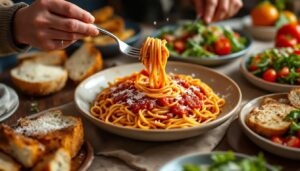
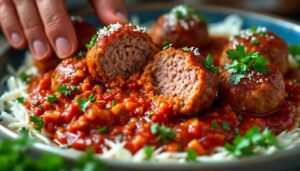
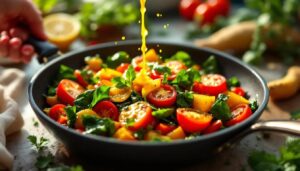
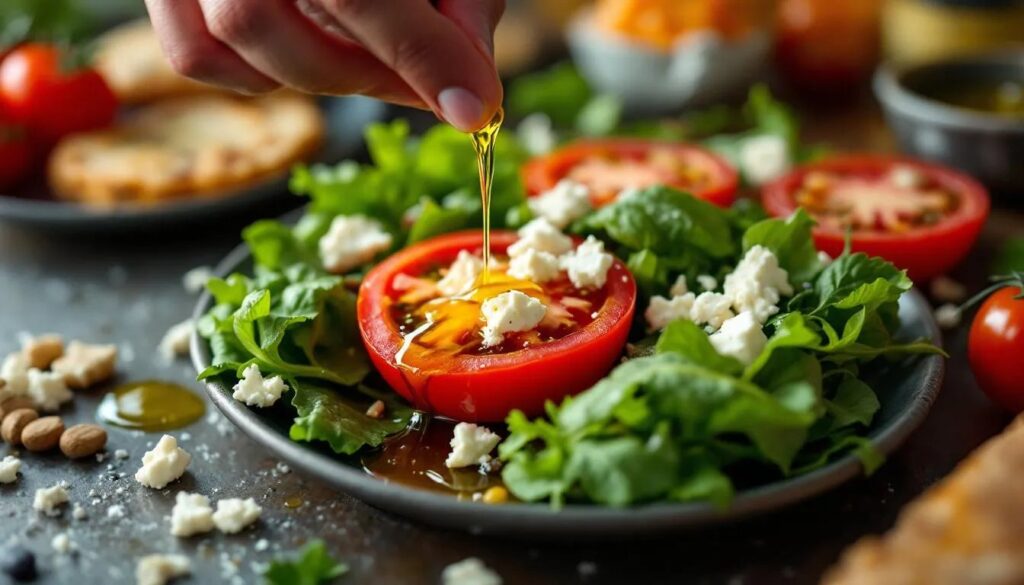
Spring is here, and with it comes the perfect moment to reset the dinner table. The Mediterranean diet has earned its reputation not through fad cycles but through decades of research and centuries of lived tradition — from the fishing villages of Crete to the olive groves of Andalusia. Thirty evenings of vibrant, produce-forward cooking awaits: herbs picked at their peak, legumes simmered low and slow, fish bought fresh from the counter, and olive oil used with an unashamed hand. This is food that belongs to April just as much as it belongs to any sun-drenched coastline.
This 30-day dinner plan is built around what is actually available right now: spring onions, asparagus, early peas, artichokes, fresh herbs, and the last of winter's citrus. Each recipe follows a simple logic — whole ingredients, minimal processing, bold seasoning, and a cooking method that preserves rather than destroys. Whether you are cooking solo or feeding a family of four, this guide gives you a full month of structured, adaptable meals without repetition fatigue. Tie on your apron and let the first week begin.
What is the Mediterranean diet — and why dinners matter most
The Mediterranean diet is not a prescription. It is a pattern — one observed across southern European and North African coastal cultures and documented extensively since the 1950s. At its core: an abundance of vegetables, legumes, whole grains, and fruit; olive oil as the primary fat; fish and seafood several times a week; moderate poultry and dairy; red meat rarely; and wine occasionally, always with food. Processed foods, refined sugars, and industrial seed oils are largely absent.
Dinner holds particular weight in this pattern because it is typically the most social meal and the one most likely to be skipped or replaced by convenience food. A structured 30-day dinner plan removes the daily decision fatigue that often derails dietary change. It also allows you to build gradually — the first week focuses on simplicity, the second introduces more technique, the third plays with legumes and grains as centrepieces, and the fourth invites longer, slower cooking for weekend evenings.
How this 30-day plan is structured
Each week follows a rhythm designed to balance nutrition, shopping efficiency, and variety. Weeknight dinners (Monday to Thursday) are ready in 30 to 45 minutes. Fridays lean toward fish and seafood. Weekends open up for dishes that benefit from an extra hour — braises, stuffed vegetables, whole roasted fish, or a pot of slow-cooked beans.
The plan uses a core shopping list approach: a handful of pantry staples remain constant throughout the month (olive oil, canned tomatoes, dried legumes, whole grains, anchovies, capers, dried herbs), while fresh produce rotates weekly with the season. In late March and early April, that means leaning into asparagus, spring onions, new potatoes, peas, broad beans, artichokes, and fresh parsley and mint. By the final week, early strawberries and young courgettes begin to appear — a sign that summer's repertoire is knocking at the door.
Week one — the foundations
Day 1 — spaghetti with anchovies, capers, and cherry tomatoes
Begin with the storecupboard. Whole wheat spaghetti cooked to al dente — with a firm bite at the centre — is tossed in a pan where anchovy fillets have melted into warm olive oil with garlic and dried chilli. Cherry tomatoes blister briefly. Capers and a handful of flat-leaf parsley finish the dish. The anchovies dissolve completely, leaving no fishiness, only a deep, savoury backbone. Ready in 20 minutes.
Day 2 — baked cod with lemon, olives, and herbs
A thick cod fillet — or any firm white fish available at the counter — is placed over a bed of sliced new potatoes, halved olives, and lemon rounds. Drizzle generously with olive oil, scatter fresh thyme and oregano, and roast at 200°C until the potatoes are tender and the fish flakes cleanly with a fork. The juices that collect in the roasting dish are the sauce. No thickening required.
Day 3 — chickpea and spinach stew (espinacas con garbanzos)
This Andalusian classic proves that legumes need no apology as a main course. Canned chickpeas — thoroughly rinsed — are simmered with wilted spinach, a base of softened onion and garlic, smoked paprika, ground cumin, and a spoonful of sherry vinegar stirred in at the end. The result is earthy, slightly smoky, and deeply satisfying. Served with crusty bread to catch every drop of the broth.
Day 4 — grilled chicken thighs with tabbouleh
Bone-in chicken thighs are marinated for at least 30 minutes in lemon juice, olive oil, crushed garlic, and dried oregano before being cooked under a hot grill or on a cast-iron griddle pan until the skin crisps and the fat renders. Alongside: a generous tabbouleh — predominantly flat-leaf parsley, finely chopped, with bulgur wheat as a supporting player, not the star. Tomato, spring onion, fresh mint, lemon, and olive oil complete it.
Day 5 — prawn and tomato orzo (garides saganaki style)
Raw prawns are sautéed briefly in olive oil with garlic and a pinch of dried chilli, then a can of crushed tomatoes is added and the mixture simmers for ten minutes. Orzo — the small rice-shaped pasta — goes in directly with a ladleful of hot water and cooks in the sauce, absorbing all the flavour as it swells. Crumbled feta is scattered over just before serving, softening into the warmth without fully melting.
Day 6 — roasted vegetable and lentil salad with tahini
Weekend cooking begins with a sheet of roasted vegetables — spring onions, asparagus tips, halved cherry tomatoes, and wedges of courgette — tossed in olive oil and roasted at 220°C until caramelised at the edges. These are laid over warm Puy lentils and dressed with a tahini, lemon, and garlic sauce thinned to a pourable consistency with cold water. A scattering of toasted pine nuts and fresh coriander finishes the plate.
Day 7 — slow-roasted lamb shoulder with white beans and rosemary
Sunday evening belongs to this. A bone-in lamb shoulder is studded with garlic slivers and rosemary sprigs, rubbed with olive oil and sea salt, placed over a bed of soaked and par-cooked white beans, and roasted low — 160°C for three to four hours — until the meat pulls apart at the touch of a spoon. The beans absorb the rendered fat and cooking juices, becoming extraordinary. This is the kind of cooking that makes a house smell like somewhere worth being.
Week two — building technique
Day 8 — stuffed peppers with farro, herbs, and feta
Red and yellow peppers are halved lengthways and filled with a mixture of cooked farro — an ancient wheat grain with a satisfying chew — combined with chopped sun-dried tomatoes, fresh herbs, crumbled feta, and toasted walnuts. Baked for 35 minutes at 190°C until the pepper walls soften and the filling develops a slight crust on top. This dish reheats well, making it an ideal candidate for batch cooking.
Day 9 — seared salmon with asparagus and preserved lemon gremolata
Asparagus is at its most tender in early April — snap off the woody ends, blanch the spears for 90 seconds in boiling salted water, then transfer immediately to ice water to halt cooking and preserve the bright green colour. Salmon fillets are seared skin-side down in a very hot pan for four minutes without moving — this is how the skin becomes crisp rather than steaming. A gremolata of finely chopped flat-leaf parsley, preserved lemon rind, and raw garlic goes over both at the last moment.
Day 10 — shakshuka with artichoke hearts and harissa
Shakshuka — eggs poached directly in a spiced tomato sauce — is one of the Mediterranean's most adaptable evening meals. This version adds jarred artichoke hearts (tinned are fine) and a tablespoon of rose harissa to the tomato base for a gentle heat that builds rather than burns. The eggs are cracked in, the lid goes on, and they cook in five to seven minutes until the whites are set but the yolks remain runny. Eaten directly from the pan with flatbread.
Day 11 — penne with roasted aubergine and ricotta
Aubergine cubes — salted and pressed for 20 minutes to draw out excess moisture before roasting — develop a concentrated, almost meaty character in a hot oven. Tossed through penne with a simple tomato passata, fresh basil, and spoonfuls of ricotta stirred in off the heat. The ricotta does not melt completely; it remains in soft, creamy pockets that contrast with the acidity of the tomato and the slight bitterness of the aubergine skin.
Day 12 — grilled sardines with herbed bulgur and lemon
Fresh sardines are available and affordable in spring. Ask the fishmonger to gut them; the rest of the preparation takes minutes. Score the skin diagonally, rub with olive oil, sea salt, and ground coriander, and cook on a cast-iron griddle or under a very hot grill for three minutes per side. The skin chars slightly and crisps; the flesh beneath remains moist. Herbed bulgur — cooked in vegetable stock and finished with chopped dill, spring onion, and lemon zest — serves as the base.
Day 13 — baked feta with honey, walnuts, and thyme
A Saturday starter that becomes dinner when paired with a grain salad. A block of feta is placed in a small baking dish, drizzled with good honey, scattered with crushed walnuts and fresh thyme, and baked at 200°C for 15 minutes until the cheese softens and the honey bubbles around the edges. The salt of the feta against the sweetness of the honey and the bitterness of the walnuts creates a precise balance that needs nothing further.
Day 14 — moroccan chicken tagine with preserved lemon and olives
The second Sunday is for a tagine. Chicken thighs are browned in olive oil, then braised in a sauce built from softened onions, saffron, ground ginger, and turmeric, with preserved lemon quarters and cracked green olives added halfway through. The cooking liquid reduces to a silky, deeply perfumed sauce. Serve over couscous steamed with a little butter and fresh coriander scattered over the top. The preserved lemon provides the salt; no additional seasoning is needed.
Week three — legumes and grains at the centre
Day 15 — white bean soup with cavolo nero and olive oil
This Tuscan ribollita-adjacent soup requires nothing more than patience. Dried cannellini beans soaked overnight and cooked until completely tender form the base. Half are blended directly in the pot to create a thick, creamy texture. Cavolo nero — or any dark leafy green — wilts in during the final ten minutes. The finishing touch: a generous pour of raw, grassy olive oil poured directly into each bowl at the table. That raw oil is not optional; it is where the flavour lives.
Day 16 — falafel with cucumber and yogurt sauce
Proper falafel starts with dried chickpeas soaked overnight, never canned — canned chickpeas are already cooked and will produce a dense, gluey interior rather than the light, herb-flecked crumb that characterises a well-made falafel. The soaked (not cooked) chickpeas are blitzed with garlic, spring onion, flat-leaf parsley, cumin, coriander, and a pinch of bicarbonate of soda, then shallow-fried in olive oil until a deep golden crust forms. Served with sliced cucumber, ripe tomato, and a thick yogurt sauce sharpened with lemon and garlic.
Day 17 — prawn saganaki with orzo revisited — mussel version
Mussels replace prawns this week for a budget-friendly variation on the Week One classic. Cleaned mussels are steamed open in white wine and garlic, then the cooking liquor is used as the base for the tomato sauce. The orzo cooks directly in this intensely flavoured liquid. Any mussels that have not opened after three minutes of steaming should be discarded.
Day 18 — greek lemon chicken soup (avgolemono)
Avgolemono is one of the Mediterranean's most quietly extraordinary preparations. A plain chicken broth — made from a leftover carcass or from scratch with thighs — has orzo or short-grain rice cooked directly in it. Off the heat, a mixture of beaten eggs and lemon juice is tempered — whisked while a ladleful of hot broth is poured in gradually to raise the temperature without scrambling — then stirred back into the pot. The soup transforms from clear to opaque, silky, and gently acidic. It sets no faster or firmer than cream; it remains liquid and light.
Day 19 — roasted cauliflower steaks with chermoula
A whole cauliflower is sliced into thick steaks, brushed with olive oil, and roasted at 220°C for 25 minutes, flipping once, until both cut surfaces are deeply caramelised. Chermoula — a Moroccan herb and spice marinade of preserved lemon, fresh coriander, cumin, paprika, garlic, and olive oil — is spooned over generously. Warm lentils or griddled flatbread make this a complete meal.
Day 20 — whole baked sea bass with fennel and orange
The whole fish approach is more forgiving than filleted fish for home cooks: the bone insulates the flesh and prevents overcooking. A 600g to 700g sea bass is seasoned inside and out, stuffed with fennel fronds, orange slices, and fresh dill, placed over a bed of thinly sliced fennel bulb that has been softened in olive oil for ten minutes, and baked at 200°C for 20 to 25 minutes. The fennel softens further in the juices released by the fish; the orange caramelises at the edges.
Day 21 — slow-cooked beef and tomato stew (stifado)
The Greek stifado is a Sunday braise built around pearl onions and a cinnamon stick — an unusual addition that prevents the dish from tasting meaty and heavy, lending instead a subtle warmth that ties the wine and tomato together. Chuck or shin beef is browned in batches, then slow-cooked at 160°C for two and a half hours with the onions, crushed tomatoes, red wine vinegar, allspice, and bay. The sauce reduces to a thick, wine-dark coating. Served with orzo or crusty bread.
Week four — longer evenings, slower cooking
Day 22 — stuffed courgette flowers with ricotta and lemon zest
If courgette flowers have appeared at the market — and they begin to appear at good greengrocers in late March — this is the occasion to use them. A filling of ricotta, lemon zest, finely grated Parmesan, and chopped basil is piped or spooned gently into each flower. The flowers are twisted at the tip to seal and pan-fried in olive oil for two minutes per side until just golden. They need no batter; the petals themselves blister and crisp slightly in the hot fat.
Day 23 — pasta e fagioli
The Italian soup of pasta and beans is one of the most economical, sustaining, and technically satisfying dishes in the Mediterranean canon. Borlotti or cannellini beans are simmered with a soffritto of onion, celery, and carrot, then half the beans are crushed directly in the pot to thicken the broth. Short pasta — ditalini or broken spaghetti — is cooked directly in the soup for the final eight minutes. A Parmesan rind thrown in during cooking adds a savory depth that disappears without trace but leaves its effect throughout.
Day 24 — swordfish with caponata
Caponata — the Sicilian sweet-and-sour aubergine relish — is better made a day ahead, as the vinegar and sugar mellow overnight into something more complex. Aubergine cubes, celery, capers, olives, and tomato are cooked together with a splash of red wine vinegar and a teaspoon of sugar. Swordfish steaks, grilled for three minutes per side over very high heat, are placed directly over a generous spoonful of the caponata. The fish and the relish need each other.
Day 25 — spanakopita
Spanakopita — the Greek spinach and feta pie encased in phyllo pastry — takes time but not skill. The filling is straightforward: wilted spinach (thoroughly squeezed of all moisture, which is the only step that cannot be rushed), crumbled feta, spring onions, fresh dill, and eggs to bind. Phyllo sheets are brushed with olive oil rather than butter, layered in a baking dish, filled, topped with more phyllo, and baked at 190°C for 40 minutes until the pastry is shatteringly crisp and a deep amber.
Day 26 — grilled octopus with white beans and lemon dressing
Octopus requires a two-stage process: a slow simmer first (45 minutes to one hour in lightly salted water with a bay leaf and a splash of red wine vinegar), followed by a very brief but very hot grill or griddle finish that chars the surface and tightens the exterior while the interior remains tender. The contrast between the charred outer layer and the soft inner flesh is the point. White beans dressed simply with olive oil, raw garlic, lemon juice, and flat-leaf parsley serve as the base.
Day 27 — chicken and orzo bake with lemon and herbs
Everything in one dish. Chicken thighs sit over raw orzo mixed with stock, lemon juice, garlic, and fresh thyme in a roasting tin. As the chicken roasts at 200°C, the stock absorbs into the orzo, which swells and becomes creamy beneath the chicken while the skin above crisps and turns golden. After 40 minutes, the orzo is fully cooked, the liquid absorbed, and the chicken perfectly done. The lemon has mellowed into the grain. This is a dish that asks for nothing else.
Day 28 — vegetable paella
Paella is built on socarrat — the intentional crust that forms at the base of the pan in the final minutes of cooking and is considered the prize of the dish. Short-grain Calasparra or Bomba rice is used; it absorbs liquid without becoming starchy. The vegetable base for this spring version uses artichoke hearts, broad beans, spring onions, red pepper, and saffron-infused hot stock. The rice is never stirred once the stock is added. When the liquid has absorbed and a faint crackling sound begins from the base of the pan, the socarrat has formed.
Day 29 — lamb kofta with yogurt sauce and flatbread
Ground lamb — ideally with a visible fat content — is seasoned assertively with cumin, coriander, cinnamon, black pepper, grated onion, and chopped flat-leaf parsley. Formed around metal skewers (or shaped into oval patties for a pan), they cook over intense heat for four to five minutes per side. The fat renders, the surface colours deeply, and the interior remains just pink. A yogurt sauce with garlic and dried mint, and warm flatbread pulled by hand, complete the meal.
Day 30 — branzino al forno with early spring vegetables
The final evening deserves simplicity elevated. A whole branzino (European sea bass) is roasted at 210°C over a tray of asparagus spears, halved spring onions, and new potatoes that have been par-boiled for eight minutes. The fish is done in 18 to 22 minutes. The vegetables beneath have softened in the fish juices and olive oil, absorbing everything. Finish with a last squeeze of lemon and a few torn basil leaves. Thirty days of Mediterranean dinners end precisely as they began — with good fish, good oil, and the season on the plate.
Pantry essentials for the full month
A well-stocked Mediterranean pantry eliminates the daily shopping trip and makes weeknight cooking genuinely fast. These are the non-negotiables:
- Extra virgin olive oil — buy a quantity you will use within three months
- Canned plum tomatoes and tomato passata
- Dried legumes: chickpeas, white beans, green and Puy lentils
- Whole grains: farro, bulgur wheat, orzo, short-grain rice
- Anchovies in oil, capers in brine, Kalamata olives
- Preserved lemons (or the ingredients to make them two weeks ahead)
- Dried herbs: oregano, thyme, bay, chilli flakes
- Ground spices: cumin, coriander, cinnamon, smoked paprika, turmeric
- Saffron threads
- Harissa paste
- Tahini
- Feta and Parmesan (refrigerated, used throughout)
Nutrition at a glance
The Mediterranean dietary pattern is associated with a reduced risk of cardiovascular disease, type 2 diabetes, and all-cause mortality according to multiple large-scale observational studies, including the PREDIMED trial published in the New England Journal of Medicine. The mechanism is not attributed to any single food but to the pattern as a whole — the combination of anti-inflammatory fats from olive oil and oily fish, dietary fibre from legumes and vegetables, polyphenols from herbs, and moderate protein from lean sources.
| Nutrient profile | Mediterranean dinner average (per meal) |
|---|---|
| Calories | ~500–650 kcal |
| Total fat | ~20–28 g (predominantly monounsaturated) |
| Carbohydrates | ~45–65 g (predominantly whole grain or legume) |
| Protein | ~28–38 g |
| Fibre | ~8–14 g |
| Sodium | ~600–900 mg |
Values are approximations based on typical Mediterranean dinner compositions. Individual meals vary significantly. These figures should not be used for clinical dietary planning.
Shopping strategy — week by week
Buy dried legumes in bulk at the start of the month and rotate through them. Fresh fish should be bought the day it is needed, or at most the day before. Vegetables for the week can be bought in one shop, with a mid-week top-up for anything delicate (herbs, asparagus, courgette flowers). Whole grains keep indefinitely in sealed jars; cook a large batch of farro or bulgur on Sunday evening and use it across two or three weeknight dinners.
Spring shopping at this time of year means asparagus are in full season in the UK and across much of Europe, artichokes are arriving from the south of France and Italy, new potatoes are appearing in good greengrocers, and fresh peas and broad beans are not far behind. These are the ingredients that make this month's dinners feel specifically of their time rather than interchangeable with any other season.
Nutritional values (per serving, approximate values - entire plan)
| Nutrient | Average per dinner |
|---|---|
| Calories | ~550 kcal |
| Protein | ~32 g |
| Carbohydrates | ~55 g |
| Fat | ~22 g |
| Fiber | ~11 g |
Frequently asked questions
Can I follow this plan as a vegetarian?
Approximately 40% of the 30 dinners listed are fully vegetarian or easily made so with minor substitutions. The legume-forward evenings — chickpea stew, pasta e fagioli, falafel, roasted cauliflower with chermoula, vegetable paella, and several soups — require no adaptation. Fish and meat dishes can be replaced with a protein-rich grain bowl, a second legume-based meal, or eggs prepared in the Mediterranean style. The pantry essentials remain exactly the same.
How long does meal prep take each week?
A one-hour Sunday preparation session covers most of the week's heavy lifting: soak and cook a large batch of dried legumes, cook a grain (farro or bulgur), roast a tray of vegetables, and prepare a sauce or marinade. Weeknight dinners then assemble in 20 to 35 minutes. The avgolemono, tagine, and slow braises are better suited to Saturdays or Sundays when the extra hour is available without pressure.
Is this plan suitable for weight management?
The Mediterranean diet is not a calorie-restriction protocol, but its high fibre content, the satiety provided by olive oil and legumes, and the relative absence of ultra-processed foods tend to support a moderate caloric intake naturally. The dinners in this plan average around 500 to 650 kcal per serving, appropriate within a balanced total daily intake. Portion sizes should be adjusted to individual requirements; the recipes are designed for two to four servings.
What if I cannot find certain fish or seasonal ingredients?
Substitution is built into Mediterranean cooking culture. Cod can replace any firm white fish. Tinned sardines in olive oil work wherever fresh sardines appear, with a different but equally valid result. Out-of-season vegetables can be replaced with whatever is best at the market that week — the diet's logic is one of seasonal abundance rather than rigid prescription. Frozen broad beans and peas are genuinely good alternatives when fresh are unavailable, and they shorten preparation time significantly.
Can these dinners be batch-cooked and frozen?
Most legume-based dishes freeze excellently: the chickpea stew, pasta e fagioli, white bean soup, stifado, and tagine all improve after a day in the refrigerator and hold well in the freezer for up to three months. Grain salads, fresh herb-dressed dishes, and anything containing cooked fish or pasta should be eaten fresh. Phyllo pastry (spanakopita) can be frozen before baking — bake directly from frozen at the same temperature with an extra ten minutes added to the cooking time.
Do I need special equipment?
No. A heavy-based frying pan (cast iron is ideal but not mandatory), a large saucepan, a roasting tin, and a sharp knife cover the majority of these 30 recipes. A paella pan helps for Day 28 but a wide, shallow sauté pan with a flat base produces a comparable result. A food processor speeds up the falafel mixture but is not strictly necessary — the original method uses a hand grinder or a very sharp knife and patience.