


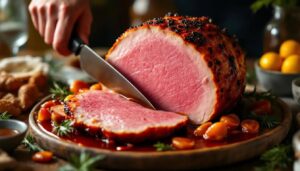

Passover stretches across eight days, and while the seder plate holds its rightful place at the center of that first evening, the rest of the week tends to become a quiet culinary challenge. Matzah fatigue sets in by day three, the leftover brisket runs out by day four, and suddenly the constraints of chametz-free cooking feel less like tradition and more like a puzzle with too many missing pieces. Spring is here — markets in late March overflow with asparagus tips, young leeks, tender herbs, and the first strawberries — and those ingredients belong on your Passover table just as much as they belong in any other spring kitchen.
These nine recipes push past the expected. They respect the rules — no leavened grains, no chametz — while reaching toward flavors that feel alive, seasonal, and genuinely worth cooking. Some draw on Sephardic traditions that have always made Passover food more adventurous. Others use matzah meal, almond flour, or potato starch in ways that bear no resemblance to the dense, gummy textures that give Passover cooking a bad reputation. All nine are built for real weeknight dinners during the holiday week, not just the ceremonial first night.
Lamb shoulder braised with fresh herbs and spring vegetables
Lamb and Passover share a bond that goes back to the very origin of the holiday, but a slow-braised shoulder has more to offer than ceremonial symbolism. Season the meat generously with salt and let it sit uncovered in the refrigerator overnight — this draws moisture to the surface and intensifies the flavor of the crust that forms during searing. Sear in a heavy pot over high heat until the exterior is a deep mahogany, then build the braising liquid with dry white wine, good chicken stock, whole garlic cloves, a few sprigs of fresh rosemary, and the first spring leeks cut into thick rounds. Cook low and slow at 160°C / 325°F for 3 to 3.5 hours. The meat should yield completely to a spoon. Finish the sauce by reducing it on the stovetop until it coats the back of a ladle, then stir in a handful of chopped fresh mint.
Matzah ball soup — the light version
The debate between floaters and sinkers will never end, but the technique behind light matzah balls is worth understanding properly. The key lies in two variables: fat temperature and air incorporation. Schmaltz — rendered chicken fat, which adds both flavor and tenderness — should be melted and slightly cooled before mixing with the eggs. Whipping the eggs briefly before combining creates small air pockets that expand during cooking. Add matzah meal, a pinch of salt, white pepper, and finely chopped fresh dill. Rest the batter in the refrigerator for at least 30 minutes before shaping. Wet your hands lightly, roll with minimal pressure, and drop into barely simmering — never boiling — salted water. Cover the pot completely and resist lifting the lid for 40 minutes. The result is a ball that gives gently under a spoon before yielding entirely.
Roasted asparagus and leek frittata with fresh herbs
Late-March asparagus is arriving at its peak — thin stalks, firm tips, the grassy sweetness that disappears by summer. A Passover frittata built around them makes a compelling lunch or a light dinner alongside a simple salad. Roast the asparagus at 220°C / 425°F for eight minutes until the tips begin to color. Soften sliced leeks in olive oil with a pinch of salt until they go translucent and faintly golden, around ten minutes. Beat eight eggs with a generous pinch of salt, white pepper, and a small handful of chopped flat-leaf parsley and chives. Pour over the leeks in an oven-safe skillet, arrange the asparagus on top, and transfer to the oven at 180°C / 350°F for twelve to fifteen minutes until the center is just set but still carries a faint tremor. Serve at room temperature — it holds better that way.
Sephardic-style stuffed peppers with rice and ground beef
In many Sephardic traditions, rice is permitted during Passover — a divergence from Ashkenazi practice that opens up an entirely different range of dishes. These stuffed peppers follow that tradition. Combine ground beef with cooked white rice, a finely diced onion softened in oil, ground allspice, cinnamon, black pepper, salt, and fresh chopped parsley. The spice combination is distinctly Middle Eastern — warm and aromatic without being sharp. Hollow out red and yellow bell peppers, fill them firmly, and stand them upright in a baking dish. Pour a sauce of crushed tomatoes, a little sugar, and lemon juice around the base. Bake covered at 180°C / 350°F for 1 hour, then uncovered for another 20 minutes until the tops take on some color and the sauce thickens around the edges of the pan.
Almond cake with lemon and olive oil
Almond flour has been central to Passover baking for centuries — long before gluten-free became a broader food category. This cake requires no matzah meal, no potato starch, and no workarounds. Beat four eggs with 200g of sugar until pale and thick, then fold in 250g of finely ground almond flour, the zest of two lemons, the juice of one, 80ml of good olive oil, and a pinch of salt. Pour into a greased and parchment-lined 23cm / 9-inch round pan and bake at 170°C / 340°F for 35 to 40 minutes. The surface should be golden and cracked, the interior dense but moist — closer to a French financier in texture than a conventional cake. Dust with powdered sugar just before serving. It holds well for three days, arguably improving after the first 24 hours as the lemon deepens.
Cauliflower steaks with harissa and fresh mint
A whole cauliflower, sliced into thick steaks and roasted aggressively, develops a caramelized, almost meaty quality that makes it a serious main course rather than an afterthought. Season generously with salt, olive oil, and ground cumin, then roast on a very hot tray at 230°C / 450°F for 20 to 25 minutes, flipping once halfway. While still hot, spread with harissa — a North African chili paste that is naturally chametz-free and available in most supermarkets — and return to the oven for five more minutes. Scatter with torn fresh mint, a squeeze of lemon, and a handful of toasted pine nuts. The contrast between the charred, spiced crust and the cool brightness of the mint is what makes this dish worth eating.
Crispy potato latkes with smoked salmon and crème fraîche
Latkes belong to Hanukkah in popular imagination, but they are equally at home during Passover week — and with spring produce available, there is room to make them feel entirely seasonal. Grate starchy potatoes (such as russets) and one small onion. Squeeze out every possible drop of liquid through a clean kitchen towel — this step determines whether the latkes are crisp or sodden. Add two eggs, 2 tablespoons of potato starch, salt, and white pepper. Fry in a thin layer of neutral oil over medium-high heat until the underside is deeply golden before turning, around 4 to 5 minutes per side. The oil temperature matters: too cool and the latkes absorb fat; too hot and the exterior burns before the interior cooks through. Serve topped with cold smoked salmon, a spoonful of crème fraîche, and fresh dill.
Chocolate and walnut torte with no flour
This torte is dense in the way that good chocolate should be — not heavy, but substantial. Melt 200g of dark chocolate (minimum 70% cocoa) with 150g of unsalted butter over a bain-marie, stirring until perfectly smooth. Remove from heat. Whisk five egg yolks with 150g of sugar until the mixture turns pale and holds a ribbon. Fold the chocolate mixture into the yolks, then stir in 100g of finely chopped toasted walnuts. Whip the five egg whites to soft peaks — the point at which they hold their shape but still carry a slight gloss — and fold in three additions to preserve the air. Bake in a greased springform pan at 170°C / 340°F for 30 minutes. The center will look underdone when it comes out of the oven; that is correct. It firms up as it cools, arriving at a fudgy, crackle-topped result that needs nothing but a light dusting of cocoa powder.
Spring herb chicken with preserved lemon
Preserved lemons are a North African pantry staple that require no adaptation for Passover — just salt, lemon, and time. They add a fermented, intensely aromatic quality that fresh lemon cannot replicate. Loosen the skin of a whole chicken and push a mixture of softened butter, finely chopped flat-leaf parsley, fresh thyme, minced garlic, and the inner flesh of one quarter of a preserved lemon underneath the skin, spreading it as evenly as possible. Rub the exterior with olive oil, salt, and black pepper. Roast on a bed of sliced spring onions and a few sprigs of thyme at 200°C / 400°F for 1 hour 10 minutes, basting twice during cooking. The skin goes lacquered and deeply colored; the meat beneath stays moist from the herb butter. Rest for 15 minutes before carving.
Building a week of passover cooking
The practical value of these nine recipes is that they can be distributed across eight days without repetition and without excessive effort on any single evening. The braised lamb and the stuffed peppers both improve the following day, making them strong candidates for Sunday cooking with Monday eating in mind. The almond cake and the chocolate torte keep well at room temperature for several days, meaning one baking session covers dessert for the better part of the week. The frittata and the cauliflower steaks come together in under 45 minutes — the kind of speed that matters by day five of a week with restricted pantry options.
What connects all nine is a willingness to look at the constraints of Passover cooking as a starting point rather than a limitation. The absence of chametz does not narrow the table — it redirects attention toward ingredients that are at their best right now, in late March and early April: lamb raised on spring pasture, asparagus cut that morning, lemons that carry the last brightness of the citrus season. That is, in its own way, exactly what the holiday is about.
Frequently asked questions
Can these recipes be made ahead of time?
Several of these dishes are designed with advance preparation in mind. The braised lamb shoulder, the stuffed peppers, the almond cake, and the chocolate walnut torte all hold well — and in some cases taste better — after a day of resting. The matzah ball soup components can also be made separately ahead of time: the broth one day, the matzah balls the next. The frittata and the latkes are best made fresh and served within an hour of cooking.
Are all nine recipes suitable for both ashkenazi and sephardic traditions?
Most of the recipes are suitable for both traditions. The stuffed peppers with rice are specifically noted as following sephardic practice, since ashkenazi tradition generally prohibits kitniyot — legumes, rice, and corn — during passover. If you observe ashkenazi customs, the rice in that recipe can be replaced with additional ground beef and finely diced vegetables, though the texture and balance of the dish will change. All other recipes use ingredients that are broadly accepted across both traditions.
What can replace matzah meal in these recipes?
In the matzah ball recipe, matzah meal is central to the structure and cannot be directly replaced without changing the dish significantly. Potato starch can substitute for matzah meal in some binding applications — it is used in the latke recipe for exactly that purpose. For baking, almond flour and finely ground walnuts work well as bases, as demonstrated in the almond cake and the chocolate torte, neither of which uses any grain-based flour.
How do i keep passover cooking from feeling repetitive across eight days?
The key is to vary both the protein and the cooking method from one day to the next. Moving between slow-braised meat, roasted whole chicken, egg-based dishes, and fully vegetable-forward plates like the cauliflower steaks creates enough variety that the chametz restriction rarely becomes the dominant experience of the meal. Leaning into seasonal spring produce — asparagus, leeks, fresh herbs, citrus — also helps: these ingredients carry enough brightness and variety on their own to shift the mood of a dish considerably.
Where can i find preserved lemons if i don't have time to make them?
Preserved lemons are widely available in the international or middle eastern section of most well-stocked supermarkets, as well as in specialty food stores and online. Look for jars with whole lemons or lemon quarters packed in salted brine. Once opened, they keep in the refrigerator for several months. For the spring herb chicken recipe, only the inner flesh — not the rind — is mixed into the herb butter, so a small jar goes a long way.