
Spring has a way of bringing meatballs back to the table — tucked into a slow-simmered tomato sauce, threaded onto skewers for an outdoor dinner, or piled high on a bed of freshly made pasta. Yet for all their apparent simplicity, meatballs have a reputation for going wrong in one very specific, very frustrating way: they come out tight, dense, and bone-dry. You bite through the crust expecting something tender and juicy, and instead you get something closer to a rubber eraser with breadcrumbs. The culprit, almost every time, is the breadcrumb.
Dry breadcrumbs — the fine, sandy kind that come pre-packaged in a canister — are the single most common mistake home cooks make when preparing meatballs. Understanding why they sabotage the texture, and what to use instead, completely changes the result. This article breaks down the science behind meatball texture, exposes the dry breadcrumb problem in detail, and gives you the technique that will make your meatballs genuinely worth eating from now on.
Why dry breadcrumbs ruin meatball texture
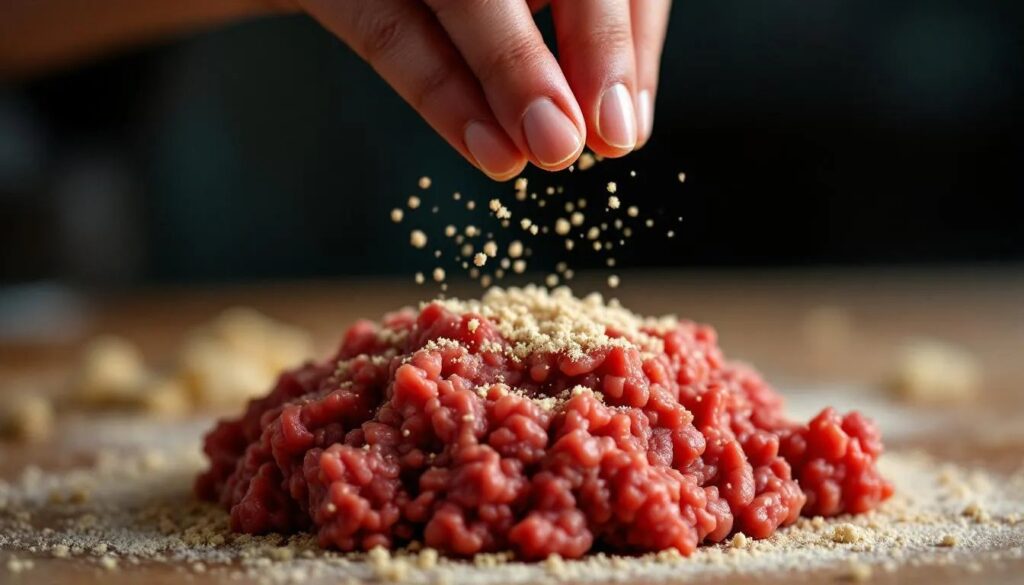
To understand the problem, you need to understand what breadcrumbs are actually supposed to do inside a meatball. Their role is not to bulk out the meat — it is to act as a moisture buffer. Ground beef, when exposed to heat, contracts. The proteins tighten, they squeeze, and they push liquid out. Without something to absorb and hold that liquid inside the mixture, it escapes into the pan, leaving behind a dry, compacted mass of overworked protein.
Breadcrumbs, in theory, intercept that liquid before it can escape. They swell during cooking, hold moisture close to the meat fibers, and create soft pockets of texture that break up the otherwise relentless density of pure ground beef. That is the theory. The problem with dry breadcrumbs is that they are already bone-dry before they ever enter the mixture. They have no moisture to give, and they have very limited capacity to absorb moisture from the meat before cooking begins. So they sit inert inside the mixture, neither contributing nor absorbing, and they begin to draw moisture out of the meat rather than trapping it in.
The result is a meatball that loses more liquid than it should during cooking, shrinks aggressively in the pan, and finishes with a sandy, slightly gritty interior texture. The outside may brown well — dry surfaces do caramelize efficiently — but the inside tells a different story. It is mealy. It is tight. It is the opposite of what a meatball should be.
The panade: the technique that changes everything
Professional kitchens have solved this problem for decades with a simple preparation called a panade — a mixture of bread or breadcrumbs soaked in a liquid, typically milk or broth, until fully saturated and softened into a paste. The panade is folded into the ground beef before any other mixing occurs, and it transforms the interior texture of the finished meatball entirely.
When you soak fresh or even dried breadcrumbs in whole milk and let them sit for five to ten minutes, something important happens. The bread absorbs the liquid completely, swells, and softens into a loose, almost pudding-like consistency. Mixed into the ground beef, this saturated paste distributes moisture evenly throughout the mixture. During cooking, as the beef proteins contract and attempt to push liquid outward, the panade intercepts it. The already-hydrated bread holds that moisture in suspension, releasing it slowly and keeping the interior of the meatball soft and yielding even after a full fifteen minutes in a hot oven or a rolling simmer in sauce.
The ratio that works reliably is two tablespoons of liquid per twenty-five grams of breadcrumbs, or roughly one slice of crustless white bread soaked in three tablespoons of whole milk per five hundred grams of ground beef. Fresh, crustless white bread torn into small pieces works even better than dried crumbs because it retains more moisture and integrates more smoothly into the mixture.
The mixing problem: why less is more
Dry breadcrumbs are not the only factor ruining meatballs; they are often accompanied by a second mistake: overmixing. Ground beef contains myosin, a protein that becomes increasingly sticky and elastic the more it is worked. When you knead meatball mixture aggressively, you develop a protein network similar to what happens when you overwork bread dough. The mixture becomes dense, springy, and resistant to tenderness, no matter what you add to it.
The correct approach is to combine all ingredients — the panade, the egg, the aromatics, the seasoning — in a bowl, and then fold everything together with your hands using the minimum number of movements required to achieve an even distribution. Twenty to thirty seconds of gentle folding is sufficient. The mixture should look slightly shaggy and irregular. That irregularity is not a flaw; it is a sign that you have not overworked the proteins.
Fat content matters as much as the binder
Another variable that interacts directly with the breadcrumb issue is the fat content of the ground beef itself. Lean mince — anything below fifteen percent fat — produces drier meatballs regardless of the binder you use, because fat carries flavor, conducts heat gently through the interior, and provides lubrication between the protein strands. Ground beef with fifteen to twenty percent fat content is the standard for meatballs that stay moist and carry flavor well. Butchers in early spring often have excellent fresh-ground beef available, particularly chuck or a chuck-and-brisket blend, both of which hit that fat percentage naturally and bring more beefy depth than pre-packaged extra-lean mince.
Temperature and resting: the final variables
Even with a correct panade and a well-chosen fat content, meatballs cooked at the wrong temperature will lose their moisture rapidly. A very hot oven — above 450°F (230°C) — will set the exterior quickly but drive moisture out of the interior too aggressively. The reliable approach is to brown the meatballs in a wide, heavy pan with a neutral oil over medium-high heat, turning them until a deep mahogany crust forms on all sides, and then finish them either in a gentle oven at 350°F (175°C) for twelve to fifteen minutes, or directly in a simmering sauce over low heat for the same duration.
Resting matters here as it does with any piece of cooked meat. Three to five minutes off the heat allows the interior moisture to redistribute before you cut or bite into them. Meatballs served directly from the pan have already pushed a significant amount of their remaining juice onto the plate before they reach the table.
My chef's note
The single most reliable upgrade to any meatball recipe is replacing the dry breadcrumb entirely with a torn slice of day-old white bread soaked in warm whole milk. Tear the bread into rough pieces, pour the milk over, and press gently with a fork after five minutes to encourage absorption. Fold this paste into your beef before adding anything else. At the end of March, when spring garlic starts appearing at market stalls, add two cloves of finely grated fresh spring garlic to the mixture — it has a brightness and a gentleness that dried garlic powder simply cannot replicate, and it perfumes the meatballs from the inside out.
In brief: what to do instead
Dry breadcrumbs from a canister are a convenience product designed for coatings and toppings. Inside a meatball mixture, they actively work against the result you want. Replace them with a panade made from fresh or slightly stale white bread and whole milk. Handle the mixture minimally. Choose ground beef with a proper fat content. Brown carefully, finish gently, rest briefly. The difference between a dry, dense meatball and one with a genuinely tender, juicy interior is not a question of secret ingredients — it is a question of understanding what the breadcrumb is actually supposed to do, and giving it the moisture it needs to do its job.
Nutritional values (per meatball, approx. 60 g, approximate values)
| Nutrient | Amount |
|---|---|
| Calories | ~145 kcal |
| Protein | ~11 g |
| Carbohydrates | ~6 g |
| of which sugars | ~1 g |
| Fat | ~9 g |
| Fiber | ~0.3 g |
Frequently asked questions
Can I use panko breadcrumbs instead of a panade?
Panko performs better than fine dry breadcrumbs because its larger, coarser flakes absorb liquid more readily. That said, even panko should be soaked in milk or broth before being added to the mixture rather than used straight from the bag. A brief five-minute soak in equal parts panko and liquid will give you a workable panade that integrates cleanly into the beef.
What liquid works best for the panade — milk, broth, or water?
Whole milk is the standard choice because its fat content adds richness and its proteins help bind the mixture gently. Warm beef or chicken broth is an excellent alternative and adds a layer of savory depth. Water works technically but contributes nothing in terms of flavor. Avoid skimmed milk, which has less to offer than whole milk and can make the panade slightly watery.
Why do my meatballs fall apart during cooking?
If meatballs are falling apart, the mixture is either too wet, insufficiently bound, or being moved too early in the searing process. A properly seared meatball will release naturally from the pan once a crust has formed — forcing it before that point tears the surface and causes collapse. One whole egg per five hundred grams of beef is sufficient binder. If the mixture feels very loose before cooking, a short rest of fifteen minutes in the refrigerator will firm it up without toughening it.
Does cooking meatballs directly in sauce affect the texture?
Yes, and generally in a favorable way for tenderness — the gentle, moist heat of a simmering tomato sauce creates an environment that keeps the interior soft. The trade-off is that the meatballs will not have a browned, caramelized exterior unless you sear them first. For the best result, sear until colored on all sides, then transfer into the sauce and finish cooking there. The sauce also absorbs the fond left in the pan, which deepens its flavor considerably.
Can meatball mixture be prepared ahead of time?
The mixture can be made and refrigerated, covered tightly, for up to twenty-four hours before shaping and cooking. Resting overnight actually improves the result: the bread absorbs the surrounding moisture more completely, the seasoning distributes more evenly, and the mixture becomes easier to shape. Formed, uncooked meatballs can also be frozen on a tray and then transferred to a bag for up to three months, cooked directly from frozen at a slightly lower temperature with a few extra minutes added to the cooking time.