
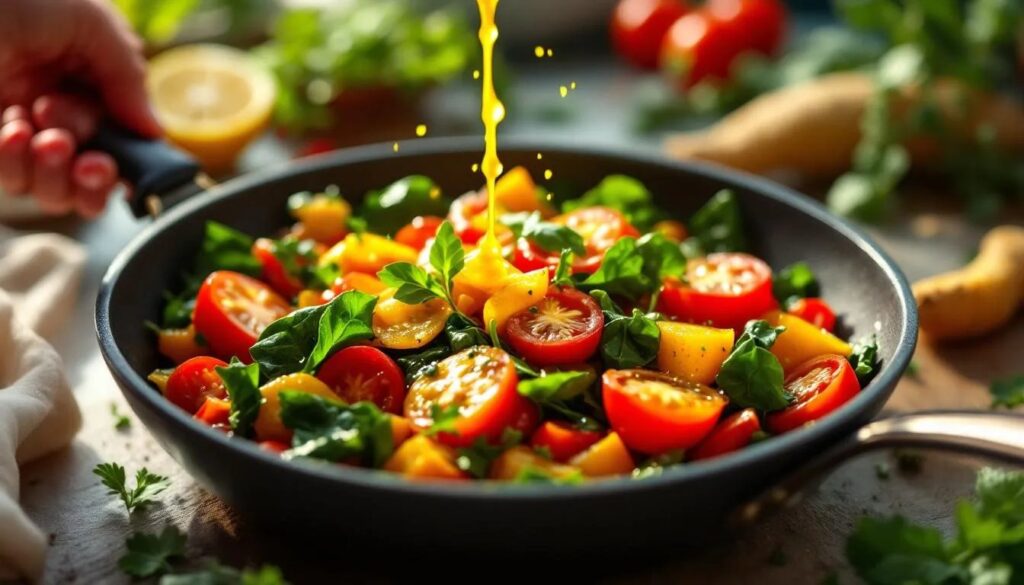
Spring light is back, the farmers' market stalls are stacked with asparagus bundles and fresh peas, and the body—after months of heavier winter cooking—quietly asks for something that nourishes rather than weighs. Anti-inflammatory eating isn't a trend built on restriction; it's a way of choosing ingredients that actively support the body's natural balance, reducing low-grade inflammation linked to fatigue, joint discomfort, and sluggish digestion. And a cast-iron or stainless skillet, it turns out, is the perfect vehicle for that ambition: fast enough for a weeknight, hot enough to build real flavor.
The twelve dinners gathered here draw on the season's finest produce—think tender spring onions, bright turmeric-stained broths, wild salmon, chickpeas, and generous handfuls of herbs—combined with cooking techniques that preserve nutrients rather than destroy them. Each recipe follows the same logic: one pan, a short active cooking time, and a finished plate that is as visually alive as it is satisfying. Pick up your skillet and let the season do most of the work.
What makes a dinner anti-inflammatory?
Before diving into the recipes, it helps to understand the underlying architecture. An anti-inflammatory plate is built around a few consistent pillars: omega-3 fatty acids (found in fatty fish, walnuts, flaxseeds, and chia), polyphenols (concentrated in deeply colored vegetables, extra-virgin olive oil, and fresh herbs), fiber-rich legumes and whole grains that feed beneficial gut bacteria, and anti-inflammatory spices—turmeric, ginger, black pepper, and cinnamon leading the list. Refined sugars, industrial seed oils, and ultra-processed ingredients work in the opposite direction and are quietly absent from every dish below.
Spring makes this approach almost effortless. The season delivers quercetin-rich asparagus, sulforaphane-packed broccoli, anticoagulant and antioxidant-dense spinach, and peas bursting with plant protein and chlorophyll. Wild-caught salmon and sardines reach excellent quality at this time of year. Olive oil—harvest batches from the previous autumn—is at peak freshness. The pantry and the market align perfectly.
The 12 skillet dinners
1. Turmeric salmon with spring asparagus and lemon
A skin-on salmon fillet seared in a hot cast-iron skillet develops a crust that locks in the EPA and DHA omega-3 fatty acids within. A rub of ground turmeric, black pepper—which increases curcumin absorption by up to ~20 times, according to current research—and smoked paprika goes on first, at least fifteen minutes before cooking. Blanched asparagus spears join the pan for the final three minutes, finishing with a squeeze of lemon and a handful of fresh dill. The whole dinner is ready in under 25 minutes.
2. Ginger chicken and snap pea stir-fry
Thinly sliced chicken thighs—richer in zinc and iron than breast meat—are seared over high heat with fresh ginger, garlic, and a splash of tamari. Sugar snap peas, still crisp, go in for the last two minutes alongside spring onions and toasted sesame seeds. Fresh ginger contains gingerols, active compounds associated with reduced muscle soreness and digestive ease. Serve over brown rice or cauliflower rice for a fully balanced plate.
3. Sardine and cherry tomato skillet with capers and herbs
Sardines are among the most nutrient-dense anti-inflammatory proteins available—high in omega-3s, vitamin D, and selenium—and they thrive in a hot skillet with nothing more than olive oil, a crushed garlic clove, and a punnet of cherry tomatoes that collapse into a rough sauce. Capers add brininess and a dose of quercetin. Fresh flat-leaf parsley finishes the dish. Whole-wheat bread alongside makes the meal complete.
4. White bean and kale skillet with lemon tahini
Creamy cannellini beans provide both plant protein and soluble fiber, which feeds the gut microbiome and supports steady blood sugar. Lacinato kale is wilted briefly in olive oil with garlic and chili flakes, then combined with the beans and a drizzle of tahini thinned with lemon juice and water. The result is satisfying without heaviness—a dinner that works equally well the following day as a cold lunch.
5. Spiced chickpea and spinach skillet
Canned chickpeas, drained and patted dry, go into a dry skillet first to develop a slight crispness, then are joined by canned tomatoes, ground cumin, coriander, turmeric, and smoked paprika. A generous pile of baby spinach collapses into the sauce in under a minute. An egg poached directly in the pan—optional but recommended—adds a yolk rich in choline and fat-soluble vitamins. A spoonful of full-fat yogurt on top cools the spice and contributes active cultures.
6. Wild shrimp with garlic, fennel, and white wine
Fennel, whose fronds and bulb both contain anethole—a compound studied for its anti-inflammatory properties—softens slowly in olive oil before wild shrimp join the pan. A splash of dry white wine deglazes the fond, creating a light, fragrant sauce. Crushed walnuts scattered on top add omega-3s and crunch. This dinner takes under 20 minutes from cold pan to table.
7. Rainbow trout with walnut-herb crust
A whole rainbow trout fillet, skin side down in a hot oiled skillet, cooks almost entirely from radiant heat without needing to be flipped—a technique that keeps the flesh moist. A mixture of crushed walnuts, fresh thyme, lemon zest, and a pinch of sea salt is pressed onto the flesh side before cooking, forming a crust as the pan heat rises through the fish. Served alongside a simple salad of raw spring radishes and pea shoots dressed in apple cider vinegar.
8. Turkey and vegetable skillet with turmeric broth
Ground turkey—leaner than beef and a solid source of tryptophan, a precursor to serotonin—browns quickly in a wide skillet with diced zucchini, spring onions, and shredded carrot. Ladle turmeric-spiked broth, reduced for five minutes, creating a loose, golden sauce. Finished with fresh coriander and a squeeze of lime, this dish has a brightness that feels entirely suited to an April evening.
9. Lemon herb tofu with spring vegetables
Firm tofu, pressed and cubed, develops a golden exterior when it meets a properly heated, lightly oiled skillet. The key is patience: do not move the cubes for at least 3 minutes per side. Once colored, it joins blanched asparagus tips, fresh peas, and a dressing built from lemon juice, Dijon mustard, and extra-virgin olive oil. Nutritional yeast stirred through at the end adds a savory depth along with B vitamins.
10. Grass-fed beef and broccoli with ginger-sesame glaze
Grass-fed beef contains a notably higher ratio of omega-3 to omega-6 fatty acids compared with conventionally raised beef—a distinction that matters when the goal is inflammation reduction. Thin strips of sirloin are seared fast and hard, then removed while the broccoli florets and stems cook briefly in the same pan with freshly grated ginger, garlic, and a glaze of tamari, rice vinegar, and a small amount of raw honey. The beef returns for thirty seconds before serving.
11. Cod with olive tapenade and cherry tomatoes
Cod is a mild, lean white fish that absorbs surrounding flavors readily. A thick fillet, seasoned simply, sears skin-side down until the flesh turns opaque two-thirds of the way up. A spoonful of green olive tapenade—olives being rich in oleocanthal, a compound that mimics the anti-inflammatory action of ibuprofen at molecular level, according to published research—goes on top before the pan finishes under the broiler for two minutes. Halved cherry tomatoes, blistered briefly in the same pan, complete the plate.
12. Miso-glazed eggplant with edamame and brown rice
Eggplant slices, salted and rinsed to remove bitterness, caramelize beautifully in a cast-iron skillet with just a thin layer of sesame oil. A glaze of white miso, mirin, and a few drops of rice vinegar is brushed on during the final two minutes of cooking. Edamame—a complete plant protein containing all essential amino acids—is stirred through warm cooked brown rice as the base. Scattered black sesame seeds and thinly sliced scallions close the dish.
Building your anti-inflammatory skillet pantry
Twelve dinners become infinitely more practical when the pantry behind them is consistent. The staples that recur across these recipes share a common logic: they are shelf-stable, nutrient-dense, and flexible enough to combine in dozens of directions. Keep extra-virgin olive oil as the default cooking fat for medium-heat applications, and reserve sesame oil for finishing. Stock ground turmeric and black pepper together—they are always used as a pair. A rotation of canned legumes (chickpeas, cannellini, lentils) and sustainable canned fish (sardines, wild salmon) gives the week a protein backbone that requires no thawing.
Fresh spring produce should be bought often and in smaller quantities to ensure peak freshness and maximum polyphenol content. Asparagus, peas, and spinach deteriorate quickly; plan to use them within two to three days of purchase. Ginger root keeps well in the freezer and grates directly from frozen—a practical detail worth remembering on a rushed Tuesday evening.
| Ingredient category | Spring skillet stars | Key anti-inflammatory compound |
|---|---|---|
| Fatty fish | Salmon, sardines, trout | EPA & DHA omega-3s |
| Leafy greens | Spinach, kale, arugula | Quercetin, vitamin K |
| Spices | Turmeric, ginger, cinnamon | Curcumin, gingerols |
| Legumes | Chickpeas, white beans, edamame | Fiber, plant protein |
| Healthy fats | Extra-virgin olive oil, walnuts | Oleocanthal, ALA omega-3 |
| Spring vegetables | Asparagus, snap peas, fennel | Sulforaphane, anethole |
Skillet technique: getting it right
An anti-inflammatory ingredient list does not automatically produce a good dinner—technique matters. The most consistent error home cooks make with a skillet is adding protein to a pan that is not yet properly hot. A pan that is insufficiently heated causes the protein to steam rather than sear, losing both color and flavor. A simple test: a drop of water should evaporate on contact within one second. Oil goes in after this point, and protein follows ten seconds later.
For vegetables, the opposite instinct applies: a slightly lower heat and a patient, undisturbed cook produces caramelization that sweetens and deepens flavor. Overcrowding the pan is the single most common cause of steamed, pale vegetables. Work in batches when the volume is large, and the results will be noticeably better. These are not abstract principles—they are the difference between a skillet dinner that feels like a compromise and one that earns its place at the center of the table.
Questions frequently asked
Can I use a non-stick pan instead of cast iron for these recipes?
A non-stick pan works for most of these recipes, particularly the fish and tofu dishes where sticking is a common concern. However, non-stick surfaces should not be heated to the very high temperatures required for a proper sear on beef or chicken thighs—at those heat levels, the coating can degrade. For high-heat applications, a stainless-steel or cast-iron skillet produces significantly better results and is worth the investment.
Are these dinners suitable for meal prep?
Most of the legume-based and grain-based dishes—the spiced chickpea skillet, the white bean and kale, and the miso eggplant—hold well refrigerated for up to three days. Fish dishes are best eaten the day they are prepared; reheated fish loses texture rapidly and the omega-3 fatty acids are more sensitive to prolonged heat. The turkey and vegetable skillet reheats well with a small splash of water added to the pan.
How do I know if an olive oil is truly extra-virgin and not refined?
Genuine extra-virgin olive oil has a harvest date—not just a best-before date—on the label and is typically bottled in dark glass to protect against oxidation. It should taste slightly peppery at the back of the throat: that sensation is oleocanthal, the compound responsible for much of its anti-inflammatory activity. Oils that taste flat or purely fatty are likely refined blends, regardless of what the label claims. Buy from reputable producers and aim to use each bottle within three months of opening.
What is the best way to incorporate these dinners into a weekly routine without it feeling rigid?
The most sustainable approach is to treat these twelve dinners as a rotating pool rather than a fixed schedule. Cook two or three per week, varying protein sources between fatty fish, legumes, and lean meat. Consistently keep the pantry staples stocked—olive oil, canned legumes, spices, frozen wild fish—so that any of the recipes can be assembled without a dedicated shopping trip. Over four weeks, the body registers the cumulative effect of consistent anti-inflammatory eating more than any single perfect day of nutrition.
Is black pepper really necessary when cooking with turmeric?
From a nutritional standpoint, yes—piperine, the active compound in black pepper, has been shown in multiple studies to dramatically increase the bioavailability of curcumin from turmeric, with some estimates citing an enhancement of ~20 times. A small pinch is sufficient. The flavor impact is negligible in most savory dishes, and including it offers strong nutritional benefits, making it a consistent habit whenever turmeric is used.