


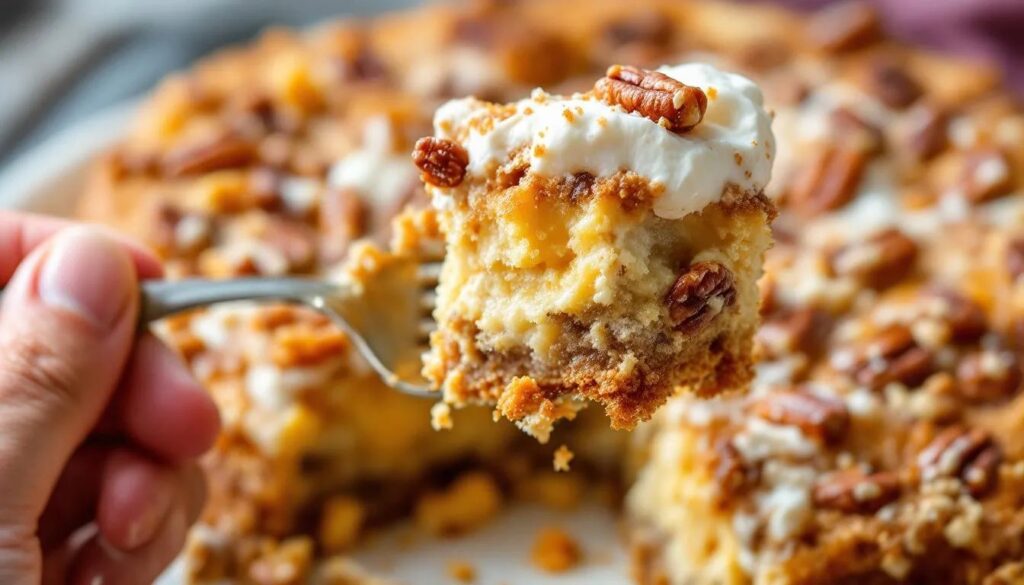
Spring is properly here, and with it comes the urge to bake something that feels generous and a little bit Southern — without spending an entire afternoon in the kitchen. Hummingbird dump cake answers that call with minimal effort and maximum reward. It borrows all the warm, fruity character of the classic hummingbird cake — crushed pineapple, ripe banana, a whisper of cinnamon — and strips the method down to its bare, beautiful bones: open, pour, layer, bake.
No creaming butter, no alternating dry and wet ingredients, no three-tiered frosting operation. A box of yellow cake mix does the structural heavy lifting, while canned fruit and a generous scattering of brown sugar do the rest. The result is somewhere between a cobbler and a self-saucing pudding: caramelized at the edges, soft and almost jammy at the center, with the kind of aroma that pulls people into the kitchen before it has even finished baking. Preheat the oven and keep reading.
| Preparation | 10 min |
| Cooking | 45 min |
| Portions | 10–12 people |
| Difficulty | Easy |
| Cost | $ |
| Season | Ripe bananas, canned pineapple — available year-round, perfect in spring |
Suitable for: Vegetarian
Ingredients
For the fruit base
- 1 can (20 oz / ~565 g) crushed pineapple, undrained
- 3 very ripe bananas, mashed (the spottier, the better)
- ½ cup (100 g) packed brown sugar
- 1 tsp ground cinnamon
- ½ tsp vanilla extract
- ½ cup (80 g) chopped pecans or walnuts
- ½ cup (75 g) shredded sweetened coconut (optional but traditional)
For the topping
- 1 box (15.25 oz / ~432 g) yellow cake mix
- ¾ cup (170 g) unsalted butter, cold, cut into thin slices
- ½ cup (50 g) additional pecans, roughly chopped, for finishing
To serve
- Vanilla ice cream or lightly sweetened whipped cream
Equipment
- 9×13-inch (23×33 cm) baking dish
- Large mixing bowl
- Fork or potato masher
- Sharp knife and cutting board
- Oven
Preparation
1. Prepare the oven and the dish
Heat the oven to 350°F (175°C). There is no need to grease the baking dish — the fruit and butter will release enough moisture and fat to prevent sticking. Place the dish on a large rimmed baking sheet before sliding it into the oven; this catches any bubbling juices that spill over the edge during baking, which they often do, especially around the 40-minute mark when the caramel action really kicks in.
2. Build the fruit layer
In a large bowl, combine the crushed pineapple with all its juice, the mashed bananas, the brown sugar, the cinnamon and the vanilla extract. Stir until everything is evenly distributed — the mixture will look loose and wet, and that is exactly right. The liquid from the pineapple is what creates the self-saucing effect at the bottom of the dish as it bakes. Pour this mixture directly into the ungreased baking dish and spread it level. Scatter the chopped pecans and the shredded coconut (if using) over the top of the fruit in an even layer.
3. Add the cake mix layer
Open the box of cake mix and tip the dry powder directly over the fruit — do not mix, do not stir, do not be tempted. Spread it gently with the back of a spoon until it covers the fruit completely and evenly, right to the edges and corners. This dry layer is what absorbs the rising fruit juices during baking, creating a texture that is half cake, half cobbler crust: sandy and golden on the surface, dense and moist underneath.
4. Lay the butter across the surface
This is the move that makes the whole thing work. Arrange the cold, thin-sliced butter across the surface of the cake mix, covering as much of the powder as possible — think of it like tiling a floor with small, pale squares. As the butter melts in the oven, it saturates the cake mix from above while the fruit juices rise from below, cooking the dry powder from both directions simultaneously. Any patches of cake mix left exposed by the butter will remain slightly crumbly and powdery after baking, which is worth taking the extra two minutes to avoid. Scatter the remaining chopped pecans over the butter slices.
5. Bake to a deep golden finish
Slide the baking dish (on its tray) into the center of the oven and bake for 40 to 50 minutes. The cake is ready when the top is deep golden brown, the edges are bubbling visibly, and the center gives just a very slight wobble when nudged — not liquid, but not completely rigid. Resist pulling it out too early: the color needs to go further than you think, because that caramelization is where most of the flavor lives. Remove from the oven and allow to rest for at least 15 minutes before serving; the juices need time to settle and thicken slightly.
Chef's tip
The single most important variable in this cake is the ripeness of your bananas. Underripe fruit is starchy and almost flavorless once baked; fully ripe, heavily spotted bananas bring concentrated sweetness and a floral note that makes the tropical character of the dish sing. If your bananas are not quite there yet, place them unpeeled on a baking sheet in a 300°F (150°C) oven for 15 to 20 minutes until the skins are black and the flesh is completely soft — a perfectly valid shortcut. In late spring, some farmers' markets carry ultra-ripe bananas at a steep discount: that is exactly the moment to make this cake.
Drinks & dessert pairings
Hummingbird dump cake sits somewhere between a tropical fruit cobbler and a warm spiced pudding, so it pairs best with drinks that either echo its sweetness or cut through it with some acidity or effervescence.
A chilled glass of Muscat de Beaumes-de-Venise works beautifully — its apricot and stone-fruit notes mirror the banana and pineapple without overpowering them. For something lighter, a sparkling Moscato d'Asti brings fizz and a lower alcohol level that suits an afternoon gathering. For a non-alcoholic option, a cold-brew iced coffee or a spiced chai served over ice offers the bitterness needed to balance the caramelized sweetness of the topping.
About hummingbird cake
The original hummingbird cake — a layered Southern American classic filled with pineapple, banana, pecans and a generous cream cheese frosting — is believed to have first appeared in print in Southern Living magazine in the late 1970s, where it became one of the most-requested recipes in the publication's history. Its name is thought to refer either to the hummingbird of Jamaica (the cake has Caribbean roots through its tropical fruit combination) or simply to the idea that it is sweet enough to attract those tiny, nectar-loving birds.
The dump cake format borrows that same flavor DNA — the banana, the pineapple, the toasted pecans, the cinnamon warmth — and applies the no-fuss dump-and-bake method that became popular in American home cooking in the 1980s. Where the original requires skill, patience and a considerable amount of cream cheese frosting, this version asks for almost nothing and delivers something that is genuinely its own thing: looser, jammier, more casual, and perhaps more honest about what it is trying to be.
Nutritional values (per portion, approximate values)
| Nutrient | Amount |
|---|---|
| Calories | ~390 kcal |
| Protein | ~3 g |
| Carbohydrates | ~58 g |
| of which sugars | ~38 g |
| Fat | ~17 g |
| Fiber | ~2 g |
Frequently asked questions
Can this be made ahead of time?
The assembled, unbaked dish can be covered and refrigerated for up to 8 hours before baking — useful if you are serving it at a dinner party and want to get the prep out of the way in advance. Add 5 to 8 extra minutes to the baking time if going straight from fridge to oven. The baked cake can also be made a day ahead and reheated, loosely covered with foil, at 300°F (150°C) for 15 to 20 minutes until warmed through.
How should leftovers be stored?
Cover the baking dish tightly with plastic wrap or transfer leftovers to an airtight container. They keep well in the refrigerator for up to 4 days. The texture will firm up considerably once cold, becoming more pudding-like — which some people actually prefer. Reheat individual portions in the microwave for 45 to 60 seconds, or return the whole dish to a 325°F (160°C) oven until warmed through.
What substitutions work well here?
The yellow cake mix can be swapped for a spice cake mix, which deepens the cinnamon and clove notes and leans the cake further towards autumn flavors — a worthwhile variation come October. Walnuts work in place of pecans. For a dairy-free version, use a good-quality vegan butter cut into thin slices in the same way; the result is nearly identical. If crushed pineapple is unavailable, canned mango makes a compelling alternative that keeps the tropical profile intact.
Why is there still dry cake mix visible after baking?
This is almost always a butter-coverage issue. If patches of dry mix remain powdery after the full baking time, it means those areas were not reached by either the melting butter above or the fruit juices below. For your next bake, slice the butter thinner and arrange the pieces so they overlap very slightly, ensuring complete coverage. Some bakers also drizzle 2 to 3 tablespoons of cold water over any obviously bare patches of cake mix before putting the dish in the oven — a reliable fix without changing the flavor.
Can this be made in a smaller or differently sized pan?
A square 9×9-inch (23×23 cm) dish works for a smaller batch — use half the quantities of everything and reduce the baking time to around 30 to 35 minutes, checking for that deep golden color and bubbling edges. Avoid using a round cake pan, as the corners of the rectangular dish play an important role in catching the caramelized fruit juices and crisping the edges of the topping.