



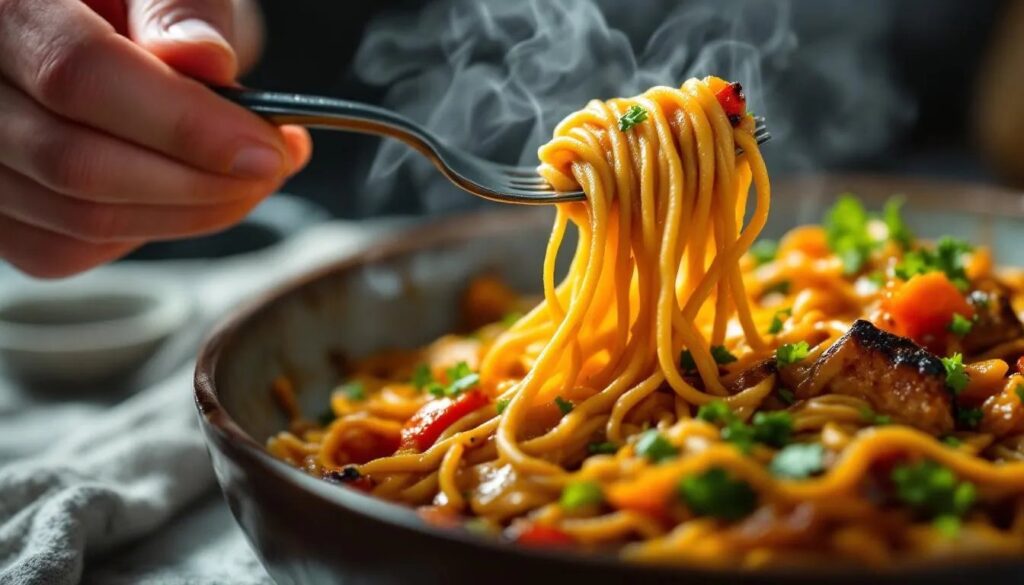
As March draws to a close and the first tentative warmth of spring begins to soften the days, there is still every reason to keep the oven running. Evenings in late March carry a residual chill — the kind that makes you want something substantial, something that fills the kitchen with a deep, spiced fragrance and arrives at the table in one piece, from a single tin. Georgina Hayden's spiced roast noodle traybake does exactly that: it takes the humble sheet pan and turns it into something genuinely unexpected, where dried noodles roast directly in the tray, absorbing fat and spice as they crisp and tangle in the heat.
Hayden has built a reputation for recipes that sit at the intersection of ease and genuine flavor — food that feels considered without demanding hours of your evening. This traybake borrows from the pantry-led, spice-forward cooking she has championed across her books, and it arrives at the right moment: when you want the satisfaction of a proper dinner without the attention a stovetop demands. Pull on your apron and clear a shelf in the oven.
| Preparation | 15 min |
| Cooking | 35 min |
| Portions | 4 people |
| Difficulty | Easy |
| Cost | £ |
| Season | Spring onions, dried noodles, pantry spices |
Suitable for: Vegetarian (adaptable) · High in carbohydrates · Dairy-free
Ingredients
- 300 g dried medium egg noodles (or dried rice noodles for a dairy-free, gluten-free version)
- 4 tablespoons neutral oil, such as sunflower or vegetable
- 2 teaspoons ground cumin
- 2 teaspoons ground coriander
- 1 teaspoon smoked paprika
- 1 teaspoon ground turmeric
- ½ teaspoon dried chilli flakes, plus more to finish
- 4 garlic cloves, finely grated
- 2 tablespoons soy sauce
- 1 tablespoon runny honey
- 200 ml hot vegetable or chicken stock
- 1 bunch spring onions, trimmed and cut into 3 cm lengths
- 2 medium carrots, peeled and cut into fine matchsticks
- 150 g frozen edamame beans, defrosted
- 2 limes, 1 zested and juiced, 1 cut into wedges for serving
- Small bunch of fresh coriander, leaves picked
- 2 tablespoons toasted sesame seeds
- 4 eggs (optional, for serving)
Equipment
- Large deep-sided roasting tin (approximately 30 x 40 cm)
- Small bowl or measuring jug
- Box grater or fine Microplane grater
- Tongs or two large forks for tossing
- Small frying pan (if serving with fried eggs)
- Kitchen scales
Preparation
1. Preheat the oven and build the spice base
Set your oven to 220°C / 200°C fan / gas mark 7 and allow it to come to full temperature before anything goes in — a fierce, consistent heat is what transforms the noodles from soft and limp to something with bite and a faintly toasted edge. While the oven heats, measure the oil, ground cumin, ground coriander, smoked paprika, turmeric, chilli flakes, grated garlic, soy sauce and honey directly into your large roasting tin. Use a spoon or a pastry brush to mix and spread the paste evenly across the base of the tin. This coating is what every noodle will eventually cling to, so taking a moment here to distribute it properly pays off in the eating.
2. Prepare and coat the noodles
Break the dried noodles into the roasting tin, snapping them roughly in half if they are long — this makes the final dish easier to serve and ensures they fit in an even layer. Pour the hot stock over the noodles and toss everything together with tongs, working the spiced oil mixture through the broken noodles until each strand is visibly coated. The noodles will absorb the liquid as they cook, so make sure the stock reaches every corner of the tin. Scatter the spring onion pieces and carrot matchsticks over the top, pressing them lightly into the noodles rather than leaving them to sit proud on the surface, where they would char before the noodles are ready.
3. Roast the traybake
Transfer the tin to the hot oven and roast for 20 minutes. At the halfway point — around 10 minutes in — pull the tin out and give everything a thorough toss with tongs, lifting the noodles from the bottom where they have already started to catch and color. This redistribution is not optional: the noodles at the edge of the tin cook faster than those in the center, and one good turn keeps the whole thing uniform. Return the tin to the oven and continue roasting. You are looking for noodles that range from deep golden and slightly crisped at the edges to just-tender at the heart — a range of textures in a single bake, which is precisely what makes the dish interesting.
4. Add the edamame and finish with citrus
With about 5 minutes of cooking time remaining, scatter the defrosted edamame beans across the tin and return it to the oven. The beans need only a brief blast of heat to warm through — too long and they toughen and lose their fresh, grassy sweetness. Once the timer is up, remove the tin from the oven and immediately squeeze the zested lime over the surface. The juice hits the hot noodles and creates a brief, sharp steam — an instant lift that cuts through the fat and spice. Scatter over the lime zest, the picked coriander leaves and the toasted sesame seeds. Taste a strand of noodle: the balance should be warm, spiced, slightly sweet from the honey, with a clean citrus edge at the finish.
5. Serve
Bring the tin straight to the table. If you are serving this with fried eggs, cook them in a small frying pan in a little oil while the noodles are in their final five minutes, aiming for whites that are set but yolks that remain runny — the yolk will break and coat the noodles as you eat, adding a richness that turns this from a side dish into a complete meal. Set lime wedges alongside for anyone who wants an extra squeeze at the table.
Chef's tip
The single most common mistake with roast noodle traybakes is using too shallow a tin. A deep-sided roasting tin holds the noodles close enough together that they steam slightly in their own moisture before crisping — a shallower tin spreads them too thin and risks burning rather than toasting. If you find your noodles are taking on color very quickly around the edges, cover the tin loosely with foil for the first half of cooking and remove it to allow things to crisp up at the end. In spring, when you might find young purple sprouting broccoli still lingering at the market, it makes a superb addition: toss a handful of small florets in a drizzle of oil and lay them over the noodles for the final 12 minutes of roasting.
Wine and drink pairings
The spice profile here — warm cumin and coriander, a whisper of chilli, brightness from lime — calls for a drink that can hold its own against the heat without amplifying it.
An off-dry German Riesling from the Mosel, with its characteristic tension between residual sweetness and cutting acidity, handles the chilli and the soy with composure. The fruit — green apple, lime zest, white peach — mirrors what is already in the tin. For a more accessible alternative, a chilled Viognier from the Languedoc brings apricot and floral notes that work well with the turmeric. Those avoiding alcohol will find a ginger and yuzu sparkling water, or a lightly sweetened green tea served cold, every bit as considered a pairing.
About this dish
Roasting dried pasta or noodles directly in a tray without pre-cooking them is a technique that has migrated steadily into mainstream home cooking from more regional, practiced traditions — most notably from the Middle Eastern practice of toasting dried vermicelli in butter before simmering it in stock, which gives the finished dish its characteristic nutty depth. The traybake format as Georgina Hayden applies it is distinctly contemporary: it collapses prep, cooking vessel and serving dish into one, and works within the specific constraints of a busy household week rather than around them.
Hayden's cooking has always drawn on her Cypriot heritage while remaining open to influences from across the Mediterranean, the Middle East and East Asia — and this recipe reflects that range. The spice blend owes a debt to North African chermoula, while the soy-and-honey glaze and the sesame finish pull the dish firmly into a pan-Asian register. It is not fusion for its own sake; it is the way people actually cook now, using the pantry they actually have. As spring approaches and lighter evenings begin to return, it fits the mood precisely — substantial enough for a cold night, sharp enough to feel awake.
Nutritional values (per portion, approximate values)
| Nutrient | Amount |
|---|---|
| Calories | ~520 kcal |
| Protein | ~18 g |
| Carbohydrates | ~68 g |
| of which sugars | ~9 g |
| Fat | ~18 g |
| Fibre | ~6 g |
Frequently asked questions
Can this traybake be prepared in advance?
The spice paste and chopped vegetables can be prepared several hours ahead and kept covered in the fridge. The noodles, however, are best roasted immediately before serving — they lose their textural contrast as they sit, the crisped sections softening as they cool. If you need to get ahead, pre-measure all the dry spices into a bowl and cut the vegetables, then assemble and roast just before you want to eat.
How should leftovers be stored and reheated?
Transfer any leftover noodles to an airtight container and refrigerate for up to two days. Reheat them in a hot oven — 200°C / 180°C fan — for around 8–10 minutes rather than using a microwave, which makes the noodles uniformly soft. Spread them in a single layer on a baking sheet to help restore some of the original texture. Add the fresh herbs and a fresh squeeze of lime only after reheating.
What substitutions can be made to the recipe?
The egg noodles can be replaced with dried rice vermicelli for a gluten-free version; reduce the oven temperature slightly to 200°C / 180°C fan and check them at 15 minutes, as they cook faster. Edamame can be swapped for frozen peas, canned chickpeas (drained and dried) or shredded cooked chicken added for the final 5 minutes. In early spring, a handful of tender spinach leaves stirred through the finished dish just before serving adds both color and iron without any additional cooking time.
Can the heat level be adjusted?
The recipe as written produces a mild background warmth rather than outright heat. For a more assertive chilli presence, increase the dried flakes to a full teaspoon and finish the dish with a drizzle of chilli oil at the table. For a version suitable for children, omit the chilli flakes entirely from the spice paste and serve with a bottle of hot sauce on the side for adults.
Does the recipe work with fresh noodles?
Fresh noodles are not suitable here — they contain too much moisture and will steam rather than roast, resulting in a soft, clumped mass rather than the varied textures the dish is built around. The technique depends specifically on dried noodles, which gradually hydrate from the stock while simultaneously crisping where they make contact with the hot fat and the tin. Stick with dried for the result Hayden intends.