


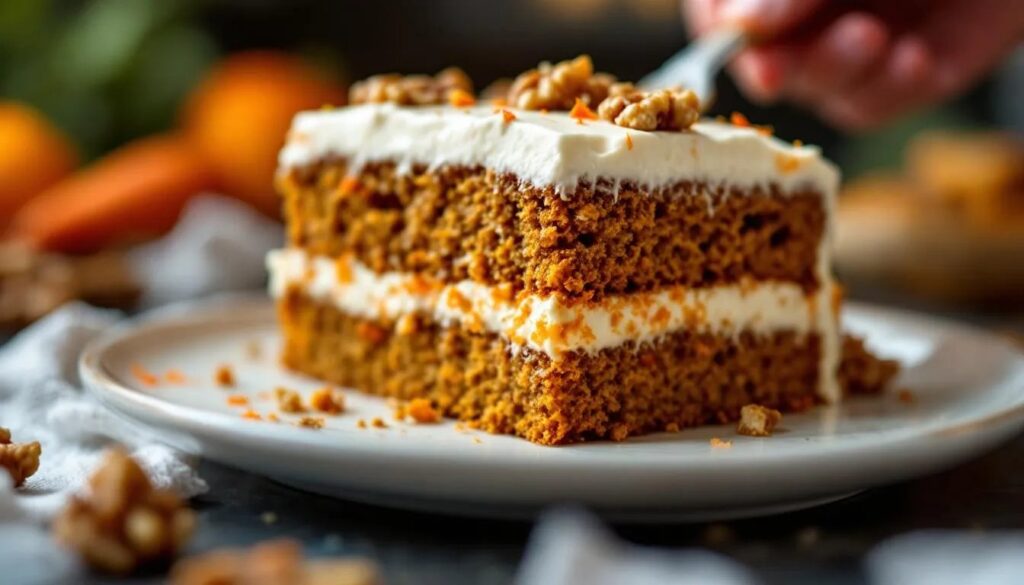
Late March is right at that threshold where winter finally loosens its grip and spring tentatively steps in — and carrot cake, with its warm spice, earthy sweetness, and generous cream cheese frosting, bridges both worlds perfectly. Carrots are at a brilliant point right now: the new season roots have arrived at farmers' markets with a crunch and sweetness that the tired winter batches simply lacked. This is the moment, right before strawberries and rhubarb steal the show, when a proper carrot cake makes absolute sense.
Several weeks were spent baking through four carrot cake recipes attributed to well-known chefs and food writers — testing them against one another for texture, depth of flavor, structural integrity, and that undefinable quality that makes a cake feel like it was made with genuine care. One recipe stood clearly above the rest. It is not the flashiest, not the most technically demanding — but it produced a cake so tender, so warmly spiced, and so generously frosted that every tester reached for a second slice without a word of hesitation. Here is everything you need to recreate it at home, along with notes on what the other three contenders got right and wrong.
| Preparation | 30 min |
| Cooking | 35 min |
| Cooling | 60 min |
| Portions | 10–12 slices |
| Difficulty | Medium |
| Cost | $$ |
| Season | New-season carrots, fresh walnuts, spring eggs |
Suitable for: Vegetarian
Ingredients
For the cake
- 300 g all-purpose flour
- 2 tsp baking powder
- 1 tsp baking soda
- ½ tsp fine sea salt
- 2 tsp ground cinnamon
- 1 tsp ground ginger
- ¼ tsp freshly grated nutmeg
- ¼ tsp ground cloves
- 300 g light brown sugar, packed
- 240 ml neutral vegetable oil (sunflower or grapeseed)
- 4 large eggs, at room temperature
- 2 tsp pure vanilla extract
- 360 g freshly grated carrots (approximately 5 medium carrots)
- 120 g toasted walnuts, roughly chopped
- 80 g crushed pineapple, well drained
For the cream cheese frosting
- 450 g full-fat cream cheese, cold
- 115 g unsalted butter, at room temperature
- 360 g powdered sugar, sifted
- 1 tsp pure vanilla extract
- 1 pinch fine sea salt
- 1 tsp freshly squeezed lemon juice
Equipment
- Two 9-inch (23 cm) round cake pans
- Parchment paper
- Box grater or food processor with grating attachment
- Two large mixing bowls
- Whisk
- Rubber spatula
- Stand mixer or hand mixer with paddle attachment
- Wire cooling rack
- Offset spatula
- Serrated knife
Preparation
1. Prepare the pans and preheat the oven
Set your oven to 350°F (175°C) and position a rack in the center. Grease both 9-inch round pans generously with butter or cooking spray, then line the bottoms with parchment paper circles and grease the parchment as well. This double protection is not overcaution — carrot cake, with its high moisture content from both the carrots and the oil, has a tendency to stick stubbornly if the pan is not properly prepared. Dust each pan lightly with flour and tap out the excess. Set them aside while you prepare the batter.
2. Grate the carrots — freshly and coarsely
Peel your carrots and grate them on the large holes of a box grater. This is a step worth doing by hand rather than delegating to a food processor — the processor tends to shred carrots into fine, wet fragments that release too much liquid during baking, resulting in a gummy crumb. The large-hole grater produces longer, coarser strands that soften beautifully in the oven while retaining enough structure to give each bite a pleasant, barely-there chew. Do not wring out the grated carrots or pat them dry: that natural moisture is a deliberate part of the recipe's texture equation. Weigh out 360 g and set aside.
3. Whisk together the dry ingredients
In a large bowl, combine the flour, baking powder, baking soda, salt, cinnamon, ginger, nutmeg, and cloves. Whisk for a full 30 seconds — this is your sifting equivalent, dispersing the leavening agents and spices evenly through the flour so that no pocket of batter ends up with an uneven concentration of either. The smell at this stage should already be promising: warm, resinous, gently peppery from the ginger, with the cloves adding a dark, almost smoky undertone.
4. Beat the wet ingredients until the sugar is fully dissolved
In a separate large bowl, whisk together the brown sugar and oil until the mixture is smooth and slightly glossy, about 1 minute. The oil and sugar will not emulsify the way butter and sugar do when creamed — this is intentional. An oil-based carrot cake stays moister for longer than a butter-based version, because oil remains liquid at room temperature while butter solidifies. Add the eggs one at a time, whisking well after each addition. The batter should become slightly thicker and a shade paler after the eggs go in. Stir in the vanilla extract. Finally, fold in the drained pineapple — it adds an almost imperceptible tropical sweetness and an extra boost of moisture without making the cake taste fruity.
5. Combine wet and dry, then fold in the carrots and walnuts
Add the dry ingredients to the wet in two additions, folding with a rubber spatula rather than whisking. Switch to folding the moment the flour disappears — over-mixing, or working the batter beyond the point of incorporation, develops the gluten in the flour and produces a tough, dense crumb instead of the tender, open texture you are after. Once the batter is just combined and no dry streaks remain, add the grated carrots and fold them in with six to eight broad strokes. Add the toasted walnuts and fold again briefly. The batter will be thick, a deep amber-orange, speckled with walnut and carrot.
6. Bake, test, and resist the urge to open the oven early
Divide the batter evenly between the two prepared pans — a kitchen scale makes this straightforward. Smooth the tops lightly with your spatula. Transfer to the preheated oven and bake for 32 to 36 minutes, rotating the pans once at the halfway point to account for any uneven heat distribution. The cakes are ready when a wooden skewer inserted into the center comes out with just a few moist crumbs attached, the tops are deep golden-brown, and the edges have pulled very slightly away from the sides of the pan. Do not open the oven before the 25-minute mark — the batter is still structurally fragile before then, and a sudden drop in temperature can cause the center to sink.
7. Cool completely before frosting
Let the cakes rest in their pans on a wire rack for 15 minutes, then turn them out, peel off the parchment, and leave them to cool completely, right-side up. Completely means cool to the touch at the center — typically another 45 minutes at room temperature. Frosting a warm cake is one of the most common home-baker mistakes: the butter in the cream cheese frosting will melt on contact, turning a structured frosting into a thin, sliding glaze that pools on the plate rather than sitting proudly on the cake.
8. Make the cream cheese frosting
Using a stand mixer fitted with the paddle attachment — or a hand mixer — beat the room-temperature butter on medium speed for 2 minutes until it is pale and fluffy. Add the cold cream cheese and beat for another 2 minutes. The contrast in temperatures is deliberate: the soft butter provides the structure and body, while the cold cream cheese keeps the frosting from becoming too loose. Reduce the speed to low and add the sifted powdered sugar in three additions, mixing just until incorporated after each. Add the vanilla, lemon juice, and pinch of salt, then increase to medium and beat for 1 final minute. The finished frosting should be thick enough to hold a clean swirl, brilliantly white, and tangy enough to offset the sweetness of the cake.
9. Level, fill and frost
If either cake layer has domed slightly during baking, use a serrated knife to level it with a gentle sawing motion — a flat surface ensures the layers stack without sliding. Place the first layer on a serving plate or cake board, cut-side up. Apply a generous layer of frosting — roughly one third of the total — spreading it to the edges with an offset spatula. Place the second layer on top, cut-side down. Apply the remaining frosting across the top and down the sides. For a more rustic, inviting finish, leave the sides semi-naked — frosted but with the cake visible through a thin coat — and swirl the top with the back of a spoon. Finish with a handful of additional walnut halves pressed into the top, if desired.
Chef's tip
Toast your walnuts before adding them to the batter — spread them on a dry baking sheet and give them 8 minutes at 325°F (160°C), shaking once halfway through. Toasting drives off moisture, intensifies their natural oils, and eliminates the faint bitterness that raw walnuts can carry. The difference in the finished cake is noticeable. In spring, when you find young, freshly cracked walnuts at the market, use them without hesitation — their flavor is noticeably cleaner and less tannic than the shelf-stable bags that have been sitting since autumn. For a different kind of warmth, try replacing the walnuts with toasted pecans and adding a quarter teaspoon of cardamom to the spice mix.
Drink pairings
Carrot cake's spice profile — cinnamon, ginger, nutmeg — and its rich cream cheese frosting pair well with drinks that either echo that warmth or cut through the fat with brightness and acidity.
A well-made chai latte is the intuitive choice, and for good reason: the shared spice vocabulary creates a seamless, enveloping combination. For something more restrained, a lightly brewed Darjeeling second flush — with its characteristic muscatel note — complements the frosting without being overwhelmed by it. If you want to serve wine, a glass of Sauternes or a late-harvest Riesling from Alsace provides the honeyed, slightly acidic counterpoint that the richness of the cake needs. The lemon in the frosting will make a dry wine taste harsh, so choose a sweet wine.
The story behind carrot cake
Carrot cake's origins are older than its current reputation as a 1970s health-food bakery staple might suggest. Medieval European bakers used carrots as a sweetener at a time when sugar was scarce and expensive — their natural sugars and high moisture content made them a practical, affordable substitute. Carrot puddings and carrot breads appear in British cookbooks as far back as the 17th century, and a version close to what we recognize today was popular in Switzerland during and after the Second World War, when the country promoted carrot-based desserts as part of its wartime frugality campaigns.
The cream cheese frosting pairing, now so synonymous with carrot cake that it is almost impossible to imagine one without the other, is almost certainly an American innovation of the mid-20th century. The combination of that tangy, fatty frosting with the spiced, moist cake transformed the recipe from an earnest, austere thing into the celebratory, unapologetically generous cake it is today. American food writers and home economics teachers popularized it through the 1960s and 1970s, and the addition of crushed pineapple — which appears in many of the most beloved versions, including this one — seems to date from roughly the same period, possibly drawing on the broader American enthusiasm for fruit-enriched baked goods.
Nutritional information (per slice, approximate values)
| Nutrient | Amount |
|---|---|
| Calories | ~520 kcal |
| Protein | ~7 g |
| Carbohydrates | ~58 g |
| of which sugars | ~42 g |
| Fat | ~29 g |
| Fiber | ~2 g |
Frequently asked questions
Can carrot cake be made a day ahead?
Yes — it actually improves with a night in the refrigerator. The spices continue to develop, and the moisture from the carrots redistributes through the crumb, making the texture even more tender by the next day. Bake and frost the cake, cover it loosely with plastic wrap, and refrigerate overnight. Remove it from the refrigerator about 30 minutes before serving to take the chill off.
How should leftover carrot cake be stored?
Because of the cream cheese frosting, carrot cake must be stored in the refrigerator — at room temperature, the frosting softens significantly and food safety becomes a concern after two hours. Cover the cake (or individual slices) with plastic wrap or store in an airtight container. It keeps well for up to 5 days refrigerated. The cake layers alone, unfrosted, can be wrapped tightly in plastic wrap and frozen for up to 3 months.
Can the recipe be adapted for dietary restrictions?
For a dairy-free version, replace the cream cheese frosting with a coconut cream-based frosting: whip the solid part of two chilled cans of full-fat coconut cream with powdered sugar, vanilla, and a small amount of coconut oil until stiff. It will not have the same tang but it works well. The cake itself is already dairy-free. For a gluten-free version, a 1-to-1 gluten-free flour blend can be substituted, though the texture will be slightly denser, and you should add one additional egg to compensate.
Why is there pineapple in carrot cake?
Crushed pineapple contributes moisture, a subtle tropical sweetness, and a small amount of natural acidity that brightens the overall flavor profile without making the cake taste of pineapple. It is one of those background ingredients that you notice more by its absence than its presence — cakes baked without it tend to taste slightly flatter and dry out faster. Make sure the pineapple is very well drained before adding it; excess liquid will throw off the batter's hydration balance.
What made the winning recipe different from the other three?
The three other recipes we tested each had identifiable flaws: one used melted butter instead of oil, producing a firmer, drier crumb that staled noticeably within 24 hours; another called for pre-shredded carrots and whipped them into the batter with a mixer, resulting in a damp, slightly gluey texture; the third was technically accomplished but so restrained in its spicing — a single teaspoon of cinnamon, no ginger or nutmeg — that it tasted closer to a plain oil cake with orange flecks. The winning recipe succeeded because of its balance: generous spicing, oil for longevity, coarsely grated fresh carrots for texture, and the small but effective addition of pineapple for depth. One tester noted that it tasted like something a skilled home baker had been making for twenty years and had quietly perfected.