



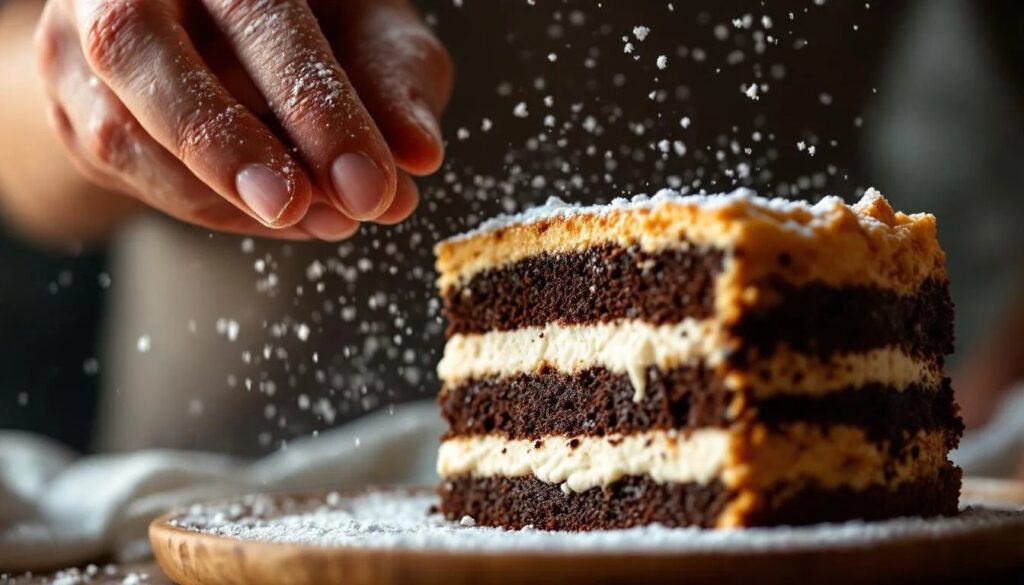
Spring is barely here, and already the internet has found its dessert of the season. The Holy Cow Cake is exactly what its name promises: a layered, over-engineered, unapologetically excessive chocolate creation that borrows from the best of American poke cake tradition and refuses to stop there. Caramel seeps into a warm chocolate cake, whipped topping blankets the whole thing, crushed toffee bars and chocolate cookies finish it off — and somehow, none of it feels like too much once you take that first bite. This is the kind of dessert that silences a room.
What makes this cake worth your Saturday afternoon is the technique: the poke method allows the caramel and sweetened condensed milk mixture to travel deep into the crumb, making every single square a fully saturated, fudgy experience rather than a dry base topped with decoration. The toppings are not an afterthought — they are structural, textural, essential. If you have been looking for a showstopper that requires no piping skills, no stand mixer magic, and no pastry diploma, this is the one to pull out for Easter weekend or any spring gathering where the dessert table needs to earn its place.
| Prep Time | 20 min |
| Baking Time | 30 min |
| Resting Time | 2 hours (refrigeration) |
| Servings | 15–18 people |
| Difficulty | Easy |
| Cost | $$ |
| Season | Year-round · perfect for spring holidays |
Ingredients
For the cake base
- 1 box (15.25 oz) chocolate fudge cake mix (plus eggs, oil, and water as directed on the box)
- 1 can (14 oz) sweetened condensed milk
- 1 jar (12 oz) caramel sauce or caramel ice cream topping
For the topping
- 1 container (8 oz) frozen whipped topping (such as Cool Whip), thawed
- 4 Heath toffee bars (or equivalent chocolate-covered toffee bars), roughly crushed
- 10–12 Oreo cookies or chocolate sandwich cookies, coarsely crushed
- 3 tbsp caramel sauce, for drizzling
- 2 tbsp chocolate syrup, for drizzling
Equipment
- 9×13-inch baking pan
- Wooden spoon handle or a thick dowel (for poking holes)
- Mixing bowls
- Rubber spatula
- Small saucepan or microwave-safe bowl
- Zip-lock bag and rolling pin (for crushing toffee and cookies)
- Offset spatula or the back of a large spoon
Method
1. Bake the chocolate base
Prepare your chocolate fudge cake mix according to the package instructions, using the eggs, oil, and water specified. Pour the batter into a greased 9×13-inch pan, spreading it evenly to the corners with a rubber spatula. Slide it into an oven preheated to 350°F (175°C) and bake for 28 to 32 minutes, or until a toothpick inserted in the center comes out with just a few moist crumbs — not wet batter, not bone dry. The surface should spring back lightly when pressed near the center. This distinction matters: an overbaked cake will not absorb the caramel mixture as generously, and the whole premise of the Holy Cow Cake depends on that absorption.
2. Poke while it's still warm
Pull the cake from the oven and let it sit for exactly 5 minutes — warm enough to still be receptive, cool enough not to steam everything apart. Using the rounded handle of a wooden spoon, poke holes across the entire surface of the cake, spacing them roughly 1 inch apart. Press down firmly so the holes reach about two-thirds of the way through the cake. The goal here is to create channels — capillary tunnels of sorts — through which the liquid filling will travel. The more generous and evenly spaced the holes, the more consistently saturated every portion will be.
3. Pour the caramel-condensed milk mixture
In a small saucepan over low heat (or in a microwave in 30-second increments), gently warm the sweetened condensed milk and caramel sauce together, whisking until smooth and pourable — this should take no more than 2 minutes. The mixture should have the consistency of a thick but fluid syrup. Pour it slowly and evenly over the entire surface of the warm cake, paying particular attention to the holes, tilting the pan slightly if needed to encourage the mixture to flow in. Watch it disappear into the crumb: this is the moment the cake stops being ordinary. Allow it to settle for 10 minutes at room temperature before refrigerating.
4. Refrigerate until fully set
Cover the pan loosely with plastic wrap and refrigerate for a minimum of 2 hours, though overnight yields a markedly better result. The resting time allows the caramel mixture to firm up slightly inside the crumb, transforming the texture from spongy to dense, fudgy, and almost brownie-like in the best possible way. Don't rush this step — a cold, fully set base is far easier to top cleanly.
5. Apply the whipped topping
Remove the pan from the refrigerator and spoon the thawed whipped topping across the entire surface of the cake. Using an offset spatula or the back of a large spoon, spread it into an even layer that reaches all four corners. The layer should be generous but not mounded — roughly half an inch thick — so the toppings have something to grip without sliding off. Work with a light hand: pressing too hard will compress the cake and displace the caramel-soaked crumb underneath.
6. Add the toppings
This is where the Holy Cow earns its name. Scatter the crushed Heath toffee bars across the whipped topping in an even layer — the shards should be varied in size, some fine enough to almost dissolve against the cream, others large enough to deliver a proper crunch. Follow with the crushed Oreo cookies, distributing them so that every future square of cake will contain both textures. Finally, drizzle the additional caramel sauce and chocolate syrup over the top in loose, crossing lines — no need for precision here, the visual chaos is part of the appeal. Return the pan to the refrigerator for another 30 minutes to allow everything to settle before slicing.
Chef's Tip
The single most impactful upgrade you can make to a Holy Cow Cake is to swap the jarred caramel sauce for a homemade salted caramel — just sugar, cream, butter, and a pinch of fleur de sel. The depth of flavor compared to a jarred product is significant, and the slight bitterness of a properly cooked caramel balances the sweetness of the condensed milk and whipped topping far more effectively. For spring occasions, a small handful of lightly toasted pecans scattered alongside the toffee adds both season-appropriate warmth and a pleasant contrast to the softness of the rest of the cake. If you're making this for Easter weekend, a dusting of cocoa powder over the finished drizzle gives it a more polished, gift-ready appearance.
Pairing
A dessert this rich and caramel-forward asks for a beverage that either mirrors its intensity or cuts through it entirely — there is very little middle ground that works.
On the coffee side, a cold brew concentrate served over ice is the natural companion: its bitterness provides the counterpoint the cake's sweetness needs, and the temperature contrast is genuinely satisfying. For those who prefer something warm, a Guatemala or Sumatra single-origin espresso — both regions known for their dark chocolate and caramel-adjacent tasting notes — will echo the cake rather than fight it. If alcohol enters the picture, a small pour of bourbon (neat or over a single cube) complements the toffee elements with remarkable precision. A ruby port is equally valid for a more dessert-wine oriented crowd.
About the Holy Cow Cake
The Holy Cow Cake belongs to the proud American tradition of poke cakes, a technique that rose to prominence in the 1970s when Jell-O began appearing in doctored box-cake recipes circulated through community cookbooks and church fundraisers across the Midwest. The poke method was never about elegance — it was about maximizing flavor penetration with minimal effort, a democratic approach to dessert that prioritized taste and accessibility over presentation. Over the decades, the flavors migrated from fruit gelatin toward caramel, chocolate, and cream-based fillings, and the Holy Cow variant — with its toffee-bar topping — represents the natural endpoint of that evolution: more is more, and then a little more on top of that.
The name itself is colloquial American for astonished disbelief, and it does exactly what it promises on the label. Versions of this cake circulate under slightly different names — Cow Patty Cake in some regional cookbooks, Better Than Anything Cake in others — but the architecture is consistent: chocolate base, caramel-condensed milk soak, whipped topping, and Heath bars. What distinguishes contemporary versions is the addition of crushed cookies for textural contrast, a touch that has become standard in the last decade of food blogging. There is no definitive origin chef, no patented recipe — just a shared, evolving idea of what maximum dessert impact looks like.
Nutritional Information (per serving, approximate values)
| Nutrient | Amount |
|---|---|
| Calories | ~480 kcal |
| Protein | ~5 g |
| Carbohydrates | ~68 g |
| of which sugars | ~52 g |
| Fat | ~21 g |
| Fiber | ~1 g |
Frequently Asked Questions
Can this cake be made in advance?
Absolutely — and it is actually better when made the day before. The caramel-condensed milk mixture needs time to fully set inside the crumb, and an overnight rest in the refrigerator deepens the fudgy texture considerably. Add the whipped topping and toppings no earlier than 4 to 6 hours before serving to keep the crushed cookies from going completely soft, though some softening is both inevitable and pleasant.
How should leftovers be stored?
Cover the pan tightly with plastic wrap or transfer individual portions to an airtight container. The cake keeps well in the refrigerator for up to 4 days. Freezing is possible — without the whipped topping and toppings — for up to 2 months; thaw overnight in the fridge, then apply the topping layer fresh before serving.
Can I make this from scratch instead of using a box mix?
Yes. A straightforward chocolate sheet cake made with Dutch-process cocoa, buttermilk, and browned butter will give you a noticeably richer base. The key requirement is that the crumb remains moist and relatively open-textured — an overly dense homemade cake will resist the caramel soak. If you go that route, pull it from the oven slightly earlier than you normally would, as the residual heat will continue cooking it while you prepare the holes.
What can I substitute for Heath bars?
Any chocolate-covered toffee or butterscotch brittle works well — Daim bars are an excellent European equivalent. For a nut-forward variation, crushed praline or candied pecans replace the toffee bars nicely and add a more artisanal feel to the finished cake. Crushed graham crackers can stand in for the Oreos if you prefer a milder, less intensely chocolate topping layer.
Is there a way to make this slightly less sweet?
The sweetness comes primarily from the condensed milk, the jarred caramel, and the whipped topping. Replacing the whipped topping with lightly sweetened crème fraîche or a stabilized unsweetened whipped cream brings the overall sugar level down and adds a pleasant tang that offsets the caramel. Using a dark chocolate cake mix (70% cocoa or higher, if baking from scratch) also introduces bitterness that counterbalances the soak.