


Easter weekend arrives with that particular light—longer afternoons, the first real warmth of spring, tables set with pastel linens, and the faint smell of chocolate already drifting from the kitchen. The pressure to produce something that looks impressive is real, especially when the whole family gathers and everyone's eyes go straight to the dessert table. Yet, the gap between a beautiful Easter sweet and a genuinely achievable one is far smaller than most home bakers assume.
The 21 desserts gathered here sit firmly in that sweet spot: they photograph like they came from a patisserie window, but every single one can be made in a home kitchen without professional equipment, obscure ingredients, or a pastry degree. Spring's best produce—fresh lemon, ripe strawberries, fragrant vanilla, good-quality chocolate—does most of the heavy lifting. Read on, pick your favorites, and set aside a Saturday afternoon.
Chocolate & egg centerpieces
1. Cracked chocolate easter egg tart
A dark chocolate tart shell—made by pressing a cocoa-enriched shortcrust into a loose-bottomed tin—holds a silky ganache (a mixture of melted chocolate and warm cream) that sets firm enough to slice cleanly. The finishing touch: a hollow chocolate egg placed in the center and cracked open just before serving, scattering pastel mini eggs across the surface. The contrast between the matte, slightly bitter shell and the glossy filling pulls every eye in the room. Chill time: 2 hours.
2. Chocolate bird's nest cupcakes
Standard chocolate sponge cupcakes, piped with a swirl of chocolate buttercream, then topped with a nest of toasted shredded coconut tinted with a drop of green food coloring. Three small speckled eggs sit inside each nest. The visual payoff is absurdly high for the effort involved. The toasted coconut brings a faint caramel note that cuts through the richness of the buttercream.
3. Molten chocolate easter lava cakes
Individual ramekins of bittersweet chocolate fondant—the kind that releases a slow tide of liquid chocolate when a spoon breaks through the crust—served with a scoop of vanilla ice cream and a scattering of pastel candy-coated chocolate eggs. The batter can be prepared the morning of and refrigerated; the cakes bake in exactly 12 minutes at 400 °F. Few desserts offer such drama with so little last-minute effort.
4. Easter rocky road bark
Melted milk and dark chocolate, swirled together on a lined baking tray, then scattered with mini marshmallows, crushed digestive biscuits, dried cherries, and a generous handful of broken Easter eggs before setting in the refrigerator. Once firm, it breaks into jagged, generous shards. It requires no baking, no tempering, and no special skill—just good chocolate and the restraint not to eat half the toppings before they reach the tray.
5. Hot cross bun bread & butter pudding
Day-old hot cross buns, split and buttered, layered in a baking dish with a custard of eggs, whole milk, cream, caster sugar, and a generous scraping of vanilla. The spiced fruit in the buns perfumes the entire custard as it bakes, and the tops of the buns blister and caramelize into a lacquered crust. This is Easter leftovers at their finest: a second life that outdoes the original.
Spring fruit showstoppers
6. Lemon curd layer cake
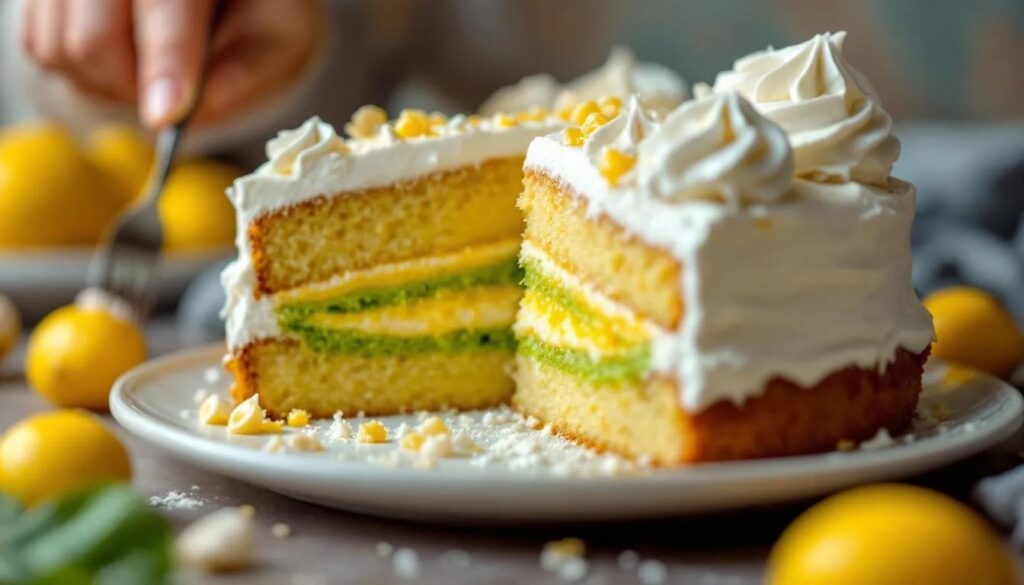
Three layers of light génoise—a sponge made airy by folding in whipped whole eggs rather than creaming butter—sandwiched with homemade lemon curd and a tangy whipped cream-cream cheese frosting. The exterior is left deliberately textured with a palette knife, not smooth, which makes it look artisan without requiring a steady hand. Decorated with edible flowers and a few sugared lemon slices, it is the kind of cake that silences a room when carried to the table.
7. Strawberry & cream choux swans
Classic pâte à choux—a dough made by beating eggs into a cooked flour-butter-water paste—piped into elongated swan shapes: a large teardrop body, a curved neck. Once baked hollow and golden, the bodies are filled with whipped cream and sliced spring strawberries, the necks tucked in like a real bird settling on water. They look like they require a French apprenticeship. They require only a piping bag and confidence in the process.
8. Rhubarb & custard tart
The first forced rhubarb of the season—shocking pink, tender, barely needing any sugar—arranged over a crème pâtissière (a thick, egg-yolk-enriched custard set with cornflour) in a blind-baked shortcrust shell. The visual contrast between the vivid pink stalks and the pale yellow custard needs no further decoration. A brief glaze of warmed apricot jam gives it the patisserie sheen. Late March rhubarb is at its most vibrant and least fibrous: use it now.
9. Lemon posset with shortbread soldiers
One of the simplest desserts in British cooking: cream and sugar boiled together, lemon juice stirred in, the mixture poured into small glasses and chilled until set. The acid in the lemon reacts with the proteins in the cream, firming it without gelatin into something between a panna cotta and a curd. Served with crisp, buttery shortbread fingers for dipping. Assembled the night before, they require no attention on the day itself.
10. Elderflower & gooseberry fool
Stewed gooseberries—sharp, jammy, yielding—folded through lightly sweetened whipped cream with a splash of elderflower cordial. Served in tall glasses with a sprig of fresh mint and a dusting of icing sugar. The tartness of the gooseberry cuts the fat of the cream in a way that makes each spoonful feel lighter than it is. If gooseberries are unavailable, early-season forced rhubarb works just as well.
No-bake & chill-set treats
11. Chocolate cheesecake easter eggs
Hollow chocolate egg shells—bought from any supermarket—used as edible molds for a no-bake vanilla cheesecake filling made from cream cheese, whipped cream, icing sugar, and vanilla. The filling is piped in and chilled until firm, then the chocolate shell is peeled away to reveal a perfectly shaped cheesecake egg, decorated with a drizzle of white chocolate and dried raspberry pieces. The effect is theatrical; the technique is forgiving.
12. Simnel cake cheesecake
A no-bake cheesecake inspired by the classic simnel cake: a base made from crushed ginger biscuits and butter, a filling flavored with mixed spice, orange zest and dried fruit, topped with a disc of rolled marzipan and eleven small marzipan balls—representing the eleven faithful apostles, as tradition dictates. The marzipan is briefly torched with a kitchen blowtorch for color, transforming the surface into something that looks considerably more laborious than it is.
13. Mini easter egg pavlovas
Individual meringue nests—crisp on the outside, yielding and marshmallowy within—piled with lightly whipped cream, a spoonful of lemon curd, and a tangle of spring berries. Shaping them into shallow nests rather than flat discs takes only a spoon, and the visual result is unmistakably Easter. Meringues can be made two days ahead and stored in an airtight tin; the assembly takes minutes.
14. Carrot cake truffles
Leftover carrot cake—or a quickly baked traybake specifically for the purpose—crumbled and mixed with cream cheese frosting until it forms a pliable dough. Rolled into balls, chilled until firm, then dipped in white chocolate and rolled in orange-tinted desiccated coconut with a tiny marzipan leaf on top. They look like miniature carrots. They taste exactly as they sound. They disappear first.
15. Speckled egg panna cotta
Classic vanilla panna cotta, set in egg-shaped molds (silicone ones are widely available and inexpensive), turned out onto a plate of mango coulis. A scattering of speckled foil-wrapped chocolate mini eggs completes the tableau. The panna cotta itself—cream, sugar, gelatin, vanilla—is made in one saucepan and requires no skill beyond patience while it sets overnight.
Baked classics, elevated
16. Carrot & walnut layer cake with brown butter cream cheese frosting
The standard carrot cake, improved at two points: toasted walnuts in the batter rather than raw ones, and a frosting made with cream cheese whipped together with beurre noisette—butter cooked until its milk solids turn deep gold and nutty. The frosting takes on a faint caramel depth that changes the whole character of the cake. Decorated with marzipan carrots pressed gently into the top, it looks like it required twice the effort it actually did.
17. Hot cross bun loaf cake
All the flavor of hot cross buns—mixed spice, orange zest, plump sultanas, a cross of white icing—in the format of a simple loaf cake that requires no proving, no shaping, and no yeast. The batter comes together in one bowl and bakes in under an hour. It slices cleanly, keeps well for three days, and pairs perfectly with a thick spread of salted butter.
18. Easter bunny biscuits
A classic sablé biscuit dough—butter, icing sugar, egg yolk, flour—cut with a bunny-shaped cutter and baked to a pale golden edge. Once cooled, they are decorated with royal icing (icing sugar, meringue powder, water) tinted in pastel yellow, lavender, and mint. The icing dries hard and glossy. Even modestly decorated biscuits look polished when arranged on a board; children and adults compete equally for the best one.
19. Spiced olive oil orange cake
A moist, deeply fragrant cake made with olive oil rather than butter, blood orange zest, cardamom, and a small amount of ground almond. The texture is tender and keeps without drying for several days—an advantage when baking ahead for a crowd. Finished with a blood orange glaze and a few slices of candied orange, it looks like something from a Mediterranean bakery counter and has the simplicity of a one-bowl recipe.
20. Coconut & lime easter wreath cake
A ring-shaped coconut sponge, baked in a bundt tin, drenched while still warm with a lime syrup that seeps into every crumb. Once cooled and turned, it is dusted with icing sugar, scattered with toasted coconut flakes, and garlanded with small spring flowers and lime zest. The ring shape reads instantly as a wreath, which reads instantly as Easter, without a single additional decoration required.
21. Marzipan-stuffed baked peaches with pistachios
Ripe peaches—or nectarines, which are arriving in markets from Spain and North Africa this time of year—halved and stoned, each cavity filled with a nugget of soft marzipan mixed with crushed amaretti biscuits and lemon zest. Baked in a moderate oven until the fruit softens and the marzipan colors at the edges. Scattered with chopped pistachios and served with a spoonful of crème fraîche. Seasonal, elegant, and ready in under 30 minutes.
Planning your easter dessert table
The most reliable approach is to spread the work across three days. Pastry cases, meringues, biscuit bases, and sponge layers all keep well when wrapped airtight; ganaches and curds can be made and refrigerated two days ahead; assembly and decoration happen the morning of Easter Sunday. Choosing one baked showstopper, one no-bake option, and one simple bite-sized sweet gives any table variety of texture, temperature, and effort without overwhelming a single afternoon.
Spring this year arrives with strawberries earlier than usual in warmer growing regions, forced rhubarb still firm and vivid in markets, and blood oranges entering their final weeks of the season. Any dessert that relies on fresh lemon or orange zest will be at its most aromatic right now, when the fruit is cold-pressed and fragrant. Buy unwaxed citrus wherever possible: the zest from a treated fruit is a different thing entirely.
A note on chocolate
More Easter desserts fail at the chocolate selection stage than at any technique. A couverture chocolate with a cocoa content between 60% and 70% will behave predictably in ganaches, tarts, and fondants, melting smoothly and setting with a clean snap. Compound chocolate—the kind that contains vegetable fat rather than cocoa butter—is easier to melt without tempering (the process of cooling and reheating chocolate to stabilize its crystalline structure) and is perfectly adequate for decorative work, dipping, and bark. Milk chocolate, used thoughtfully rather than automatically, adds sweetness and creaminess without bitterness in buttercreams and truffles. White chocolate, the most technically demanding, scorches at lower temperatures: melt it in short bursts, never over direct heat.
Making it look bakery-worthy
Three small habits separate a home-baked dessert from one that looks professionally made. First: let everything cool completely before decorating—a warm cake melts buttercream into a slide, and warm ganache resists setting. Second: restrain the garnish. One well-placed edible flower, a single ribbon of citrus zest, or a few precisely positioned chocolate eggs reads as deliberate. Ten competing elements read as frantic. Third: height. Desserts served in glasses, on stands, or with an element that rises above the plate—a nest, a cracked egg, a tuile—photograph and present far better than flat ones. None of these require equipment beyond what a well-stocked home kitchen already holds.
Pairing easter desserts with drinks
Chocolate-forward desserts find a natural partner in a glass of Pedro Ximénez sherry—thick, dark, redolent of raisins and molasses—or, for a lighter touch, a young ruby port. Citrus-based cakes and tarts pair well with a late-harvest Riesling from Alsace or Germany, where residual sweetness mirrors the lemon curd without overwhelming it. For a non-alcoholic option across the table, a sparkling elderflower pressé with a slice of fresh cucumber handles the richness of cream-based desserts cleanly. A good-quality Earl Grey, brewed strong and served in small cups, is the quiet reliable partner to almost everything listed here.
Frequently asked questions
Which of these desserts can be made entirely in advance?
The no-bake and chill-set options—panna cotta, cheesecake eggs, posset, rocky road bark, and truffles—are all designed to be made at least the day before and held in the refrigerator until needed. Meringue nests can be baked two days ahead and stored airtight at room temperature. Sponge cakes, once baked and cooled, keep well for 24 hours wrapped tightly in cling film before frosting. The baked peaches are the only recipe that genuinely benefits from being served warm from the oven, though they hold at room temperature for an hour without suffering.
How do i get clean slices from a mousse or ganache tart?
The most effective technique is to run a long, thin-bladed knife under hot water, wipe it dry, and cut in one smooth downward press rather than a sawing motion. Repeat—rinse, wipe, press—between every slice. A tart that has been chilled for a minimum of two hours will have a firm enough filling to hold its shape; a tart cut straight from the refrigerator (rather than left at room temperature for 15 minutes first) will crack rather than cut cleanly at the base.
Can any of these be made gluten-free?
Several require no adaptation at all: the lemon posset, the panna cotta, the baked peaches with marzipan, and the chocolate cheesecake eggs contain no wheat flour. For the sponge-based cakes and tart shells, a good-quality gluten-free plain flour blend substitutes directly in most recipes, though the addition of an extra egg yolk or a teaspoon of xanthan gum (if the blend does not already contain it) improves the structure noticeably. Meringue is naturally gluten-free. Always verify that oats used in any crumble topping are certified gluten-free, as standard oats are frequently cross-contaminated.
What is the best way to color coconut or desiccated coconut for decoration?
Place the coconut in a zip-lock bag with two or three drops of liquid food coloring. Seal the bag and massage until the color distributes evenly—this takes about 90 seconds and produces a far more uniform result than mixing in a bowl. Spread on a lined tray to air-dry for 20 minutes before using. Gel food coloring produces more vivid, consistent results than liquid, and a little goes considerably further than expected: start with less than you think you need.
How do i prevent a no-bake cheesecake from being too soft to slice?
The two most common causes are insufficient chilling time and cream that was not whipped firmly enough before folding in. The filling requires a minimum of four hours in the refrigerator to set properly; overnight is always more reliable. The cream should be whipped to stiff peaks—meaning the whisk leaves defined ridges that hold their shape without drooping—before it is combined with the cream cheese. Adding a tablespoon of icing sugar to the cream while whipping helps stabilize it. If the cheesecake is for a warm kitchen or an outdoor table, a small amount of gelatin dissolved in warm water and folded through the filling before chilling provides additional security.