


Easter Sunday calls for a table that looks as joyful as the occasion itself. After weeks of Lenten restraint, the dessert spread deserves to feel generous and a little theatrical — layers of cream, clouds of meringue, the first strawberries of the season blushing under a glaze. Late March sits right at the edge of spring, when rhubarb is just arriving, lemon curd tastes like sunshine, and pastel colors on a tablecloth feel genuinely earned rather than forced.
Whether you are hosting twenty people or a quiet family lunch, these ten desserts cover every skill level, every appetite and every aesthetic — from the architecture of a layered trifle to the simplicity of a syrup-soaked semolina cake. Each one has been chosen because it can hold its own as the centerpiece of an Easter Sunday table, travels well to a potluck, and makes the most of what spring markets are beginning to offer right now.
1. Lemon curd layer cake
Few things announce spring with more conviction than a towering lemon layer cake. Alternate three sponge rounds — kept deliberately light with a touch of yogurt in the batter — with a sharp, glossy lemon curd and a thick Swiss meringue buttercream. The contrast between the acidulated curd (made by cooking egg yolks, lemon juice and butter over a bain-marie until the mixture coats the back of a spoon) and the silky buttercream is what keeps every forkful interesting. Decorate with candied lemon slices and a few edible spring flowers if you can find them. The cake slices cleanly, serves twelve comfortably and can be assembled the day before — the curd actually intensifies overnight.
2. Simnel cake
The Simnel cake is the most traditionally Easter dessert on this list, with roots going back centuries in British and Irish baking. A dense, moist fruit cake — soaked dried fruits, warm spice, a generous measure of mixed peel — is sandwiched and topped with two layers of marzipan (a ground almond and sugar paste), the top layer toasted lightly under the grill until golden and slightly blistered. Eleven marzipan balls, representing the apostles, are pressed around the edge before toasting. The result is rich, long-lasting and deeply aromatic. It keeps for up to a week wrapped in baking paper, which makes it one of the most practical desserts for a large Easter gathering where food will be picked at over several days.
3. Pavlova with spring fruit
A pavlova is perhaps the most visually dramatic dessert you can place on a spring table with relatively little technical difficulty. The meringue base — crisp and papery on the outside, yielding and marshmallowy within — is built by whisking egg whites to stiff peaks, then folding in caster sugar gradually before adding a small amount of white wine vinegar and cornflour, both of which stabilize the interior texture. Top generously with softly whipped cream, then pile on whatever spring fruit the market offers: early strawberries, segments of blood orange, sliced kiwi, or poached rhubarb cooled in its own syrup. Serve within two hours of topping to preserve the meringue's texture.
4. Hot cross bun bread and butter pudding
Hot cross buns are a staple of Easter weekend, and any that remain on Sunday make one of the most satisfying conversions in British baking. Halve the buns, butter them, then layer them in a deep baking dish with a custard poured between each layer — made from whole milk, double cream, eggs, vanilla and a little orange zest. The custard (a mixture of eggs and dairy cooked to a smooth, pourable consistency) soaks into the spiced dough and the dried fruit in the buns plumps back up during baking. A light dusting of demerara sugar on top caramelizes in the oven, producing a crackled, amber surface. Serve warm with a small jug of cold pouring cream alongside.
5. Coconut lamington Easter nests
Lamingtons — the Australian sponge cake squares coated in chocolate icing and rolled in desiccated coconut — can be reshaped for Easter into something more whimsical. Cut the sponge into rounds rather than squares, hollow out the center slightly with a melon baller, then dip and roll as usual. The hollow becomes a nest. Fill each one with a small spoonful of chocolate ganache and press in three or four mini chocolate eggs. These individual portions are ideal for children's plates, can be made entirely in advance, and require no refrigeration, which simplifies service considerably.
6. Ricotta and honey tart
Borrowed from the Italian tradition of pastiera napoletana — the classic Neapolitan Easter tart — this simplified version strips back the recipe to its essentials: a crumbly, buttery shortcrust shell filled with whipped ricotta, eggs, honey, orange blossom water and a little lemon zest. The filling sets to a gentle, creamy solidity during baking, not quite a cheesecake, not quite a custard tart, but somewhere between the two. The orange blossom water is the ingredient that makes the difference — it gives the tart a floral quality that reads immediately as festive. Dust with icing sugar before serving and rest at room temperature for at least thirty minutes after coming out of the oven.
7. Carrot cake with cream cheese frosting
Carrot cake earns its place on any Easter table, and not only because of the rabbit association. The grated carrot keeps the crumb genuinely moist for days, the spicing — ground cinnamon, ginger, a hint of cardamom — brings warmth without heaviness, and the cream cheese frosting provides a sharp counterpoint to the sweetness of the sponge. Walnuts folded through the batter add texture and a slight bitterness that prevents the cake from becoming cloying. For a contemporary Easter finish, pipe small rosettes of frosting on top and press a few marzipan carrots into them. The cake travels well and holds at room temperature for a full day.
8. Chocolate egg tart
A deep, dark chocolate tart — filled with a ganache of good-quality plain chocolate and double cream, barely set so it trembles when you carry the plate — is one of the most rewarding things you can make for Easter Sunday. The shortcrust shell is blind-baked until sablé (sandy, short-textured, almost crumbly), then the ganache is poured in warm and left to set at room temperature rather than in the refrigerator, which keeps its surface glossy and its texture yielding rather than rubbery. Scatter flaky sea salt and crushed caramelized hazelnuts over the top before the ganache fully sets. The tart serves ten generously and slices beautifully when chilled for fifteen minutes before cutting.
9. Strawberry Eton mess
As the first English strawberries begin to appear in late March and early April, Eton Mess offers the most direct way to celebrate them. Crush meringue nests roughly — not to dust, but to rubble — fold through softly whipped double cream, then pile in strawberries that have been hulled, halved and left to macerate for twenty minutes with a little caster sugar and a few drops of balsamic vinegar. The balsamic deepens the flavor of the strawberries without announcing itself. Serve in individual glasses or a large bowl brought straight to the table. Nothing about this dessert needs to be neat: the pleasure is entirely in the texture, the color and the contrast between crunchy meringue, cold cream and yielding fruit.
10. Orange polenta cake
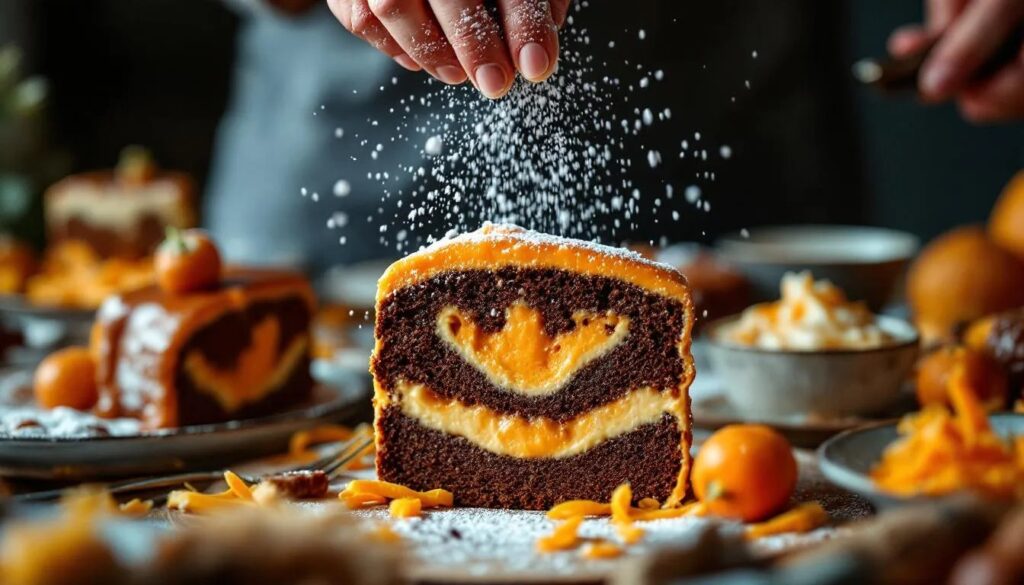
This naturally gluten-free cake is built on coarse ground polenta and ground almonds in place of flour, which gives it a dense, slightly gritty texture that is entirely its own. The whole oranges — two of them, boiled for two hours until completely soft, then blitzed to a paste, skin and all — deliver a flavor that is more complex than simply adding zest: slightly bitter, intensely floral, long on the palate. Once baked and cooled, the cake is finished with a thin orange syrup that soaks through and keeps it moist for three days. It is the most practical dessert on this list for those cooking ahead, and one of the most interesting in flavor. Serve with a spoonful of crème fraîche.
Planning the Easter dessert table
A spread of several desserts works better than a single showpiece when the group is large or the ages at the table vary widely. A useful approach: one very rich dessert (the chocolate tart, the Simnel cake), one fruit-forward option (the Eton Mess, the pavlova), one cake that slices neatly for late-afternoon tea (the lemon layer cake, the carrot cake), and one individual portion for younger guests (the coconut lamington nests). Most of these can be prepared in part or in full on Good Friday or Saturday, leaving Easter Sunday free for the main meal.
Spring markets are generous in late March. Blood oranges are at the tail end of their season, rhubarb is coming in strong, the first strawberries are appearing — and good-quality chocolate eggs from artisan makers are worth using as decoration on several of these desserts at once, creating a visual thread across the table without requiring additional work.
Questions about Easter desserts
Which of these desserts can be made entirely in advance?
The Simnel cake, the orange polenta cake, the chocolate egg tart, the carrot cake and the lamington nests can all be made one to two days ahead and stored appropriately. The lemon layer cake can be assembled and refrigerated overnight — the curd sets and the flavors integrate well. The pavlova meringue base can be baked and stored in an airtight tin for up to 48 hours; top it only on the day of serving. The Eton Mess and the bread and butter pudding are best made on the day.
Which desserts are suitable for guests with gluten intolerance?
The orange polenta cake is naturally gluten-free as written, relying entirely on polenta and ground almonds. The pavlova, the Eton Mess (if using certified gluten-free meringues) and the ricotta and honey tart can also be made gluten-free with small adjustments. Always verify that individual ingredients — including baking powder, chocolate and labeled-safe oats — carry a certified gluten-free mark if the intolerance is serious.
How many portions should i plan per person?
If you are offering a full dessert spread of three or more options, plan for roughly half a standard portion per dessert per adult. People tend to taste across several options rather than commit to one full serving. For children, individual-portion desserts like the lamington nests remove the need for decisions entirely. If you are serving only one dessert, the standard guidance of one full portion per person applies — with a slight surplus for second helpings, which are common at celebratory meals.
What drinks pair well with Easter desserts?
Lemon and fruit-based desserts pair well with a late-harvest Riesling or a Moscato d'Asti — both offer residual sweetness without overpowering the acidity of the fruit. Chocolate-forward desserts call for something richer: a Pedro Ximénez sherry, a Banyuls, or a ruby port. The Simnel cake and carrot cake sit well alongside a spiced chai or a lightly sweetened Earl Grey if alcohol is not preferred. Sparkling elderflower is a useful non-alcoholic option across the board and feels seasonally appropriate in spring.
Can any of these desserts be adapted for a smaller gathering of two or four people?
Most of these recipes scale down without technical difficulty. The Eton Mess and the pavlova are the most flexible — use fewer egg whites for the meringue and reduce the fruit accordingly. The tarts and cakes can be baked in smaller tins: a 15 cm cake tin rather than a 22 cm one reduces both baking time and yield proportionally. The bread and butter pudding works well in a small gratin dish for two. The lamington nests can simply be made in a smaller batch; there is no structural complexity to manage.