



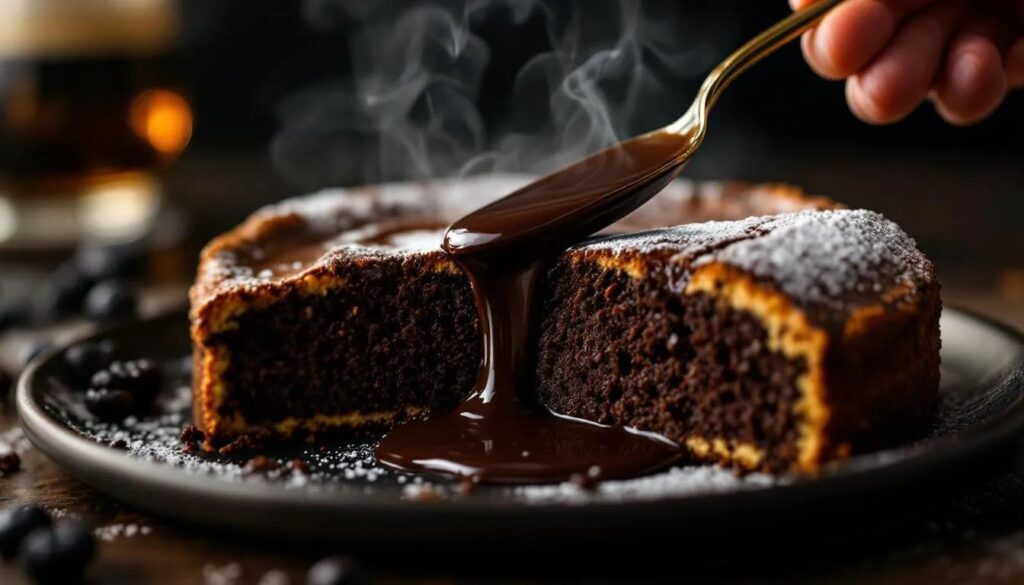
There's a moment in early spring when the kitchen calls for something dark, generous and unapologetically indulgent. The days are still cool enough to justify a heavy bake, the Easter table is being planned, and Nigella Lawson — the great priestess of domestic pleasure — has an answer for every occasion. Her chocolate stout cake is one of those recipes that sounds almost counterintuitive until you taste the result: a bittersweet, deeply moist crumb that carries the faint roasted echo of Irish stout, the kind of depth that cocoa powder alone could never achieve. The beer doesn't taste like beer. It tastes like more chocolate.
Nigella herself has described the transformation as nothing short of "magnificent" — a word she doesn't deploy lightly. The stout, simmered with butter until glossy and fragrant, becomes the liquid backbone of the batter, opening up the chocolate's tannins and giving the cake a tenderness that keeps it fresh for days. What you end up with is a single-layer, springform beauty with a slight sticky crumb, crowned with a cream cheese frosting that looks — and this is entirely intentional — like the white head settling on a freshly poured pint of Guinness. This is the recipe, step by step, with every detail you need to get it right the first time.
| Preparation | 25 min |
| Cooking | 55 min |
| Cooling | 30 min |
| Portions | 12 slices |
| Difficulty | Easy |
| Cost | €€ |
| Season | All year · especially suited to Easter and winter gatherings |
Suitable for: Vegetarian
Ingredients
For the cake
- 250 ml Irish stout (Guinness is traditional; Murphy's works equally well)
- 250 g unsalted butter, cut into cubes
- 75 g best-quality cocoa powder, sifted
- 400 g caster sugar
- 140 ml soured cream, at room temperature
- 2 large eggs, at room temperature
- 1 tbsp pure vanilla extract
- 275 g plain flour
- 2½ tsp bicarbonate of soda
For the cream cheese frosting
- 300 g full-fat cream cheese, cold
- 150 g icing sugar, sifted
- 125 ml double cream
Utensils
- 23 cm (9-inch) springform cake tin
- Large heavy-based saucepan
- Two large mixing bowls
- Electric hand whisk or stand mixer
- Fine-mesh sieve
- Rubber spatula
- Wire cooling rack
- Measuring jug
Preparation
1. Prepare your tin and preheat the oven
Heat your oven to 180°C / 160°C fan / gas 4. Grease the inside of your springform tin generously with softened butter, then line the base with a circle of baking parchment. Run a little butter over the parchment too. This cake is moist and tender and you want it to release cleanly — a well-greased tin is non-negotiable. Set the tin aside on a baking sheet, which will catch any drips during baking and make it easier to move in and out of the oven.
2. Melt the butter with the stout
Pour the 250 ml of stout into your large saucepan and add the cubed butter. Place over a medium-low heat and warm gently, stirring occasionally, until the butter has completely melted into the stout. You're not looking to boil this mixture — just a gentle, glossy amalgamation. The smell at this stage is remarkable: yeasty, slightly bitter, richly savoury. Remove from the heat once the butter is fully incorporated and let the pan sit for two minutes to cool slightly before proceeding.
3. Whisk in the cocoa and sugar
Add the sifted cocoa powder and the caster sugar directly to the warm stout-butter mixture in the saucepan. Whisk vigorously until both are fully dissolved and the batter base is smooth, dark and glossy — it should look like a very thick, shining ganache at this point. The sugar will take a minute or two to fully incorporate; keep whisking until no grains are visible. This warm base is where the magic begins: the heat blooms the cocoa, releasing its fat-soluble aromatics in a way that cold mixing never achieves.
4. Add the wet ingredients
In a separate bowl, lightly beat together the soured cream, eggs and vanilla extract. Pour this mixture gradually into the chocolate-stout base in the saucepan, whisking constantly as you go. The batter will loosen and turn glossy. Soured cream plays a double role here: it adds fat for richness and its acidity reacts with the bicarbonate of soda later to create a delicate, open crumb. Make sure all the ingredients are at room temperature before combining — cold eggs or cream can cause the batter to seize slightly.
5. Fold in the flour and bicarbonate of soda
Sift the plain flour and bicarbonate of soda together into a large bowl, then pour the liquid chocolate mixture over them. Using a large rubber spatula or a balloon whisk, fold and stir until the batter is just smooth — a few gentle rotations are enough once no streaks of flour remain. Overmixing, which means working the batter past the point of smoothness, develops gluten and will tighten the crumb. You want a fluid, pourable batter with a slight sheen.
6. Bake the cake
Pour the batter into your prepared tin — it will be quite liquid, which is correct. Transfer carefully to the oven and bake for 50–60 minutes, until the top is set and a skewer inserted into the centre comes out with just a few moist crumbs clinging to it (not wet batter). If the top is browning quickly before the centre is done, lay a piece of foil loosely over the tin from around the 45-minute mark. The cake will dome slightly during baking and then settle as it cools — this is entirely normal and the frosting will cover any imperfections.
7. Cool completely before frosting
Run a thin palette knife around the inside edge of the tin as soon as the cake comes out of the oven. Allow it to cool in the tin on a wire rack for at least 30 minutes before releasing the springform clip. Transfer the cake — still on its base — to the rack and leave until completely cold. Attempting to frost a warm cake will melt the cream cheese topping into a pale, liquid puddle. Patience here pays off.
8. Make the cream cheese frosting
Beat the cold cream cheese briefly until smooth, then sift over the icing sugar and beat again until just combined. Pour in the double cream and whisk — by hand or with an electric whisk — until the frosting holds soft, billowy peaks. It should be thick enough to mound on top of the cake without running over the sides. Crucially: do not overbeat once the cream is added, or the mixture can turn grainy. Stop the moment you have a cloud-like, spreadable texture.
9. Frost and serve
Spoon the frosting onto the cooled cake and spread it gently towards the edges, leaving a natural, slightly uneven surface. The intention is to evoke the creamy head of a freshly poured stout — a thick, irregular white blanket over that dark crumb. Do not smooth it to perfection; the slight peaks and valleys are part of the visual story. Serve the cake at room temperature, cut into generous wedges.
Chef's tip
The quality of your cocoa powder makes an extraordinary difference to the final flavor. Use a Dutch-processed cocoa if you can find one — its alkalization deepens the color and rounds out the bitterness. For an Easter gathering, a small scattering of crushed dark chocolate shards over the frosting adds both texture and drama without overwhelming the pint-glass aesthetic. If you're making this a day ahead (and it's actually better the next day), keep the unfrosted cake wrapped tightly in cling film at room temperature overnight and frost it the morning of serving.
Drinks pairings
A cake built on roasted malt and bitter cocoa calls for drinks that can match its weight and complexity without competing for sweetness.
A small glass of the same Irish stout used in the baking is the most coherent pairing — the shared roasted notes create a circular, satisfying harmony. For something more refined, a Pedro Ximénez sherry from Jerez, with its flavors of dried figs, espresso and dark treacle, is a natural partner. For a non-alcoholic option, a strong, lightly sweetened cold brew coffee over ice cuts through the richness of the frosting beautifully.
The story behind this cake
Nigella Lawson first published her guinness chocolate cake in her 2004 cookbook Feast, a book structured around food for celebrations and occasions. The recipe drew on a long tradition of using stout in baking across Ireland and the British Isles, where the grain-forward, bitter depth of dark ales had been folded into breads, puddings and cakes long before the technique became fashionable. Lawson's genius was in recognizing that stout and chocolate are essentially made from the same raw material logic — roasted grain — and that combining them intensifies rather than confuses.
The cake has since become one of her most replicated recipes globally, particularly around st Patrick's day in mid-March and over the easter weekend, when the timing of spring and the desire for something rich and celebratory align perfectly. Variations exist with porter, dark rum added to the batter, or mascarpone substituted for cream cheese in the frosting. The essential logic remains unchanged: dark beer makes chocolate cake more itself.
Nutritional values (per slice, approximate values)
| Nutrient | Amount |
|---|---|
| Calories | ~485 kcal |
| Protein | ~6 g |
| Carbohydrates | ~58 g |
| of which sugars | ~44 g |
| Fat | ~26 g |
| Fibre | ~2 g |
Frequently asked questions
Can this cake be made in advance?
Yes — and it's genuinely better for it. Baked and unfrosted, the cake keeps wrapped at room temperature for up to two days, during which time the crumb settles into an even moister, more fudgy texture. Apply the cream cheese frosting on the day you plan to serve it and keep refrigerated if your kitchen is warm. Remove from the fridge at least 45 minutes before cutting so the crumb softens back to room temperature.
How should leftovers be stored?
Once frosted, the cake should be loosely covered and kept in the refrigerator for up to three days. The cream cheese frosting contains dairy and does not keep safely at room temperature for extended periods. Before serving a refrigerated slice, leave it out for 20–30 minutes — cold cake loses much of its aromatic complexity and the crumb firms considerably.
Can I substitute the Irish stout?
Guinness is traditional and widely available, but any good Irish or English stout will produce excellent results — Murphy's, Beamish, or a craft porter with strong roasted malt notes all work well. Avoid very hoppy beers such as IPAs, as their bitterness is a different register to the roasted malt flavor you're looking for. For a completely alcohol-free version, strong black coffee — around 200 ml — is the closest substitute, maintaining the dark, bitter depth without the alcohol.
Can this recipe be made gluten-free?
The flour can be replaced with a good-quality gluten-free plain flour blend at a 1:1 ratio. Add half a teaspoon of xanthan gum if your blend doesn't already contain it, to compensate for the missing gluten structure. Note that most commercial stouts contain barley and are therefore not gluten-free — a gluten-free stout or strong black coffee should be used instead in a fully gluten-free version.
Why is my cake sinking in the middle?
A sunken center usually means the cake was underbaked, the oven door was opened too early (before the 40-minute mark), or the bicarbonate of soda was past its use-by date. Always test with a skewer in the thickest part of the cake, not just near the edges. If the skewer comes out with liquid batter, return the cake to the oven for a further 8–10 minutes. A slight dip in the center once cooled is perfectly normal and entirely hidden by the frosting.