



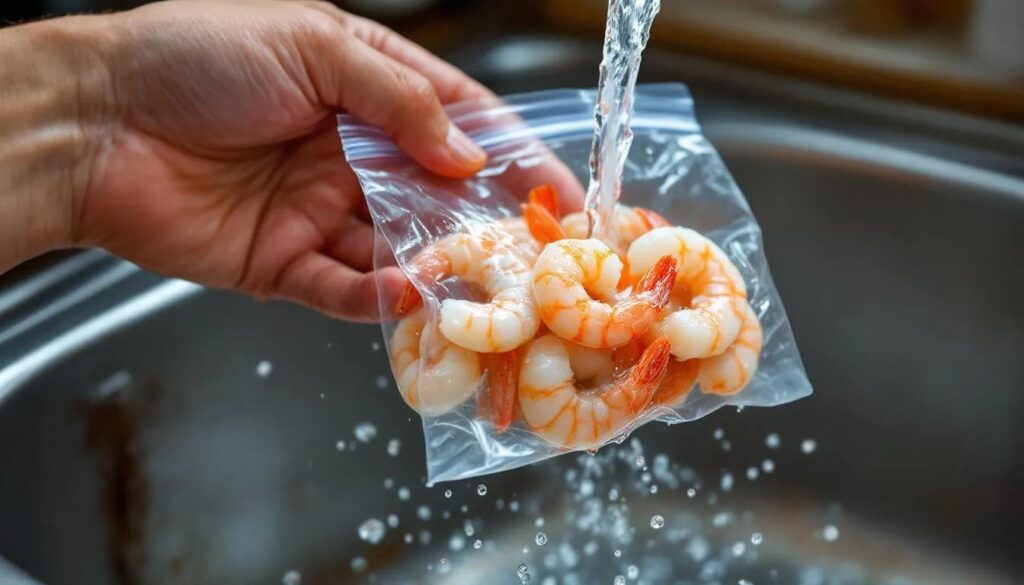
Spring is barely settled in when shrimp reappears on kitchen counters across the country — lighter meals, quick weeknight dinners, the first outdoor grills of the season. And yet, one gesture repeated millions of times every day quietly ruins the whole operation before a single pan heats up: running frozen shrimp under warm tap water to thaw them fast. The result is predictable and disappointing — rubbery, oddly firm flesh that no amount of cooking technique can fully rescue.
This is not about being precious with seafood. It is about understanding why shrimp behaves the way it does, what happens at a cellular level when heat hits ice too quickly, and what the actual alternatives look like in a real kitchen with real time constraints. The fix is simple, costs nothing, and changes everything about the final texture.
Why warm water ruins frozen shrimp
Shrimp is an unusually delicate protein. Its muscle fibers are short, loosely structured, and react to heat faster than almost any other animal protein used in cooking. A lobster tail can forgive a degree or two of careless cooking. Shrimp cannot.
When frozen shrimp meets warm tap water — typically between 40°C and 50°C — the outer layers of the flesh begin to cook before the center has finished thawing. This is not a metaphor or an approximation. The proteins on the surface denature, contract, and expel moisture at the same moment the core is still a frozen block. The result is shrimp with a pre-cooked exterior and a raw, icy interior — and once those surface proteins have contracted, no subsequent cooking step can reverse the process. The texture becomes dense, chalky, and resistant to the bite. Cooks describe it as "bouncy" or "like rubber bands." They are not wrong.
There is also the water absorption problem. Shrimp, particularly the peeled and deveined varieties sold in supermarket bags, acts like a small sponge when exposed to liquid under pressure. Warm running water forces itself into the flesh through osmosis and physical pressure, diluting the natural brininess that makes well-cooked shrimp taste of the sea. The flavor becomes flat, vaguely watery, and strangely generic — even when the seasoning and technique in the pan are otherwise perfect.
The right way to thaw shrimp
Method 1: Cold water — the practical standard
The best everyday method is also the simplest: place the frozen shrimp in a sealed zip-lock bag and submerge it in a bowl of cold tap water. Change the water once after about 10 minutes. The entire process takes 15 to 20 minutes for a standard 400 g bag. Cold water transfers heat efficiently enough to thaw the shrimp without triggering any protein denaturation. The flesh stays relaxed, the texture remains supple, and the flavor holds.
The bag matters. Direct water contact, even cold, will still waterlog shrimp over time. Keeping the shrimp sealed isolates them from the liquid while still allowing thermal exchange through the plastic. It is a small detail that makes a measurable difference in the final dish.
Method 2: Refrigerator overnight — the best result
For cooks with the luxury of planning ahead, transferring the frozen shrimp to the refrigerator the night before delivers the most consistent results. The thaw is slow, uniform, and entirely controlled. Every part of the shrimp reaches the same temperature at roughly the same pace, leaving the proteins fully intact and the texture close to that of fresh shrimp. This method works particularly well for dishes where shrimp is the centerpiece — a spring stir-fry with snap peas and ginger, a ceviche where the raw texture must be impeccable before the citrus cure takes over, or a simple sauté with garlic and olive oil where there is nowhere to hide.
What about the microwave?
Most microwave defrost functions operate on a pulse cycle designed to prevent cooking. In theory, this sounds workable. In practice, microwaves heat unevenly, and shrimp thaws in seconds rather than minutes — the margin between "thawed" and "partially cooked" is measured in single seconds. Unless the microwave has a dedicated, calibrated seafood defrost mode and the cook is monitoring actively, the risk of uneven texture is high. It is not a recommended method for shrimp specifically.
The compounding effect on cooking
Rubbery shrimp from a bad thaw does not just affect texture at the table. It changes the entire cooking dynamic in the pan. Shrimp that has already shed moisture during the warm-water thaw releases that moisture immediately when it hits a hot pan, dropping the pan temperature sharply. Instead of the fast, high-heat sauté — that quick browning over intense heat — the shrimp ends up steaming in its own liquid. The surface never caramelizes. The Maillard reaction, responsible for the golden, slightly sweet crust that makes pan-seared shrimp appealing, simply does not happen. The shrimp goes gray and soft before it ever goes golden.
Properly thawed shrimp behaves entirely differently. It is dry enough on the surface to take color immediately in a hot pan. The cook has a window of roughly 90 seconds per side over high heat before the interior finishes cooking. That window is only available with shrimp that has been thawed carefully and patted completely dry with paper towels before hitting the pan. Surface moisture is the enemy of sear.
Recognizing good-quality frozen shrimp
Even a perfect thaw cannot compensate for shrimp that was poorly frozen to begin with. The best supermarket frozen shrimp is individually quick-frozen, or IQF — meaning each piece was blast-frozen separately at the processing stage, preserving cellular structure far better than block-frozen varieties where the shrimp are frozen together in a mass of water. IQF shrimp pours freely from the bag, with no ice clumps binding the pieces together. Block-frozen shrimp, encased in a solid brick of ice, was almost certainly frozen after sitting in water — a sign of lower quality processing and often a preview of the waterlogged texture to come.
Shell-on shrimp also thaws better than pre-peeled. The shell acts as a natural insulator during the cold-water thaw, slowing the process slightly and protecting the flesh from direct water contact. The extra two minutes spent peeling after thawing is worth it, particularly in spring when shrimp dishes tend toward the lighter, brighter preparations where texture carries real weight.
A note on "fresh" supermarket shrimp
The shrimp sold as "fresh" at most supermarket fish counters in the United States and the United Kingdom is, in the overwhelming majority of cases, previously frozen shrimp that has been thawed by the fishmonger. This is not a scandal — it is a logistics reality given the distances involved in the shrimp supply chain. It does mean, however, that buying "fresh" shrimp from a supermarket counter and then refreezing it at home creates a second freeze-thaw cycle, compounding all the texture problems discussed above. Buying frozen and thawing at home, correctly, is often the more reliable choice.
The seasonal angle
Late March sits in the early weeks of spring — a moment when lighter seafood cooking feels natural and welcome after months of braises and root vegetables. Shrimp fits the season intuitively: fast to cook, versatile, suited to the peas, herbs, and young lettuces appearing at market now. A shrimp dish with snap peas, mint, and a sharp lemon dressing works on a weeknight in thirty minutes. A shrimp stir-fry with spring onions and a touch of white wine is on the table before the rice finishes cooking. These are dishes where texture is everything — where the shrimp should have that characteristic gentle snap, yielding just slightly to the bite, before giving way entirely. That texture is only available from shrimp thawed correctly. It is not recoverable once lost.
The one-line rule
Warm water thaws fast and ruins shrimp. Cold water takes twenty minutes and preserves everything. The time saved is not worth the texture lost. Patience, in this case, costs nothing and pays back immediately.
Frequently asked questions
Can you cook frozen shrimp directly without thawing?
Yes, with caveats. Small shrimp — under 30/40 count — can go directly into a hot pan or boiling liquid from frozen, as long as the cooking time is adjusted upward by roughly 50%. The key risk is uneven cooking: the exterior finishes before the center warms through. For larger shrimp, or any preparation requiring precise texture, thawing first gives far more control. Stir-fries and pasta sauces with a liquid component tolerate direct-from-frozen cooking better than dry-heat methods like grilling or searing.
How do you tell if frozen shrimp has already been thawed and refrozen?
Look for ice crystals inside the bag clinging to the shrimp flesh itself rather than forming a clean coating. A thick glaze of ice surrounding individual shrimp is normal processing. Irregular frost patches, shrimp pieces stuck together in clusters, or any visible discoloration — yellow or black at the tail or head area — suggest previous thawing. A smell test after thawing is also reliable: once fresh shrimp has gone through a second freeze cycle, it develops a faint ammonia undertone that intensifies when cooking.
Does the species of shrimp affect how it should be thawed?
The thawing method is consistent across species, but the sensitivity to poor thawing varies. White Pacific shrimp — the most common supermarket variety — is particularly prone to the rubbery texture caused by warm-water thawing due to its relatively fine muscle fiber structure. Larger tiger prawns are slightly more forgiving but still degrade noticeably with warm water. Wild-caught Gulf shrimp, when available, tends to have a firmer baseline texture that can mask moderate thawing errors, though the flavor still suffers from water absorption.
Why does restaurant shrimp always seem to have a better texture?
Several factors converge in professional kitchens. Shrimp is typically thawed overnight in a refrigerator, then patted completely dry and held uncovered in the refrigerator for a further period to allow surface moisture to evaporate — a technique known as air-drying. Pans are preheated to higher temperatures than most home stoves can sustain, and portions are kept small to avoid crowding, which would drop the pan temperature and cause steaming. The combination of a dry surface, high heat, and small batch size produces the sear — and the texture — that is difficult to replicate at home without being deliberate about each step.
Does brining help recover shrimp that was thawed incorrectly?
A short cold brine — 1 tablespoon of salt per liter of cold water for 15 minutes — can partially compensate for moisture loss caused by a poor thaw. The salt solution draws back into the shrimp through osmosis, improving juiciness and seasoning simultaneously. It does not reverse protein denaturation that has already occurred on the surface, so truly rubbery shrimp will not recover fully. Used as a preventive step on correctly thawed shrimp, however, brining consistently improves texture and flavor in the finished dish, particularly for grilled preparations where moisture loss during cooking is highest.