

Spring has barely settled in, but the craving for a good pizza doesn't wait for the season. Take-and-bake pizzas have quietly become one of the most convenient options on grocery store shelves — raw, ready to slide into your oven at home, and often promising something close to the real thing. The question is: do any of them actually deliver?
Over the course of several evenings, six store-bought take-and-bake pizzas went through the same conditions — same oven temperature, same baking time per package instructions, same hungry critic. What follows is an honest ranking, from the one you should walk past to the one worth keeping in your freezer rotation this spring.
What makes a take-and-bake pizza worth buying
Before diving into the ranking, it helps to understand what separates a genuinely good take-and-bake from a mediocre one. The crust is the first tell: it should have enough structure to hold toppings without going limp, yet enough hydration to develop some chew in the oven. A dough that smells faintly of fermentation before baking is a good sign — it means yeast had time to do its work.
The sauce matters just as much. Overly sweet tomato paste masked with dried herbs is the most common shortcut manufacturers take. A quality sauce has brightness, a slight acidity, and some body. Then comes the cheese: pre-shredded mozzarella with anti-caking agents browns differently — and less attractively — than fresh or low-moisture whole-milk mozzarella. Toppings should be distributed evenly and use recognizable ingredients, not processed fillers.
All six pizzas were baked on a preheated baking stone at 425°F (220°C), following each brand's recommended time window. Judgment was based on crust texture, sauce quality, cheese melt and browning, topping distribution, and overall balance.
#6 — Generic supermarket brand pepperoni
Last place was settled quickly. The crust arrived pale and slightly sticky, releasing a faint chemical smell during the first few minutes of baking — likely from the emulsifiers in the dough. Once baked, it stayed soft on the bottom without developing any structure, bending under its own weight when lifted. The sauce tasted primarily of sugar and dried oregano with no tomato depth. Pepperoni slices were thin, greasy, and curled unevenly. The cheese melted into a flat, slightly rubbery layer that turned orange at the edges without the characteristic spotty browning of a proper mozzarella melt. Nothing about this pizza suggested it had spent any meaningful time in a professional kitchen before reaching the shelf.
#5 — Store chain exclusive margherita
A margherita is difficult to hide behind toppings, which is precisely why this one exposed its weaknesses so clearly. The crust had reasonable thickness but lacked flavor — no salt, no fermentation note, no char potential. The tomato sauce was thin, watery in places, and pooled toward the center during baking, leaving the edges dry. The cheese, advertised as "fresh mozzarella style," was clearly a processed blend that released too much water before solidifying into a pale, slightly grainy layer. The finish was flat, with none of the freshness a margherita should carry. It was edible, but joyless.
#4 — Mid-range italian-style four cheese
This one was more honest about what it was. The four-cheese blend — mozzarella, provolone, asiago, and a sharp cheddar — created real flavor contrast that the bottom two couldn't approach. The crust showed some browning on the underside after 14 minutes and held its shape when sliced. The primary weakness was the sauce, which was applied so sparingly it barely registered. The cheese carried the flavor entirely, and while that worked reasonably well, it made the pizza feel unbalanced — rich and slightly heavy without the acid counterpoint a good tomato sauce provides. A solid midpoint, but not something to seek out specifically.
#3 — Artisan-positioned supreme
The first pizza in the ranking that felt genuinely thought through. The dough was visibly more hydrated, with a slightly irregular surface suggesting some hand-stretching or at least a less industrial process. It browned well, developed small bubbles along the edges, and had actual chew — not just density. The sauce had tomato character, a hint of garlic, and enough acidity to cut through the cheese. Toppings — sausage crumbles, green peppers, onions, and black olives — were distributed across the surface rather than concentrated in the center. The sausage had visible fennel and tasted seasoned rather than generic. This pizza required no rescue operation. It came out of the oven looking close to what the packaging suggested.
#2 — Specialty grocer mushroom and truffle white pizza
No tomato sauce here — a white base of ricotta and garlic, topped with cremini mushrooms, a scattering of fresh thyme, and a drizzle labeled "truffle oil." The truffle oil was almost certainly synthetic, but it functioned well in context, adding an earthy top note that worked with the mushrooms rather than overwhelming them. The ricotta base stayed creamy rather than drying out, which requires the right fat content and application technique — this brand had figured it out. The crust was the thinnest of the six and benefited from the baking stone, developing a crisp underside within 12 minutes. The only flaw: the thyme distributed unevenly, leaving some bites herbaceous and others completely neutral.
#1 — Regional pizzeria collaboration take-and-bake
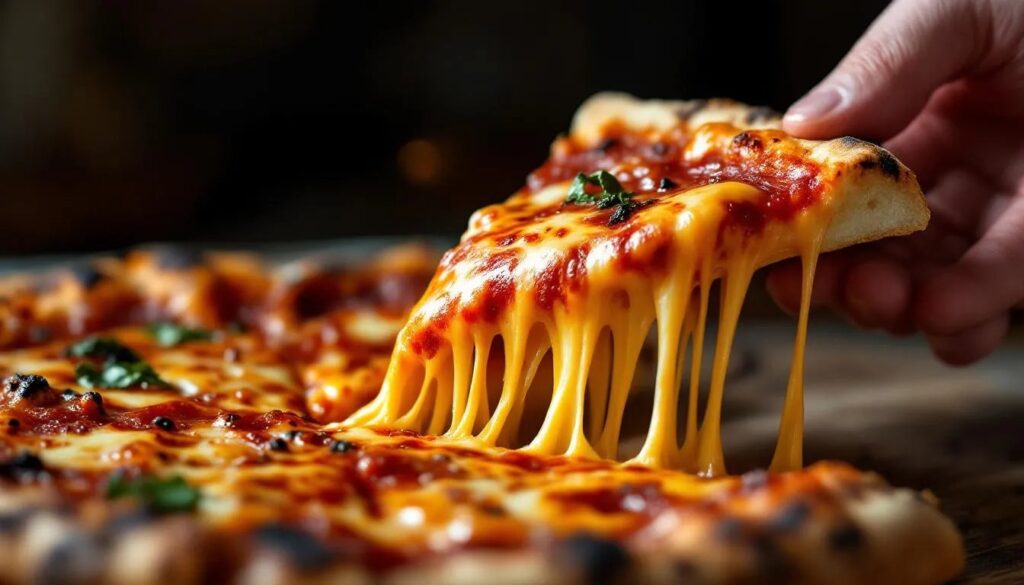
Several grocery chains now partner with local or regional pizzerias to produce take-and-bake versions of their in-house recipes, and when it works, it works convincingly. This one — a classic pepperoni and fresh basil on a slow-fermented dough — stood apart from the first slice. The crust had a genuine yeasty aroma raw, blistered properly in the oven, and delivered a crisp exterior with an open, slightly chewy crumb. The sauce was applied generously and cooked down during baking into something concentrated and bright. Pepperoni slices cupped at the edges, pooling their rendered fat in small, flavorful discs. Fresh basil leaves, added after baking per the included instruction card, wilted perfectly against the heat of the cheese. This was the only pizza of the six that didn't need to be explained or defended.
What to look for on the shelf
When choosing a take-and-bake pizza at the grocery store, a few indicators consistently predicted quality across this tasting. Dough that lists only flour, water, yeast, salt, and olive oil in the first ingredients performs better than dough padded with dough conditioners and stabilizers. Sauce listed as "crushed tomatoes" or "tomato purée" will behave differently — and better — than "tomato paste with seasoning." Cheese described as "low-moisture whole-milk mozzarella" melts and browns more like actual pizza cheese than any blend containing cheddar, unless the recipe specifically calls for that profile.
Price is not always a reliable guide, but pizzas positioned in a dedicated refrigerated section — rather than the frozen aisle — tended to use fresher components. Packaging that includes baking instructions with a temperature range and visual cues ("bake until crust is deep golden") showed more care than a single temperature and a vague time window.
The verdict
Most take-and-bake pizzas on grocery store shelves fill a hunger without particularly satisfying one. The gap between last place and first place in this ranking, however, was genuinely wide — not a question of personal preference but of ingredient quality and dough technique. The regional pizzeria collaboration proved that the format, when treated seriously, can produce a result worth choosing over delivery on a quiet spring evening. The others ranged from forgettable to actively disappointing. If the pizzeria-branded option isn't available in your store, the artisan supreme and the white mushroom pizza are worth the shelf space. The rest can stay where they are.
Questions about take-and-bake pizzas
What is the best temperature to bake a take-and-bake pizza?
Most take-and-bake pizzas perform best between 400°F and 450°F (200°C–230°C). A preheated baking stone or steel significantly improves crust texture by delivering direct bottom heat from the moment the pizza lands on it. If you don't have a stone, a preheated heavy baking sheet placed on the lower rack is a reasonable substitute. Always follow the brand's recommended temperature as a starting point, then adjust based on visual cues rather than time alone.
Should you thaw a take-and-bake pizza before baking it?
If the pizza is sold refrigerated, it goes directly into the oven — no thawing needed, and baking times on the packaging assume it starts cold. If you purchased it refrigerated but froze it yourself at home, let it thaw in the refrigerator for several hours before baking. Baking from frozen without adjustment typically results in a pale crust and unevenly melted cheese, as the outer edge finishes before the center has fully come to temperature.
Can you add your own toppings to a store-bought take-and-bake pizza?
Yes, and it often improves the result. Fresh additions that work well before baking include thinly sliced vegetables, extra cheese, or additional cured meats. Ingredients with high water content — fresh tomatoes, zucchini — should be salted and patted dry first, otherwise they release moisture during baking and make the crust soggy. Delicate ingredients like fresh basil, arugula, or a drizzle of quality olive oil are better added after the pizza comes out of the oven, where heat won't destroy their character.
How long can a take-and-bake pizza be kept in the refrigerator before baking?
Most refrigerated take-and-bake pizzas carry a "use by" or "best by" date that should be treated as a firm deadline, not a suggestion. The raw dough continues to ferment slowly in the refrigerator, and while a small amount of extra fermentation can actually improve flavor, too much breaks down the gluten structure and produces an overly slack, difficult-to-handle dough. If you cannot bake it by the use-by date, freeze it immediately and use within one month.
Why does the cheese on store-bought pizza sometimes turn rubbery instead of melting properly?
Rubbery cheese is almost always a sign of a processed blend with high moisture content or excessive anti-caking agents. These additives prevent the cheese from clumping in the bag but also interfere with the way proteins behave under heat, resulting in a texture that stretches oddly or turns dense. Low-moisture whole-milk mozzarella melts smoothly and develops the characteristic brown spots associated with quality pizza. When a brand uses this type of cheese, it typically says so on the label — it's considered a selling point, and manufacturers know it.