



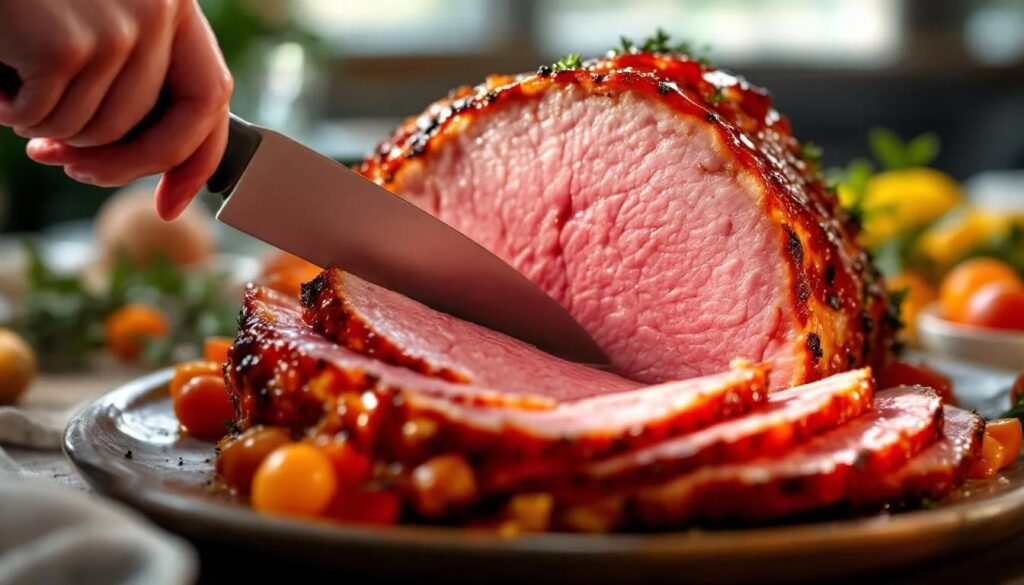
Every spring, as Easter Sunday approaches and the kitchen fills with the scent of roasting lamb, caramelized vegetables, and warm spice, one recipe rises above the rest. It gets pulled from bookmarks, forwarded between family group chats, and scrawled onto index cards for a reason: it works, every single time, without compromise. The combination of tender meat, vibrant spring produce, and a technique refined through years of Sunday lunches makes it the kind of dish that earns its reputation not through novelty but through quiet, consistent perfection.
This is the recipe that home cooks return to every Easter — not because they have to, but because nothing else comes close. It brings together a slow-roasted bone-in leg of lamb, a fragrant anchovy-and-herb crust that melts into the meat during cooking, and a tray of early spring vegetables that catch every drop of rendered fat and cooking juice. What you get on the table is a centerpiece that looks like it required professional training and tastes like it has been in the family for generations. Tie on an apron and give the oven plenty of time — this one is worth every minute.
| Prep Time | 30 min |
| Cook Time | 2 hrs 30 min |
| Resting Time | 30 min |
| Servings | 6–8 people |
| Difficulty | Medium |
| Cost | $$ |
| Season | Spring — lamb, asparagus, new potatoes, peas, spring onions |
Ingredients
For the lamb
- 1 bone-in leg of lamb, approximately 5–6 lbs / 2.5 kg, at room temperature
- 6 anchovy fillets in olive oil, drained
- 4 cloves garlic, thinly sliced
- 2 sprigs fresh rosemary, leaves stripped
- 1 small bunch fresh thyme
- 3 tbsp Dijon mustard
- 2 tbsp extra-virgin olive oil
- Flaky sea salt and freshly ground black pepper
For the tray
- 1.5 lbs / 700 g new potatoes, halved
- 1 bunch asparagus, woody ends snapped off
- 6 spring onions, trimmed and halved lengthwise
- 1 cup / 150 g fresh or frozen peas
- 1 cup / 240 ml dry white wine
- 1 cup / 240 ml good lamb or chicken stock
- 2 tbsp unsalted butter, cut into cubes
For the mint sauce
- 1 large bunch fresh mint, leaves only, finely chopped
- 1 tsp superfine sugar
- 3 tbsp white wine vinegar
- 2 tbsp boiling water
- Pinch of sea salt
Equipment
- Large roasting pan (at least 12 x 16 inches / 30 x 40 cm)
- Sharp paring knife
- Meat thermometer (instant-read)
- Small mixing bowl
- Aluminum foil
- Chopping board
- Wire rack (optional but recommended)
- Small saucepan
Preparation
1. Bring the lamb to room temperature and prepare the paste
Remove the leg of lamb from the refrigerator at least one hour before cooking — this step is not optional. A cold joint placed directly into a hot oven will cook unevenly, leaving the outer layers overdone while the center barely reaches temperature. While the meat acclimates, combine the anchovy fillets, rosemary leaves, half the thyme, and a generous pinch of flaky salt in a small bowl. Use the back of a fork to work everything into a rough paste; the anchovies will almost dissolve into the herbs, their sharp brininess becoming something deeper and more savory. Stir in the Dijon mustard and the olive oil until you have a thick, cohesive coating — not a smooth purée, but something with visible texture and body. Set aside.
2. Score and stud the lamb
Preheat the oven to 425°F / 220°C (fan 400°F / 200°C). Using a sharp paring knife, cut roughly 20 small incisions across the surface of the leg, each about 1 inch / 2.5 cm deep, distributing them evenly across both sides and around the shank bone. Push a slice of garlic and a small pinch of rosemary leaves into each pocket — these will perfume the meat from the inside as it cooks, creating layers of flavor that reach well beyond the surface. Season the entire leg generously with flaky salt and freshly ground black pepper before applying the anchovy-mustard paste all over, pressing it firmly into every fold, crevice, and cut. The crust should be thick enough that you can see it, not just sense it.
3. Build the tray and start the roast
Arrange the halved new potatoes in a single layer across the base of the roasting pan. Scatter the remaining thyme sprigs over them, then pour in the white wine and stock. Place a wire rack over the vegetables if you have one — this allows hot air to circulate under the lamb and prevents the bottom of the joint from steaming rather than roasting. Lift the lamb onto the rack (or directly onto the potatoes if no rack is available) and slide the whole tray into the hot oven. Roast at high heat for 20 minutes to develop color and begin to set the crust; the kitchen will start to fill with the smell of caramelized mustard, herbs, and rendered fat within the first ten minutes. This initial blast of heat is what creates the fond — the browned, sticky residue on the pan that will eventually enrich every mouthful of those potatoes below.
4. Reduce heat and slow-roast to temperature
After the initial 20 minutes, drop the oven temperature to 350°F / 175°C (fan 325°F / 160°C). Continue roasting for approximately 1 hour 45 minutes to 2 hours for a pink, rosé center — what chefs call à point, meaning the meat has reached its ideal internal temperature without any margin of overdoneness. The precise target depends on preference: 130°F / 55°C gives a blush of deep pink throughout; 140°F / 60°C is medium, with just a hint of rose near the bone; 150°F / 65°C is fully cooked through, which some families prefer for younger guests. Use an instant-read thermometer inserted into the thickest part of the leg, away from the bone, for an accurate reading. During the last 30 minutes of roasting, check the tray: if the liquid has reduced to almost nothing, add a splash more stock to prevent the potatoes from scorching.
5. Add the spring vegetables
With about 15 minutes of cook time remaining, open the oven and scatter the asparagus, spring onions, and peas directly into the tray alongside the potatoes. Toss them briefly in the cooking juices using a spoon — they only need the residual heat and fat to soften, not a long roast. The asparagus should emerge bright green and just tender, with a little bite still remaining at the tip; overcooked asparagus turns drab and limp, losing the freshness that makes it so characteristic of this time of year. These last-minute additions turn a straightforward roast into something that reads as spring from the very first glance at the table.
6. Rest the lamb and finish the pan sauce
Transfer the cooked lamb to a warm board or platter, tent loosely with foil, and leave it to rest for a full 30 minutes. This is not a suggestion — resting allows the muscle fibers, which have contracted sharply during cooking, to relax and reabsorb the juices that would otherwise flood the board the moment you carve. While the lamb rests, set the roasting pan over two burners on medium heat. Add the butter cubes and stir everything together, scraping up any sticky bits from the base of the pan with a wooden spoon. The liquid will reduce slightly into a light, glossy jus — not a thick gravy, but something clean and intensely flavored that you spoon over the carved slices rather than pour.
7. Make the mint sauce
In a small bowl, combine the finely chopped mint leaves with the superfine sugar, a pinch of salt, and the boiling water. Stir until the sugar dissolves, then add the white wine vinegar. Taste: the balance should be sharp, herby, and just faintly sweet — a counterpoint to the richness of the lamb, not a condiment that competes with it. Let it sit for at least 10 minutes before serving so the flavors have time to meld. This sauce takes under five minutes to make and no written recipe makes lamb taste more unmistakably of Easter.
8. Carve and serve
To carve a bone-in leg, hold the shank bone firmly in one hand using a clean cloth and slice the meat in long, even strokes parallel to the bone, working from the rounded top of the leg downward. The slices will range from well-done at the outer edge to pink at the center — arrange them on a warm platter so every guest can choose according to their preference. Spoon the pan vegetables around the carved meat, drizzle the jus over everything, and place the mint sauce alongside. The crust — that anchovy-herb-mustard layer — will have turned deep amber and slightly crisp on the high parts and melted completely into the meat on the underside, giving every slice a different character.
A Chef's Tip
The anchovy is the secret, and the one ingredient people hesitate over. Do not skip it and do not reduce it. The fillets dissolve entirely into the paste during roasting and leave no fishiness whatsoever — only an extraordinary depth of savory flavor, a quality called umami, that makes the lamb taste more intensely of itself. If you want to understand what they contribute, prepare two small lamb chops: roast one with the paste and one without. The difference will end the debate permanently. In spring, when the first market lamb arrives, this paste is all it needs.
Wine Pairings
Roasted lamb with its herb crust and the slight acidity of the pan jus calls for a red wine with structure and enough fruit to stand alongside the fat, but enough freshness to not overwhelm the spring vegetables on the tray.
The classic pairing is a Bordeaux — Saint-Émilion or Pomerol, with their Merlot-forward profiles: ripe dark plum, a hint of cedar, and tannins that soften beautifully against the lamb's rendered fat. A well-aged Rioja Reserva from the Tempranillo grape works equally well, bringing dried herbs and a leathery warmth that mirrors the rosemary in the crust. For a more accessible option at the table, a good Côtes du Rhône Villages offers Grenache-driven fruit and earthy spice without requiring a significant investment. For a non-alcoholic option, a sharp, herb-forward sparkling water with a squeeze of lemon and fresh mint alongside the meal echoes the garden quality of the dish.
The Story Behind Easter Lamb
The association between lamb and Easter is among the oldest in Western food culture, rooted simultaneously in Christian symbolism — the lamb as a representation of Christ, the Agnus Dei — and in the older agricultural reality that spring was simply when new lambs were available. Before refrigeration and industrial food systems, Easter Sunday was one of the few moments in the year when fresh, young meat arrived on the table after months of preserved and salted provisions. The feast was a genuine celebration of abundance returning, not a marketing occasion.
In Britain, the roasted leg of lamb with mint sauce has been the Easter centerpiece for centuries, its form barely changing from household to household. The anchovy element, less universally known, has roots in 17th and 18th century British cookery, when anchovy sauces and essences were used prolifically to season meat — a practice that largely vanished from domestic cooking but has been quietly reclaimed by restaurant kitchens and food writers over the past two decades. The rest of the world approaches spring lamb differently: in France, it arrives with white beans and flageolets; in Italy, with abbacchio alla romana, braised with white wine and vinegar; in Greece, slow-cooked with lemon, garlic, and oregano until it falls from the bone. Each version is a different answer to the same seasonal fact: spring lamb, handled properly, needs almost nothing else.
Nutrition Facts (per serving, approximate values)
| Nutrient | Amount |
|---|---|
| Calories | ~520 kcal |
| Protein | ~46 g |
| Carbohydrates | ~22 g |
| of which sugars | ~4 g |
| Fat | ~26 g |
| Fiber | ~4 g |
Frequently Asked Questions
Can this recipe be prepared ahead of time?
Yes — and the lamb actually benefits from it. The anchovy-mustard paste can be applied to the scored leg up to 24 hours in advance. Cover the joint loosely with plastic wrap and refrigerate it overnight; the flavors penetrate deeper into the meat during that time, particularly around the garlic and herb pockets. Remove the lamb from the refrigerator at least an hour before it goes into the oven to allow it to return to room temperature. The mint sauce can also be made the day before; it will darken slightly but the flavor intensifies, which is no bad thing.
How do you store and reheat the leftovers?
Carved lamb keeps well in an airtight container in the refrigerator for up to three days. To reheat, place the slices in a covered baking dish with a few tablespoons of stock or leftover jus and warm in a low oven at 300°F / 150°C for 15–20 minutes, until just heated through — this method prevents the meat from drying out. Cold leftover lamb, sliced thin, also makes an exceptional sandwich with mint sauce, sliced red onion, and a smear of Dijon on crusty bread, and requires no reheating at all.
What substitutions or variations are possible?
Boneless leg of lamb works if preferred — reduce the roasting time by roughly 20–25 minutes and check the internal temperature earlier. For those who do not eat anchovy or are cooking for a pescatarian-free table, the paste can be made without it; add an extra tablespoon of Dijon and a teaspoon of finely grated lemon zest to compensate for the depth of flavor that the anchovy would otherwise provide. The spring vegetables in the tray are entirely flexible: substitute small whole carrots, quartered fennel, or baby turnips for any of the listed vegetables depending on what looks best at the market. In early spring, when asparagus season has just opened, use every last stalk.
What if I don't have a meat thermometer?
A meat thermometer is strongly recommended for this recipe — it removes all guesswork and protects a significant investment of both time and money. If you do not have one, the traditional test is to insert a metal skewer into the thickest part of the leg for 10 seconds, then press it to the inside of your wrist: cool means underdone, warm means medium-pink, hot means fully cooked through. This method is less precise but functional. For a 5.5 lb / 2.5 kg bone-in leg at 350°F / 175°C after the initial high-heat blast, medium-pink typically arrives at around the 2-hour mark — but ovens vary, and bone-in weights vary, so treating the timing as a guide rather than a rule is wise.
Is this recipe suitable for a large group?
For a table of more than eight, the most practical approach is to roast two smaller legs rather than scaling up to a single very large joint. Two legs of approximately 4 lbs / 1.8 kg each will cook more evenly and quickly than a single 8-lb leg, and allow you to offer slightly different degrees of doneness if your guests have varying preferences. Use two separate roasting pans and rotate them between oven racks halfway through cooking. All other elements — vegetables, mint sauce, pan jus — can simply be doubled without any change in technique.