



Spring is the season that quietly resets our eating habits. Markets fill with rhubarb, strawberries, and the first stone fruits — and somewhere between the Easter chocolates and the lighter evenings, many of us start paying closer attention to what we put on our plates. Fiber tends to come up fast in those conversations: not enough of it, not from the right sources, not in ways that feel like anything other than a chore. The good news is that the dessert best suited to boost your daily fiber intake happens to be genuinely worth eating.
This article focuses on one category of dessert that consistently outperforms the rest on fiber content while still delivering texture, natural sweetness, and real satisfaction — and it explores exactly how to make the most of it. No chalky supplements, no protein bar disguised as a treat. Just honest, ingredient-led choices that hold up at the table.
Why fiber and dessert rarely belong in the same sentence
The cultural split between "healthy food" and "enjoyable food" runs deep, and desserts sit squarely on the wrong side of it in most nutritional conversations. Fiber recommendations for adults hover around 25 to 38 grams per day depending on age and sex, according to established dietary guidelines — yet average intake in Western countries sits closer to ~15 g. That gap is rarely closed by salads alone.
The problem with most classic desserts — pastry cream, shortbread, panna cotta, mousse au chocolat — is not that they are indulgent, but that their base ingredients (refined flour, cream, butter, sugar) contribute almost no fiber whatsoever. A generous slice of shortbread delivers close to ~0.5 g of fiber. A bowl of vanilla ice cream: similarly negligible. The architecture of traditional Western patisserie was never built around roughage.
But certain dessert traditions — particularly those rooted in legumes, whole grains, nuts, seeds, and unpeeled fruit — tell a very different story.
The winner: fruit-based crumble with a whole-grain and nut topping
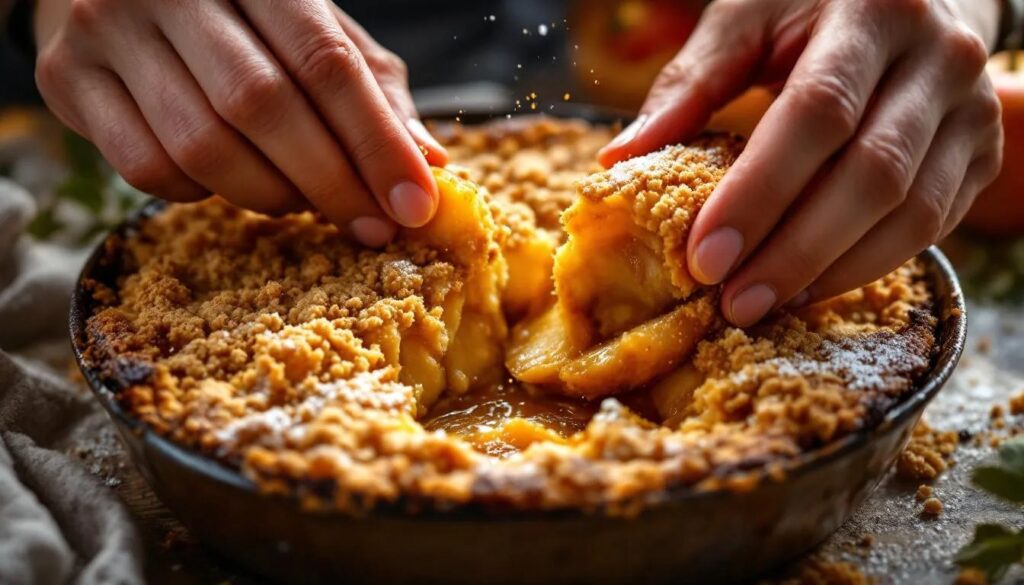
If you had to identify one dessert format that delivers meaningfully on fiber without requiring nutritional gymnastics, it is the crumble — specifically one built on skin-on fruit and a topping made from rolled oats, ground almonds, and seeds rather than plain refined flour and butter alone.
A single generous portion of rhubarb and strawberry crumble made with whole oats, almond flour, and a handful of mixed seeds can deliver anywhere from ~6 to 9 g of fiber per serving — a significant contribution toward the daily target, and one that arrives alongside vitamins, antioxidants, and genuinely pleasing textures.
Here is why each component pulls its weight:
The fruit base
Rhubarb, currently at its seasonal peak in late March and early April, is one of the more underrated fiber sources in the produce aisle. Its stalks contain both soluble and insoluble fiber, contributing roughly ~1.8 g per 100 g. Strawberries, just beginning to appear at markets, add ~2 g per 100 g. Leave the skins on wherever relevant — with stone fruits like plums, peaches, or apricots later in the season, the peel alone accounts for a disproportionate share of fiber content. Peeling fruit for a dessert is nearly always a nutritional step backward.
Berries as a category — raspberries, blackberries, blueberries — are some of the most fiber-dense fruits available, with raspberries reaching ~6.5 g per 100 g. Folding a handful into any fruit base immediately raises the nutritional ceiling of the dessert.
The crumble topping
This is where the structural decision matters most. A topping made with rolled oats instead of, or alongside, plain flour is the single most impactful swap available in dessert-making. Oats contain beta-glucan, a soluble fiber with well-documented effects on cholesterol levels and blood sugar response. At roughly ~10 g of fiber per 100 g, they transform a topping from empty crunch into a meaningful nutritional layer.
Ground almonds add approximately ~12 g of fiber per 100 g and bring a fine, sandy texture that binds the crumble without requiring excess butter. Flaxseeds or chia seeds — even a tablespoon or two scattered into the mix — contribute additional fiber along with omega-3 fatty acids. The result is a topping that smells of toasted grain and warm nut, bakes to a satisfying crunch, and does considerably more work than its indulgent appearance suggests.
Other desserts worth knowing about
The crumble format is not the only option. A few other dessert categories consistently perform well on fiber and deserve mention.
Bean-based desserts
Across Japanese, Middle Eastern, and South American food traditions, legumes have long found their place in sweet preparations. Anko — the sweet red bean paste central to many Japanese wagashi — is made from adzuki beans, which contain roughly ~7.3 g of fiber per 100 g cooked. Black bean brownies, a format that has gained traction in recent years, deliver a fudgy texture alongside a fiber profile that outperforms any conventional brownie by a considerable margin. The beans replace most of the flour, bringing structure, moisture, and nutrition simultaneously.
Dark chocolate with nuts and dried fruit
A small portion of good-quality dark chocolate — 70% cocoa or above — paired with almonds, hazelnuts, or dried figs functions as a dessert in most cultural contexts and delivers a respectable fiber contribution. Dark chocolate itself contains approximately ~10.9 g of fiber per 100 g, and a 30 g square alongside a small handful of almonds can approach ~4 to 5 g of fiber. It requires no preparation, fits a spring or summer picnic as naturally as a winter cheese board, and involves ingredients that store well.
Chia seed pudding
Chia seeds contain approximately ~34 g of fiber per 100 g — one of the highest concentrations found in any whole food. A standard chia pudding portion (around 30–40 g of seeds soaked overnight in plant milk) delivers roughly ~10 to 13 g of fiber before any toppings are added. The texture — gelatinous, almost tapioca-like — divides opinion, but topped with mango slices, fresh strawberries, or a spoonful of nut butter, it becomes a dessert with genuine presence. It also requires zero cooking, which makes it a practical choice through the warmer months ahead.
Poached pears or stewed fruit
Whole pears, skin on, contain approximately ~3.1 g of fiber each. Poached gently in spiced tea, red wine, or simply water with vanilla and a strip of orange zest, they make an elegant and underestimated dessert. The skin softens but stays intact, retaining its fiber contribution. As spring turns toward summer, the same approach works with plums, apricots, and peaches — each a solid source of dietary fiber when cooked unpeeled.
A note on how fiber works in a dessert context
Fiber slows the absorption of sugars — including those present in fruit and added sweeteners. This means that a fiber-rich dessert tends to produce a gentler rise in blood glucose compared to an equivalent portion of a fiber-free one. For anyone managing energy levels, appetite, or longer-term metabolic health, this is not a trivial detail. A crumble with an oat topping and a berry base is not just a more nutritious dessert — it is one that is likely to leave you feeling steadier afterward.
Soluble fiber, found in oats, apples, pears, and legumes, forms a gel-like substance in the gut that feeds beneficial bacteria and supports digestive transit. Insoluble fiber, found in the skins of most fruits and in many whole grains, adds bulk. A well-constructed fiber-rich dessert draws on both — and the crumble format, more than almost any other, makes that combination structurally natural.
Practical adjustments worth making
When modifying existing recipes rather than starting from scratch, a few targeted changes produce the most significant fiber gains without altering the character of the dessert. Replacing half the plain flour in any crumble, cake, or tart base with whole-wheat flour or almond flour typically raises the fiber content by a factor of two to three. Adding a tablespoon of ground flaxseed to a batter goes almost undetected in flavor while contributing close to ~2.8 g of additional fiber. Choosing a compote or fruit layer made from unpeeled fruit rather than a refined jam removes a step and improves the nutritional result simultaneously.
The underlying principle is consistent: the closer a dessert stays to whole, unprocessed ingredients — whole grains, intact fruit, nuts, seeds, legumes — the more fiber it is likely to carry. Refinement, in the culinary sense, tends to strip fiber away. The best fiber-rich desserts are built that way deliberately.
| Dessert | Estimated fiber per serving | Key fiber sources |
|---|---|---|
| Fruit & oat crumble (rhubarb, berries) | ~7–9 g | Oats, almonds, skin-on fruit, seeds |
| Chia seed pudding | ~10–13 g | Chia seeds |
| Black bean brownies | ~5–7 g | Black beans, dark chocolate |
| Dark chocolate + almonds + dried figs | ~4–5 g | Dark chocolate, almonds, dried fruit |
| Poached pears (skin on) | ~3–4 g | Pear skin, flesh |
| Classic shortbread | ~0.5 g | — |
| Vanilla ice cream (1 scoop) | ~0.2 g | — |
Nutritional values (per serving, approximate values)
| Nutrient | Fruit & oat crumble (1 serving) |
|---|---|
| Calories | ~310 kcal |
| Protein | ~7 g |
| Carbohydrates | ~38 g |
| of which sugars | ~16 g |
| Fat | ~14 g |
| Fiber | ~8 g |
Frequently asked questions
Is fruit crumble actually a significant source of fiber, or is the impact marginal?
When made with rolled oats, ground almonds, and skin-on fruit — particularly berries or rhubarb — a single serving of crumble can contribute between ~6 and 9 g of fiber, which represents roughly 20–35% of the recommended daily intake for most adults. That is a meaningful contribution, not a marginal one. The key is the composition of the topping: refined flour and butter alone deliver almost nothing on fiber, while a whole-grain and nut-based topping changes the equation substantially.
Which fruit has the most fiber for a dessert filling?
Raspberries lead the pack at approximately ~6.5 g of fiber per 100 g, making them the most fiber-dense common dessert fruit. Blackberries follow closely at ~5.3 g per 100 g. Pears (unpeeled), plums, and rhubarb all sit in the ~1.8–3 g per 100 g range. Stone fruits — peaches, apricots, nectarines — perform best when their skins are left intact, as the peel accounts for a disproportionate share of their total fiber content.
Can chia seed pudding really be considered a dessert?
That depends partly on context and partly on how it is built. Served chilled in a glass with mango, passion fruit, or sliced strawberries and a drizzle of maple syrup, chia pudding functions perfectly well as a dessert — it is sweet, textured, visually appealing, and satisfying without being heavy. Its fiber content (~10–13 g per standard portion) is higher than almost any other dessert format available, which makes it worth considering, even for those who find the texture unconventional at first.
Does cooking fruit reduce its fiber content?
Heat does not significantly destroy fiber. Cooking fruit softens the cell structure and makes some nutrients more bioavailable, but the fiber itself remains largely intact. The most important variable is whether the skin is kept on: peeling fruit before cooking removes a substantial portion of its fiber. Stewing or poaching skin-on fruit retains far more fiber than peeling it first, which is why whole poached pears or unpeeled roasted plums outperform smoother, peeled compotes on this measure.
What is the easiest way to increase fiber in a dessert without changing the recipe significantly?
The two most impactful low-effort adjustments are: replacing up to half the plain flour in any topping or cake batter with rolled oats or whole-wheat flour, and stirring a tablespoon of ground flaxseed or chia seeds into the mixture. Both changes are largely undetectable in terms of flavor. A second practical step is to avoid peeling fruit unless the recipe strictly requires it — the skin of apples, pears, plums, and stone fruits contributes fiber that is simply discarded when peeling is automatic rather than intentional.