
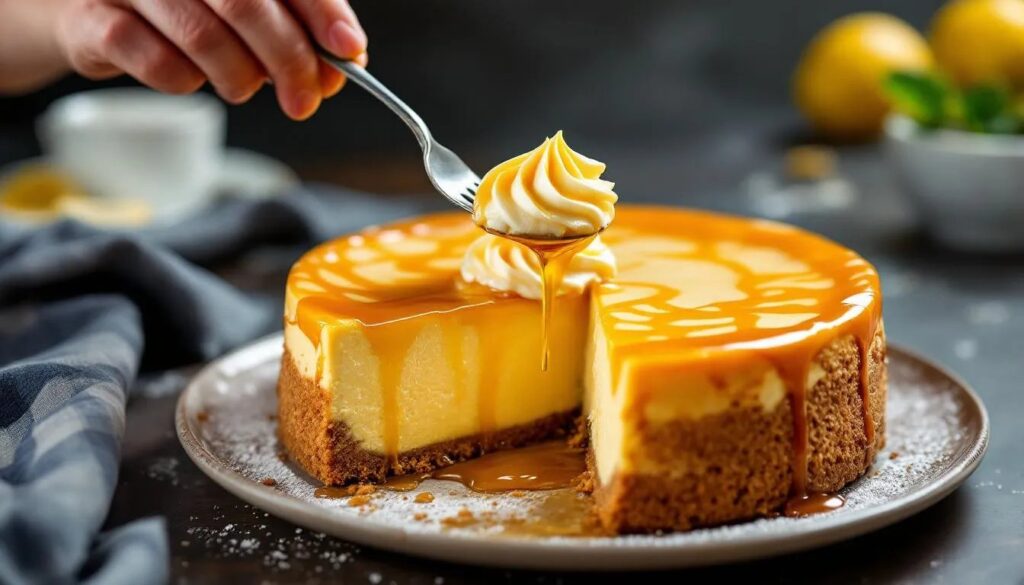
Easter brunch calls for something that earns its place at the table without last-minute panic — and this honey lemon cheesecake delivers exactly that. Spring is here: the days are longer, the market stalls are bright with the first lemons of the season, and the urge to cook something fresh and celebratory is almost involuntary. A cheesecake chilled overnight, sliced cleanly at the table, fragrant with beeswax-warm honey and sharp citrus zest, is precisely the kind of centerpiece that makes the meal feel both effortless and considered.
This version leans on a no-bake filling — creamy, just set, slightly mousse-like — resting on a buttered graham cracker crust. The honey is not background sweetness here; it steers the flavor, rounding out the lemon's acidity without blunting it. You can make it up to two days ahead, which means Easter morning is free for coffee and family rather than last-minute dessert anxiety. Here's exactly how to bring it together.
| Prep time | 30 min |
| Chilling time | 6 hours minimum (overnight recommended) |
| Servings | 10–12 slices |
| Difficulty | Easy |
| Cost | $$ |
| Season | Spring · lemons, honey |
Suitable for: Vegetarian
Ingredients
For the crust
- 2 cups (200 g) graham cracker crumbs (or digestive biscuits)
- 3 tablespoons (60 g) honey
- ½ cup (115 g) unsalted butter, melted
- 1 pinch fine sea salt
For the filling
- 24 oz (680 g) full-fat cream cheese, at room temperature
- ⅓ cup (110 g) raw honey (a floral variety such as acacia or wildflower works well)
- Zest of 3 unwaxed lemons
- ⅓ cup (80 ml) fresh lemon juice (approximately 3 lemons)
- 1 teaspoon pure vanilla extract
- 1 cup (240 ml) heavy whipping cream, cold
- 1 tablespoon powdered sugar
For the topping (optional)
- 2 tablespoons honey, warmed
- Thin lemon slices or candied lemon peel
- A few fresh edible flowers (such as viola or chamomile) for a spring finish
Equipment
- 9-inch (23 cm) springform pan
- Stand mixer or hand electric mixer
- Large mixing bowl
- Microplane or fine zester
- Rubber spatula
- Offset spatula (for smoothing the surface)
- Parchment paper
Preparation
1. Build the crust
Line the base of your springform pan with a circle of parchment paper. In a medium bowl, combine the graham cracker crumbs, melted butter, honey and a pinch of salt. Work the mixture with a fork until every crumb is evenly coated and the texture resembles wet sand — it should hold its shape when pressed between two fingers. Tip the mixture into the prepared pan and press it firmly and evenly across the base and about 1 inch (2.5 cm) up the sides. Use the flat base of a measuring cup to compact it thoroughly; any loose pockets will crumble on slicing. Transfer the pan to the refrigerator and chill for at least 30 minutes while you prepare the filling. A cold, firm crust sets the foundation for clean, confident slices later.
2. Whip the cream
Pour the cold heavy cream into a chilled bowl and whip it with an electric mixer at medium-high speed until it holds soft peaks — that is, the cream forms gentle mounds that curl over slightly at the tip rather than standing rigidly upright. Add the tablespoon of powdered sugar and whip for just a few more seconds to incorporate. Overbeaten cream turns grainy and, once folded into the filling, will make the texture dense rather than airy. Set the whipped cream aside in the refrigerator.
3. Make the cream cheese base
In a large bowl, beat the room-temperature cream cheese on medium speed for about 2 minutes until it is smooth, pale and completely lump-free. Cold cream cheese will leave lumps that no amount of further mixing will remove, which is why the room-temperature step matters. Add the honey and beat again until fully combined — the mixture will loosen slightly and become glossy. Add the lemon zest, lemon juice and vanilla extract. The juice may cause the mixture to look slightly curdled for a moment; continue beating at medium speed and it will come back together into a smooth, creamy mass with a vivid citrus aroma.
4. Fold in the cream
Remove the whipped cream from the refrigerator. Add it to the cream cheese mixture in two additions, using a rubber spatula and a wide, deliberate folding motion — cutting down through the center of the bowl, sweeping along the bottom and lifting upward in a half-moon arc. This technique preserves the air beaten into the cream, which gives the finished cheesecake its light, almost mousse-like set. Continue folding gently until no white streaks remain, taking care not to deflate the mixture.
5. Fill and chill
Retrieve the chilled crust from the refrigerator. Pour the filling over the crust and spread it to an even layer using an offset spatula. Tap the pan gently on the counter two or three times to release any large air bubbles trapped near the surface. Cover the pan tightly with plastic wrap, taking care not to let the wrap touch the surface of the filling. Refrigerate for a minimum of 6 hours, though overnight — or up to 48 hours — will give you a firmer, more cleanly sliced result. This resting time is not optional: it is where the cheesecake actually sets and the honey and lemon meld together into something more rounded and complex than the raw mixture suggests.
6. Unmold and finish
Run a thin, sharp knife around the inside edge of the springform ring before releasing the clasp. Lift the ring away slowly. If you plan to add the honey drizzle, warm it briefly so it flows easily, then pour it in a thin, uneven stream from the center outward. Arrange lemon slices and edible flowers just before serving — no more than 30 minutes ahead, or the flowers will wilt and the lemon will begin to bleed moisture onto the surface.
Chef's tip
The variety of honey matters more than most recipes admit. A strongly flavored honey — buckwheat, heather, chestnut — will compete with the lemon and muddy the overall flavor. Reach for a mild, floral honey: acacia is ideal, wildflower works well. If you want a touch of complexity, a light orange blossom honey is a beautiful choice for spring. And always use freshly zested lemons — the zest of a lemon that has been sitting out for an hour has already lost the volatile aromatic oils that do most of the work here.
Dessert & drink pairings
The cheesecake sits at the intersection of bright citrus acidity, creamy fat and honey sweetness — the ideal pairing will either echo the freshness or cut cleanly through the richness.
A late-harvest Muscat or a light Moscato d'Asti from Piedmont mirrors the floral honey notes without overwhelming the lemon. If you prefer something drier, a glass of Champagne or a good Crémant de Bourgogne with high acidity provides a bracing, palate-cleansing contrast. For a non-alcoholic option, a still or lightly sparkling elderflower cordial lengthened with cold water and a slice of lemon is a genuinely elegant match for an Easter table.
About this cheesecake
The no-bake cheesecake as we know it today emerged largely in mid-20th century America, shaped by the wider availability of cream cheese and domestic refrigeration. It sits in a long tradition of cold, set dairy desserts that stretches back through European cheesemaking cultures — the Italian torta di ricotta, the Polish sernik, the Viennese Käsekuchen — but its particular lightness, achieved by folding in whipped cream rather than eggs and baking, is distinctly modern in spirit.
The pairing of honey and lemon has deep roots in springtime cooking across many cultures, partly practical (both were among the first sweeteners and preservatives available) and partly instinctive — the two flavors sharpen and balance each other in a way that feels inherently right as the weather warms. In Greece, honey-sweetened cheese pastries mark Easter celebrations. In Provence, lemon desserts signal the end of the citrus season and the beginning of something lighter ahead. This recipe sits comfortably in that tradition while remaining straightforward enough for a busy holiday weekend.
Nutritional values (per slice, approximate values)
| Nutrient | Amount |
|---|---|
| Calories | ~380 kcal |
| Protein | ~6 g |
| Carbohydrates | ~28 g |
| of which sugars | ~19 g |
| Fat | ~28 g |
| Fiber | ~0.5 g |
Frequently asked questions
How far in advance can I make this cheesecake?
This cheesecake holds very well for up to 48 hours in the refrigerator, covered tightly. After that, the crust begins to soften and the surface may start to weep a small amount of liquid. Making it the day before Easter is not just possible — it is actively recommended, as the overnight rest improves both texture and flavor.
Can I freeze it?
Yes, this cheesecake freezes well. Freeze it without the topping, tightly wrapped in plastic wrap and then aluminum foil, for up to one month. Thaw overnight in the refrigerator rather than at room temperature, which would cause condensation to form on the surface. Add the honey drizzle and garnishes after thawing and just before serving.
What can I substitute if I don't have graham crackers?
Digestive biscuits are the closest substitute in texture and flavor and are widely available. Ginger snaps work well and add a warm spice note that pairs naturally with lemon. Speculoos cookies are another option that gives the crust a slightly caramelized, spiced depth. The ratio of butter to crumbs remains the same whichever cookie you use.
My filling seems too soft. What went wrong?
The most common cause is cream cheese that was too cold when beaten, leaving unmixed pockets that disrupt the overall structure. The second most common cause is cream that was over- or under-whipped before folding. If the cheesecake still looks very loose after 6 hours of chilling, give it another 2–3 hours — in most cases, patience is the only fix needed. If you are making this in a warm kitchen, ensure every element — bowl, cream, spatula — is cold before you begin whipping.
Can I make individual portions instead of one large cheesecake?
Absolutely. Press the crust mixture into the bases of a silicone muffin tin or individual ramekins lined with parchment strips for easy removal. Fill as normal and chill for the same duration. Individual portions set slightly faster — around 4 hours is usually sufficient — and make serving at a brunch table considerably more practical.