



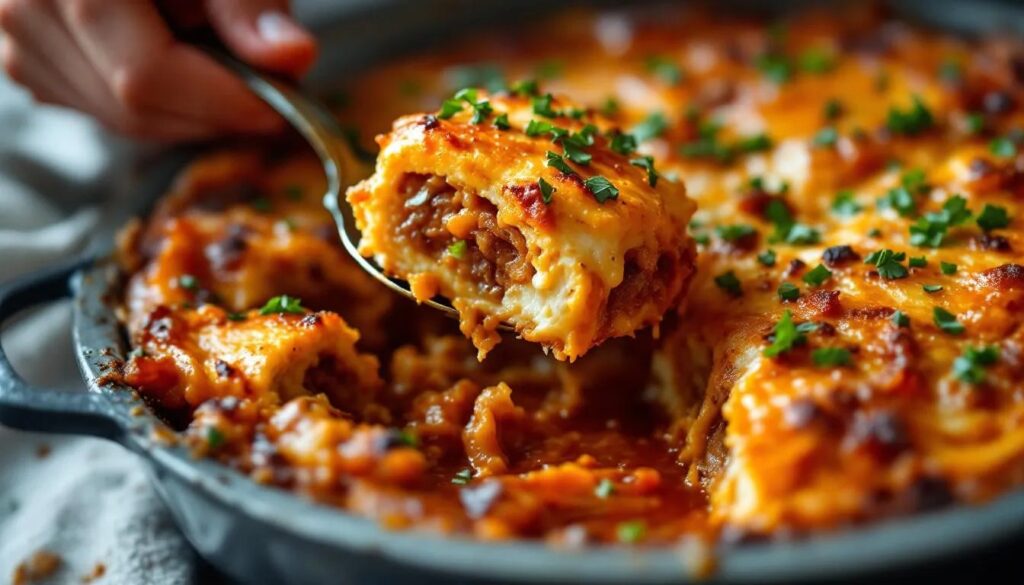
There is a particular kind of quiet satisfaction that comes with pulling a baking dish out of the oven and finding it exactly as you hoped: golden at the edges, steaming gently, and moist all the way through. As spring arrives and the days grow longer, the instinct to cook ahead becomes stronger — a Sunday afternoon in the kitchen, a dish that holds beautifully, and a week of meals that require nothing more than a brief trip back into the oven. The problem most home cooks face, however, is not the first bake. It is the second. Reheated food that weeps, dries, tightens, or splits is one of the most common disappointments in everyday cooking.
This article goes directly to the heart of that problem. The techniques gathered here apply to a wide range of oven-baked dishes — from layered gratins and stuffed vegetables to braised meat preparations and baked pasta — and they address each stage where moisture loss or uneven reheating typically occurs. Understanding the mechanics of retained moisture, the behavior of proteins and starches under dry heat, and the specific conditions that allow a dish to reheat as though it has never left the oven: this is what transforms a competent cook into a genuinely reliable one.
Why oven-baked dishes lose moisture in the first place
Before solving the problem, it helps to understand it precisely. When a dish bakes, heat drives moisture from the interior toward the surface, where it evaporates. A well-constructed recipe manages this process so that the crust or top layer firms beautifully while the interior stays tender. The issue arises during storage and reheating, when that equilibrium is disrupted.
In the refrigerator, proteins contract slightly as they cool, squeezing out liquid that then pools at the bottom of the dish. When the dish is reheated quickly — at high heat, uncovered, in a dry oven — the surface dries and toughens before the center has warmed through. The result is a dish that is simultaneously scorched on top and cold in the middle, with a texture closer to cardboard than to the original.
The three primary culprits are temperature, covering, and resting time. Address all three deliberately, and the problem largely disappears.
The covering principle: foil is not optional
The single most effective tool for reheating any oven-baked dish evenly is aluminum foil, used correctly. Placing a tight layer of foil directly over the dish before it enters the oven traps steam — both the moisture already present in the food and any liquid added at the base. This creates a gentle, humid environment that heats the dish from within rather than burning the surface from above.
For gratins, casseroles, or baked pasta dishes, add two to three tablespoons of water, broth, or sauce to the bottom of the dish before sealing with foil. This is not dilution — it is insurance. The liquid never fully incorporates into the dish; it evaporates into steam that circulates beneath the foil and keeps the interior soft throughout the reheating process. For dishes with a sauce already present, this step is often unnecessary, but for drier preparations — baked rice, stuffed peppers, roasted meat slices — it makes a measurable difference.
Remove the foil only in the final five minutes of reheating, when the dish is already fully warmed through. This brief exposure to direct dry heat revives the top layer: it crisps slightly, the cheese re-browns, the breadcrumbs regain their texture. Without this last step, the dish can feel steamed rather than baked — technically correct in temperature, but lacking the surface character of the original.
Temperature and timing: lower and slower every time
The instinct to reheat at a high temperature is understandable — it feels faster, and speed is often the goal. But high heat is precisely what causes uneven reheating. A dish taken straight from the refrigerator and placed in an oven set to 200°C (400°F) will see its surface reach serving temperature long before its core does. The edges dry. The center stays cold. The dish suffers twice.
The correct approach is a lower temperature — typically 160°C to 175°C (320°F to 350°F) — held for a longer period. A lasagne, a gratin dauphinois, or a baked chicken thigh preparation will reheat evenly at this temperature in roughly 25 to 35 minutes, depending on depth. A meat-based dish with significant thickness may need up to 40 minutes. Patience is key.
One practical refinement: remove the dish from the refrigerator 20 to 30 minutes before it enters the oven. Allowing it to approach room temperature reduces the thermal shock that causes proteins to tighten suddenly upon contact with heat. The oven does less work, and the result is more uniform. This is a step many home cooks overlook entirely, and its effect on texture is immediate.
The role of fat and sauce in maintaining moisture
Dishes that are naturally rich in fat or sauce retain their moisture far more readily than leaner preparations. A baked dish built on a béchamel, a tomato sauce, or a cream-based gratin has a built-in buffer: the fat coats the proteins and starches, slowing moisture loss during both the initial bake and subsequent reheating. This isn't an invitation to cook exclusively rich dishes — it's a reminder to work with the chemistry of the recipe.
For leaner dishes — baked fish, stuffed vegetables, or dishes made with minced poultry — consider brushing the surface lightly with olive oil or melted butter before reheating. A thin layer of fat on the surface acts as a barrier, slowing evaporation and maintaining the dish's original character. For baked pasta dishes that have dried slightly in the refrigerator, stirring a spoonful of the original sauce through the top layer before covering with foil restores both moisture and flavor.
Spring is also a useful season in which to build dishes around ingredients that hold moisture naturally: artichoke hearts, tender leeks, young courgettes — vegetables with high water content that release their moisture gently during cooking, keeping the surrounding ingredients soft and the sauce cohesive even after a night in the refrigerator.
Dish depth and portion size: often overlooked, always relevant
The depth of a baking dish directly affects how evenly it reheats. A shallow dish — no more than 4 to 5 centimeters (about 2 inches) — reheats more quickly and more evenly than a deep, dense preparation. When cooking ahead for multiple meals, consider portioning the dish into individual ramekins or shallow single-serving containers before storing. Each portion reheats in approximately 15 to 18 minutes at 170°C, with none of the uneven distribution that plagues a large communal dish reheated whole.
For family-sized preparations, slice or divide the dish before refrigerating rather than after. A lasagne that has been pre-sliced into portions stores flat, reheats faster, and maintains its layered structure better than one hacked apart cold the following day. The same logic applies to moussaka, baked potato gratins, and any layered preparation where the cohesion of the structure matters to the final presentation.
Storage conditions that protect the dish before reheating
How a dish is stored between its first and second life in the oven matters as much as the reheating technique itself. Covering the dish tightly — with foil pressed directly against the surface rather than tented loosely above it — prevents the formation of a dried crust on the top layer. That crust, once formed, does not soften on reheating: it simply hardens further.
For dishes stored in glass or ceramic baking dishes, allow the preparation to cool to room temperature before refrigerating, then seal tightly. Transferring the dish to an airtight container is preferable for anything stored beyond 24 hours. The maximum safe storage time for most oven-baked preparations — meat-based lasagnes, baked pasta, stuffed vegetables — is three to four days at or below 4°C (40°F).
Never reheat a dish more than once. Each heating cycle drives additional moisture out of the proteins and starches, compounding the dryness exponentially. Cook enough to eat within a reasonable window, and reheat only what will be consumed at that sitting.
My chef's note
The technique that consistently produces the best results — regardless of the specific dish — is to reheat covered, at low heat, with a small amount of added liquid, and to remove the covering only at the very end. If you remember nothing else from this article, remember those four points. They apply to a gratin, a moussaka, a chicken casserole, a baked orzo — anything that comes from the oven. In early spring, when the kitchen tends toward longer, slower cooking sessions on cooler afternoons, this approach fits naturally: there is no urgency, only the pleasure of food that tastes as good on Thursday as it did on Sunday.
Frequently asked questions
Can I reheat an oven-baked dish directly from frozen?
Yes, but the process requires more time and a slightly different approach. Cover the frozen dish tightly with foil and place it in an oven set to 160°C (320°F). For a standard-depth preparation such as a lasagne or gratin, allow 60 to 75 minutes before removing the foil for the final browning stage. Adding a small amount of liquid — broth or water — to the base of the dish before covering will help maintain interior moisture as the ice crystals melt and steam builds up beneath the foil. Never increase the temperature to speed the process: this is precisely what causes the outside to overcook before the center thaws.
Why does my baked pasta always dry out when reheated?
Baked pasta absorbs liquid aggressively both during cooking and while sitting in the refrigerator. By the time it is reheated, it has often soaked up whatever sauce remained in the dish. The solution is to stir two to three tablespoons of sauce, passata, or even salted water through the top layer of the pasta before covering with foil and reheating at 165°C for 20 to 25 minutes. This restores enough moisture for the pasta to steam gently rather than bake dry. A drizzle of olive oil over the surface before the foil comes off for the final few minutes also helps revive the top layer without hardening it.
Is it better to reheat in the oven or the microwave?
For most oven-baked dishes — particularly layered preparations, gratins, or anything with a desirable crust or topping — the oven produces significantly better results than the microwave. The microwave heats unevenly, creates hot and cold pockets within the same portion, and softens any crisp surface without reviving it. For single portions where time is the priority, a microwave covered with a damp paper towel can work adequately, but the texture of the dish will suffer. When quality matters, return the dish to the oven — it is the only method that actually finishes the dish rather than merely warming it.
How do I know when a reheated dish has reached the correct internal temperature?
The food safety standard for reheated cooked dishes is an internal temperature of 75°C (165°F) throughout — not just at the surface, but at the center of the thickest part. A probe thermometer inserted into the middle of the dish is the only reliable way to verify this. As a practical guide, a dish at the correct temperature will be visibly steaming when the foil is removed, and any sauce present will be actively bubbling at the edges. Cold patches at the center are a clear sign that more time — not more heat — is needed.
Which oven-baked dishes reheat most successfully?
Dishes with a significant sauce or fat content reheat most reliably: baked pasta, moussaka, gratins dauphinois, shepherd's or cottage pie, and braised meat preparations all hold extremely well. Dishes built around eggs — frittatas, soufflés, egg-based gratins — are more fragile: the proteins tighten quickly on reheating and the texture rarely returns to its original state. Fish-based baked dishes are similarly challenging and are best consumed the day they are made. For meal-prep purposes, meat, vegetable, and starch-based preparations offer the most consistent results across multiple reheating cycles.